
A shift-left mindset for cloud sustainability means moving environmental impact closer to the decisions that shape cloud usage.
In FinOps, shift left means bringing cost awareness into architecture, provisioning, and optimization decisions before inefficient usage becomes embedded in the environment. The same mindset can apply to sustainability. Carbon impact is harder to manage when it is disconnected from the decisions that created the usage in the first place.
The goal is not to make sustainability a separate operating motion. It is to bring environmental impact into the cloud optimization context teams already use to decide what to resize, reduce, or remove.
Cloud sustainability is easy to value, but hard to operationalize
Organizations know cloud usage has an environmental footprint. The challenge is making that footprint visible alongside the cost, usage, ownership, workload, and optimization data. When sustainability data lives in a separate report or manual process, it is easy for it to stay outside the cloud operating model. Without a shared view, FinOps and engineering teams are still working from fragmented pieces of the same story.
That is how sustainability becomes an afterthought. Not because it is not important, but because it is not visible in the tools and workflows teams already use to manage cloud environments.
From cost recommendation to sustainability impact
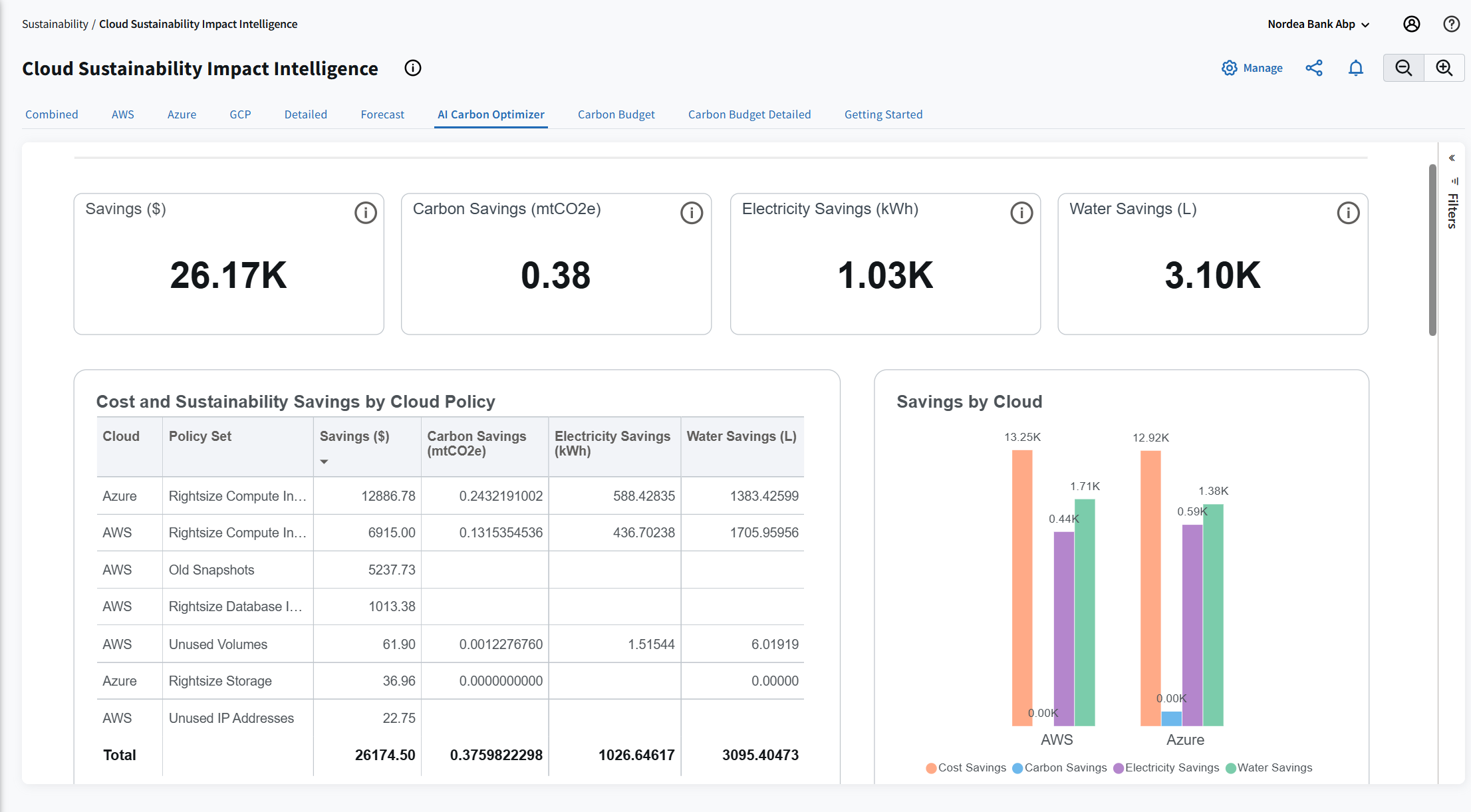
Cloud Sustainability Impact Intelligence provides a unified view of cost savings and environmental impact from cloud optimization policies, highlighting reductions in carbon emissions, electricity consumption, and water usage across AWS and Azure environments.
Flexera Cloud Cost Optimization (CCO) identifies Usage Reduction Savings opportunities across AWS, Azure, and GCP. Those recommendations help teams reduce waste, eliminate unnecessary consumption, and improve cloud efficiency.
With Greenpixie Carbon Optimizer, those same optimization opportunities can also be evaluated for their estimated carbon, electricity, and water impact. Rather than looking at cost and sustainability separately, teams can understand both outcomes from the same recommendation.
This extends the value of cloud optimization beyond cost savings alone by bringing sustainability impact closer to the optimization decision itself.
Sustainability pressure is becoming cloud operating pressure
The FinOps Foundation makes this connection directly. It defines sustainability as part of FinOps activity, where environmental efficiency is balanced with financial value and optimization decisions are aligned to organizational goals. It also notes that carbon visibility across technology domains is becoming more important for cost allocation, reporting, forecasting, and other IT functions as environmental reporting requirements grow.
The infrastructure side is adding pressure too. In its April 2025 report, the IEA projected that global electricity demand from data centers will more than double by 2030 to around 945 TWh, with AI identified as the biggest driver of that increase.
| Pressure showing up in customer conversations | What cloud teams need to see |
| Regulatory and ESG reporting requirements are increasing | Carbon, electricity, and water impact tied to cloud usage and resource context |
| Procurement and customer expectations are expanding | Environmental impact across providers, services, and sourcing decisions |
| Manual reporting is slowing teams down | Sustainability data connected to existing cloud cost and usage signals |
| Ownership is split across ESG, finance, procurement, IT, FinOps, and engineering | A shared view that can support different teams without creating a separate operating model |
| AI and data workloads are increasing infrastructure demand | Better visibility into the cloud choices driving consumption and impact |
Sustainability belongs in the cloud efficiency picture
Cloud environments do not stay still. Resources scale, workloads move, new services launch, and AI and data initiatives create new demand.
Cost data alone does not give teams enough context. They need to understand what is running, who owns it, where waste exists, and what an optimization action can change.
That is where the shift-left mindset comes full circle. Cloud sustainability starts where optimization decisions happen because that is where teams still have room to act. When carbon, electricity, and water impact are connected to CCO recommendations through Greenpixie, sustainability becomes part of the same evaluation process used to reduce waste, improve efficiency, and make better cloud decisions.
The question is not whether cloud sustainability should be measured later. It is whether teams have the right context today to understand the cost and environmental impact of the optimization decisions in front of them.
What is cloud sustainability?
Cloud sustainability is the practice of reducing the environmental impact of cloud computing by improving how cloud resources are designed, provisioned, and optimized. It focuses on lowering carbon emissions, electricity consumption, and water usage while maintaining business and operational objectives.
What does a ‘shift-left’ approach to cloud sustainability mean?
A shift-left approach brings sustainability considerations into cloud planning and optimization decisions earlier in the lifecycle. Instead of measuring environmental impact after resources are deployed, teams evaluate the carbon, electricity, water, and cost implications of cloud usage before inefficient consumption becomes embedded in the environment.
How are FinOps and cloud sustainability connected?
FinOps and cloud sustainability share the goal of improving cloud efficiency. FinOps helps organizations reduce waste and optimize cloud spending, while sustainability extends that same optimization process to environmental outcomes. By combining cost and sustainability data, teams can evaluate both financial and environmental impact from a single recommendation.
How can organizations measure the environmental impact of cloud workloads?
Organizations can measure cloud sustainability by analyzing estimated carbon emissions, electricity consumption, and water usage associated with cloud resources and workloads. When sustainability data is connected to cloud cost and usage information, teams can better understand the impact of optimization decisions across cloud providers and services.
Why is sustainability becoming part of cloud optimization?
Environmental reporting requirements, customer expectations, and growing infrastructure demand are making sustainability a cloud operations issue rather than just an ESG concern. As cloud environments expand and AI workloads increase resource consumption, organizations need visibility into both the financial and environmental impact of cloud usage.
What is GreenOps?
GreenOps is the practice of applying operational processes, governance, and optimization strategies to reduce the environmental impact of cloud and technology usage. Often considered an extension of FinOps, GreenOps helps organizations measure and improve sustainability outcomes such as carbon emissions, energy consumption, and water usage while maintaining business performance and controlling costs.
Alexa Abbruscato
Alexa Abbruscato is a Senior Product Marketing Manager for Flexera.