WORKLOAD OPTIMIZATION
Every level of automation needed to optimize your cloud resources
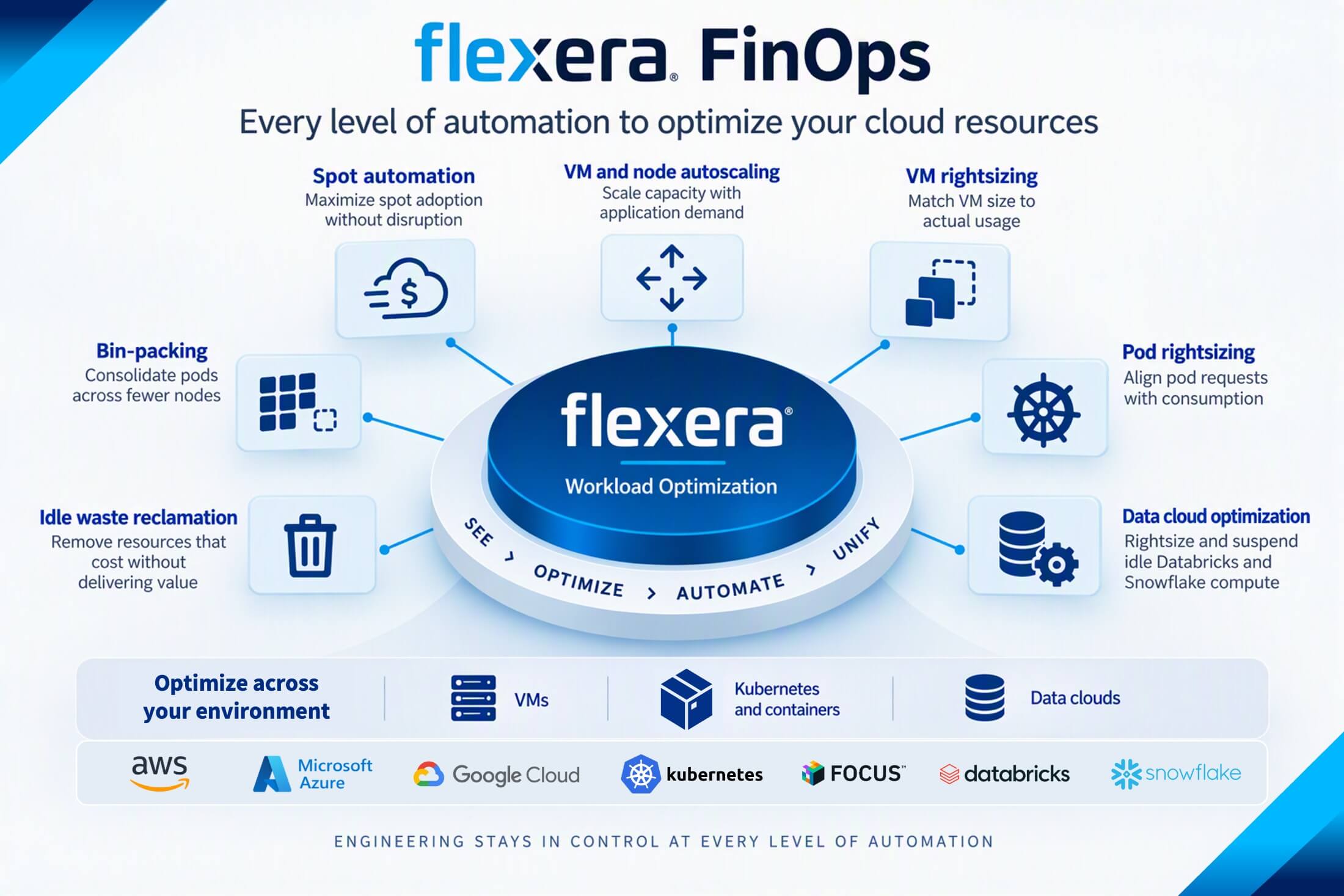
Flexera optimizes across your cloud environment: VMs, Kubernetes and containers, and data platforms like Databricks and Snowflake. The FinOps portfolio offers a full range of workload optimization, from actionable recommendations to fully autonomous optimization. Engineering teams stay in control at every level of automation, protecting enterprise-grade performance and reliability while reclaiming time for innovation.
Recommended Products
Automation that meets you where you are
Flexera understands that not all teams want hands-off autonomy for every optimization. You can review recommendations and choose which ones to apply, or set conditions under which automated optimization should occur. Use automation where it's appropriate today, and add more autonomous optimization as workloads become well understood.

See
See
Know your optimization opportunities down to the resource.

Optimize
Optimize
Human-in-the-loop-automation: Set the conditions optimization runs under

Automate
Automate
Fully autonomous optimization so engineers focus on performance and reliability

Unify
Unify
Bring rate optimization together with workload optimization in one closed-loop system
see
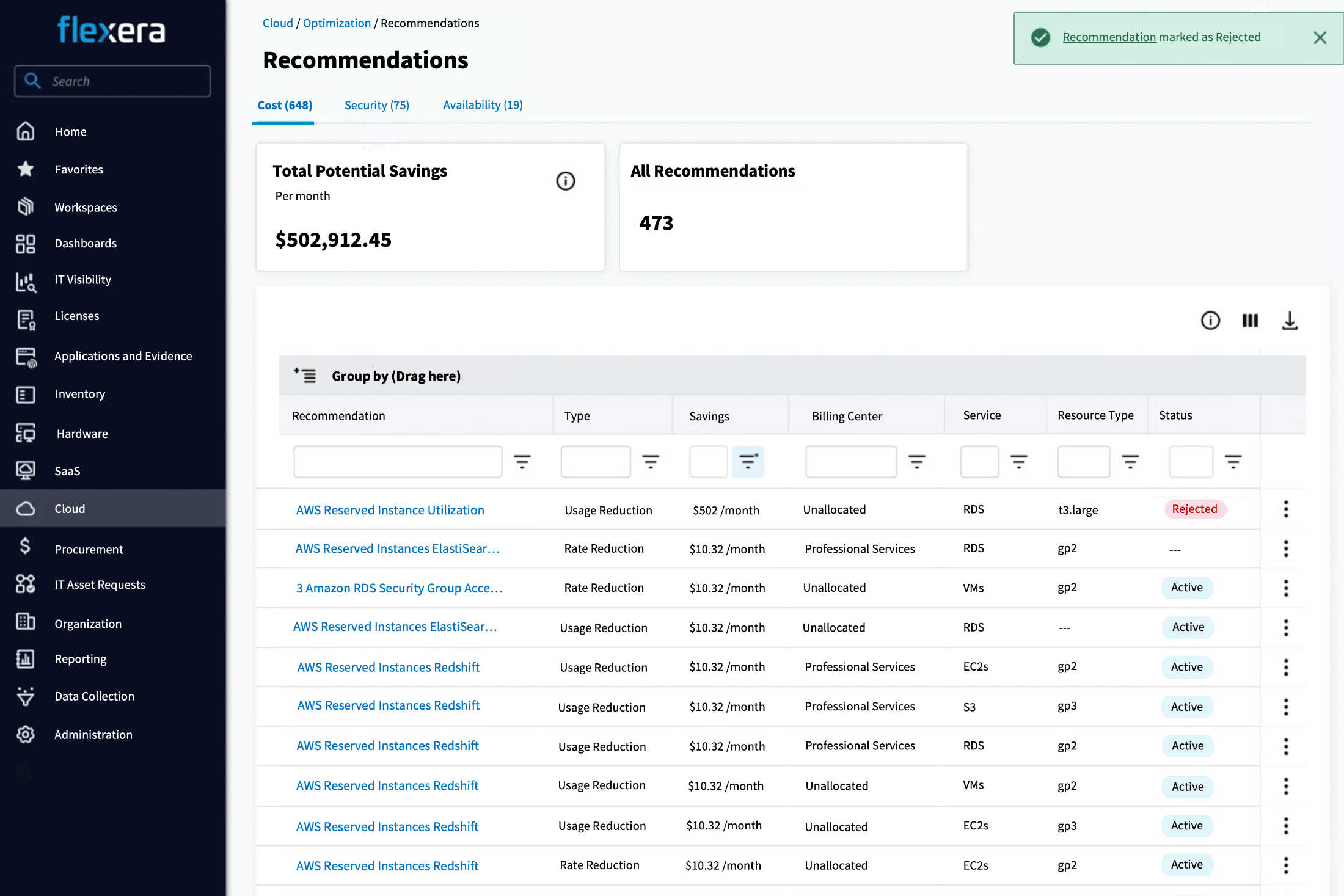
Actionable recommendations across compute and data platforms
Broad resource rightsizing
Broad resource rightsizing
Start with a clear view of where resources are wasted. Flexera analyzes usage so you can rightsize compute, storage, databases, and serverless resources confidently.
Containers
Containers
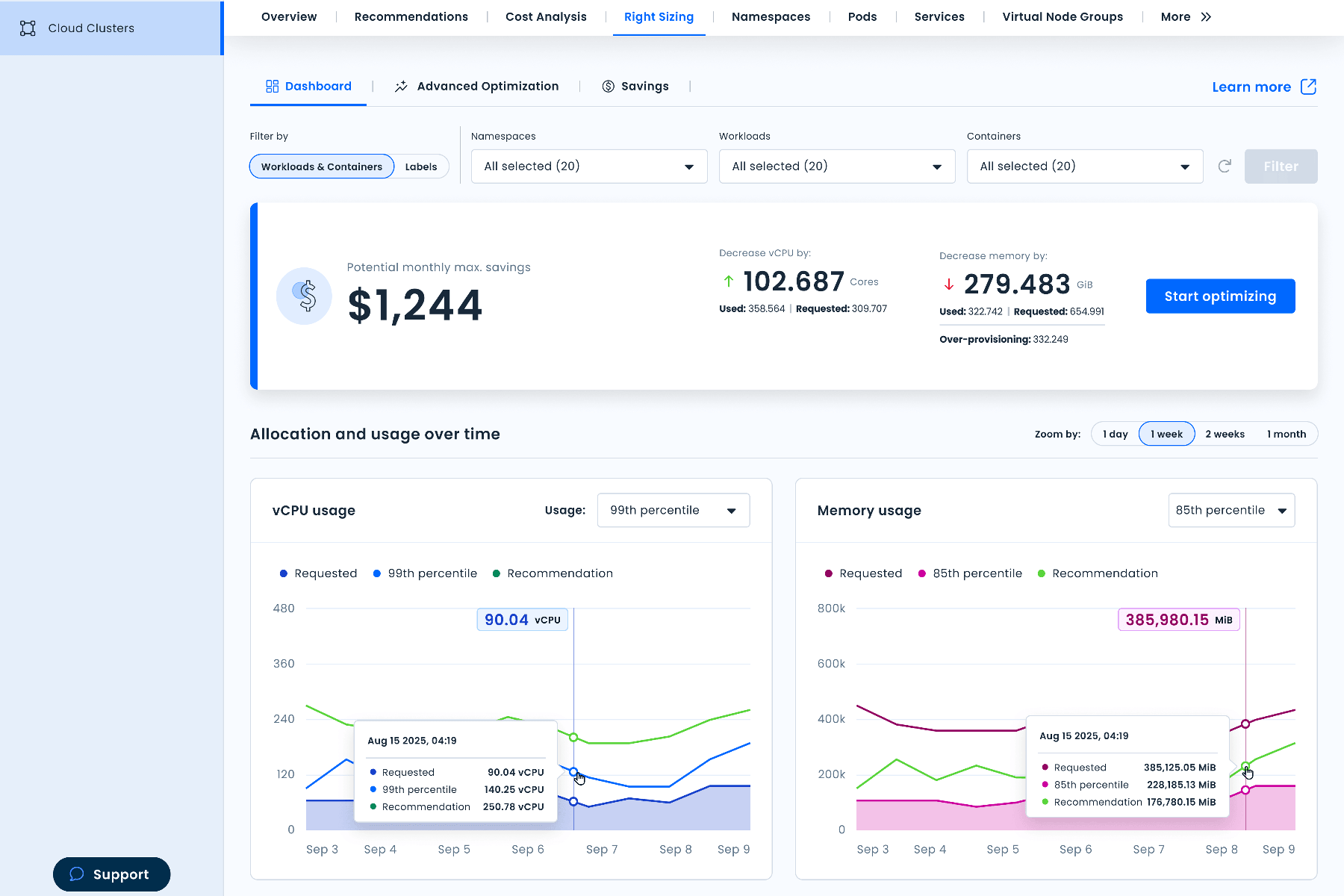
See where your K8s and containerized workloads are overprovisioned. Get pod rightsizing recommendations that fine-tune CPU and memory requests to application demand.
Data clouds
Data clouds
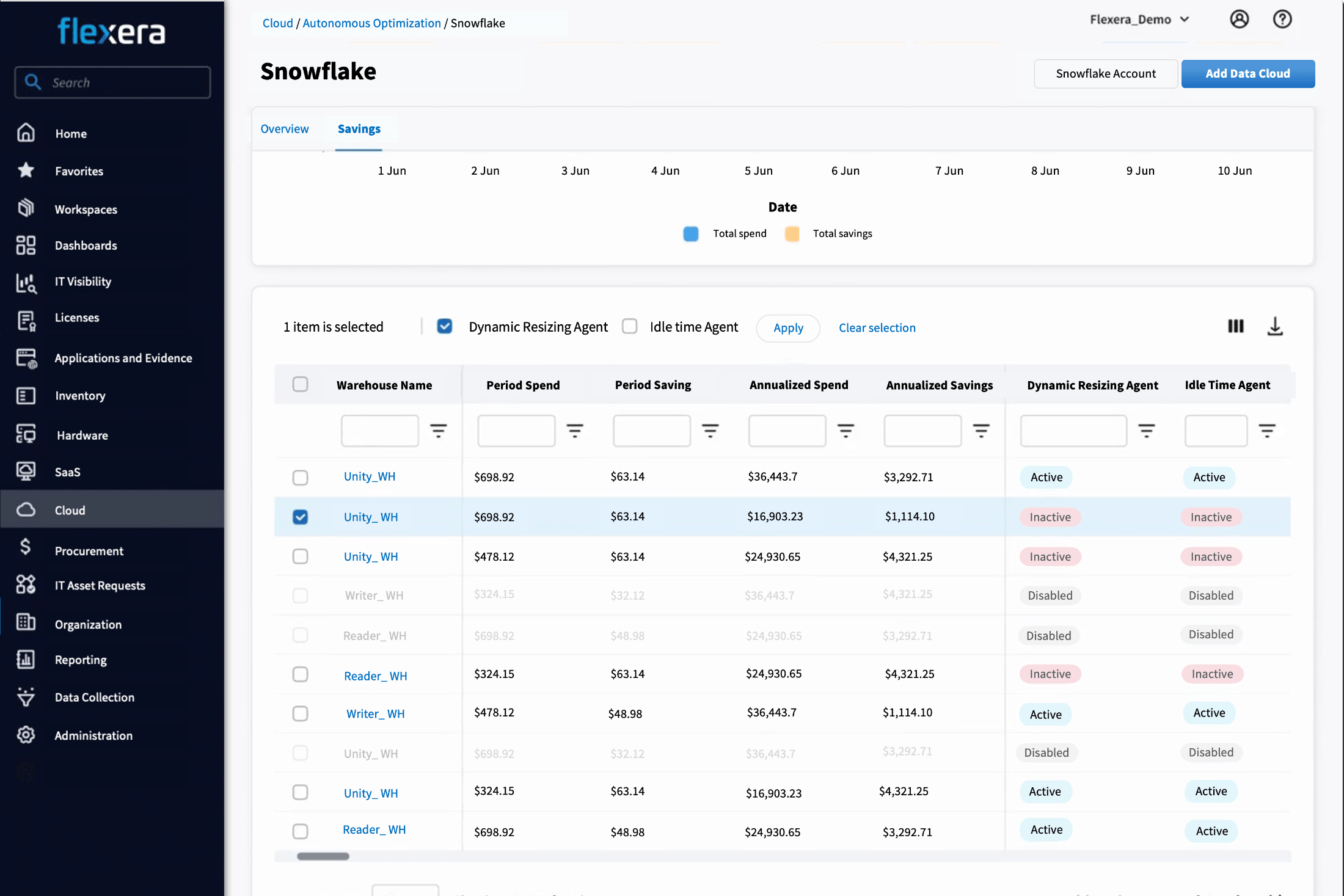
Keep your Databricks and Snowflake infrastructure aligned with workload demand. Receive recommendations to rightsize clusters, warehouses, and reduce unnecessary compute consumption.
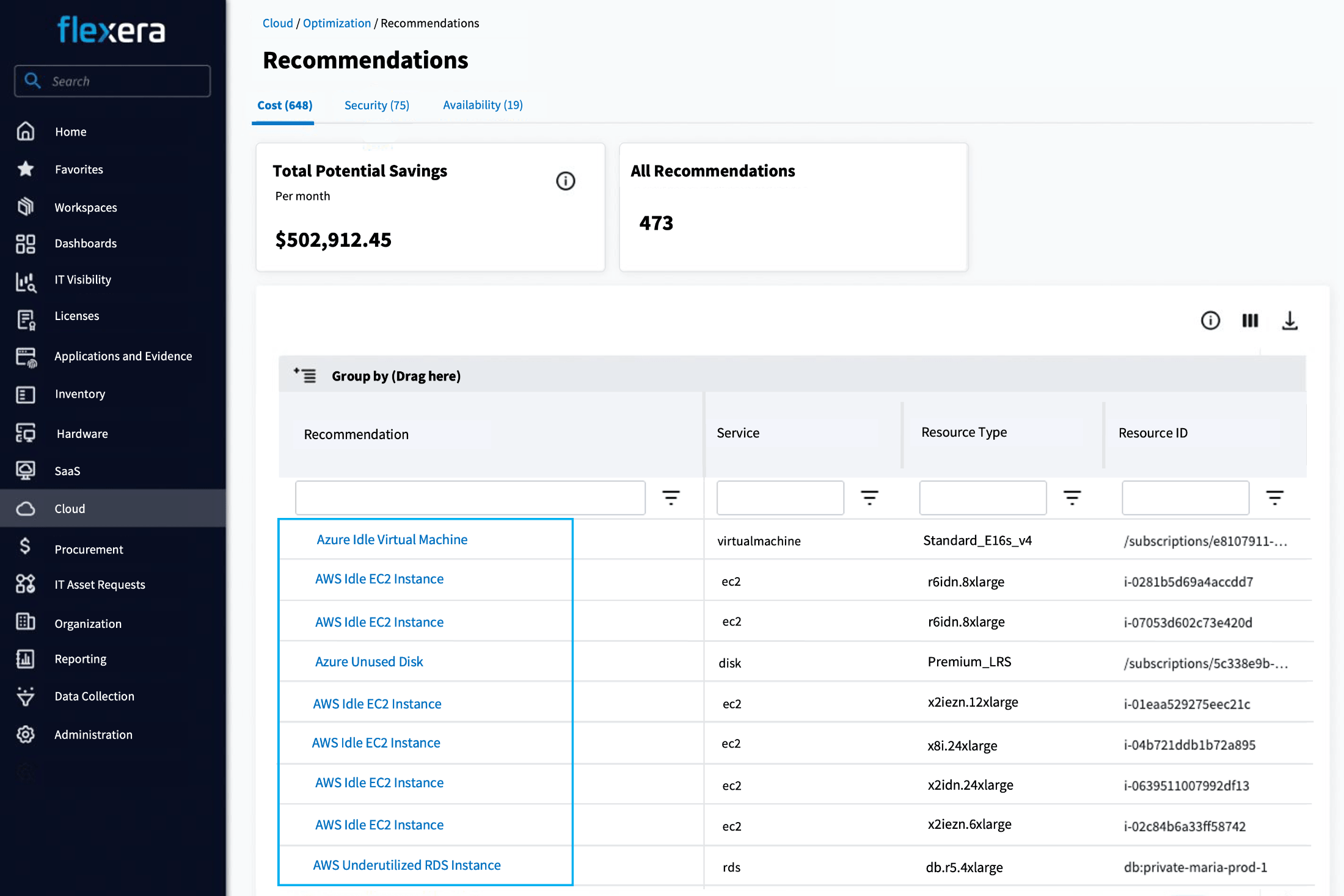
Idle waste
Idle waste
Identify resources that continue generating cost without delivering value. Surface recommendations for idle compute, storage, and networking.
OPTIMIZE
Human-in-the-loop automation sets conditions that protect workload performance and reliability
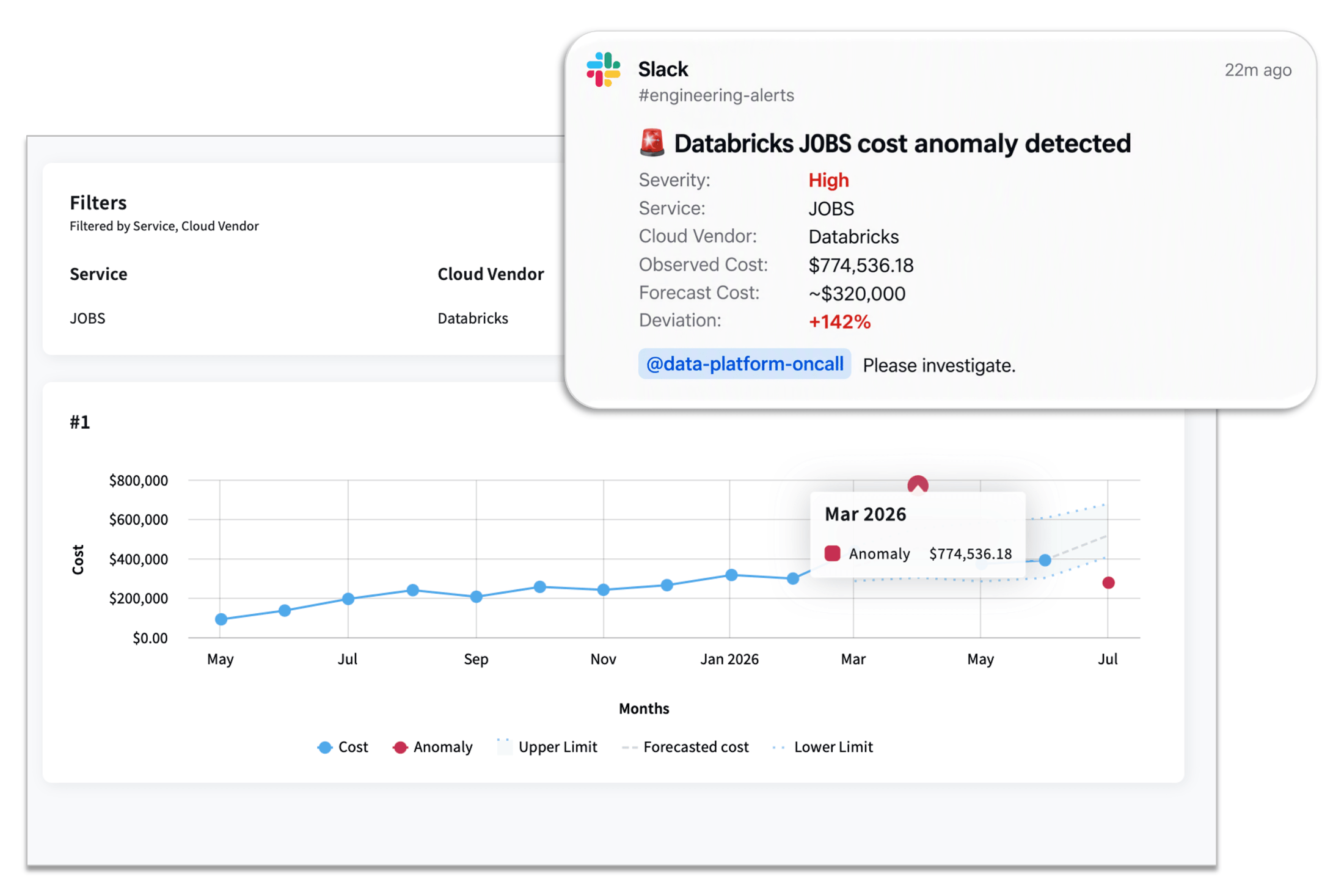
Get notified when action is needed
Get notified when action is needed
Receive alerts when Flexera detects spend anomalies or identifies optimizations recommendations, giving your team time to investigate and respond faster.
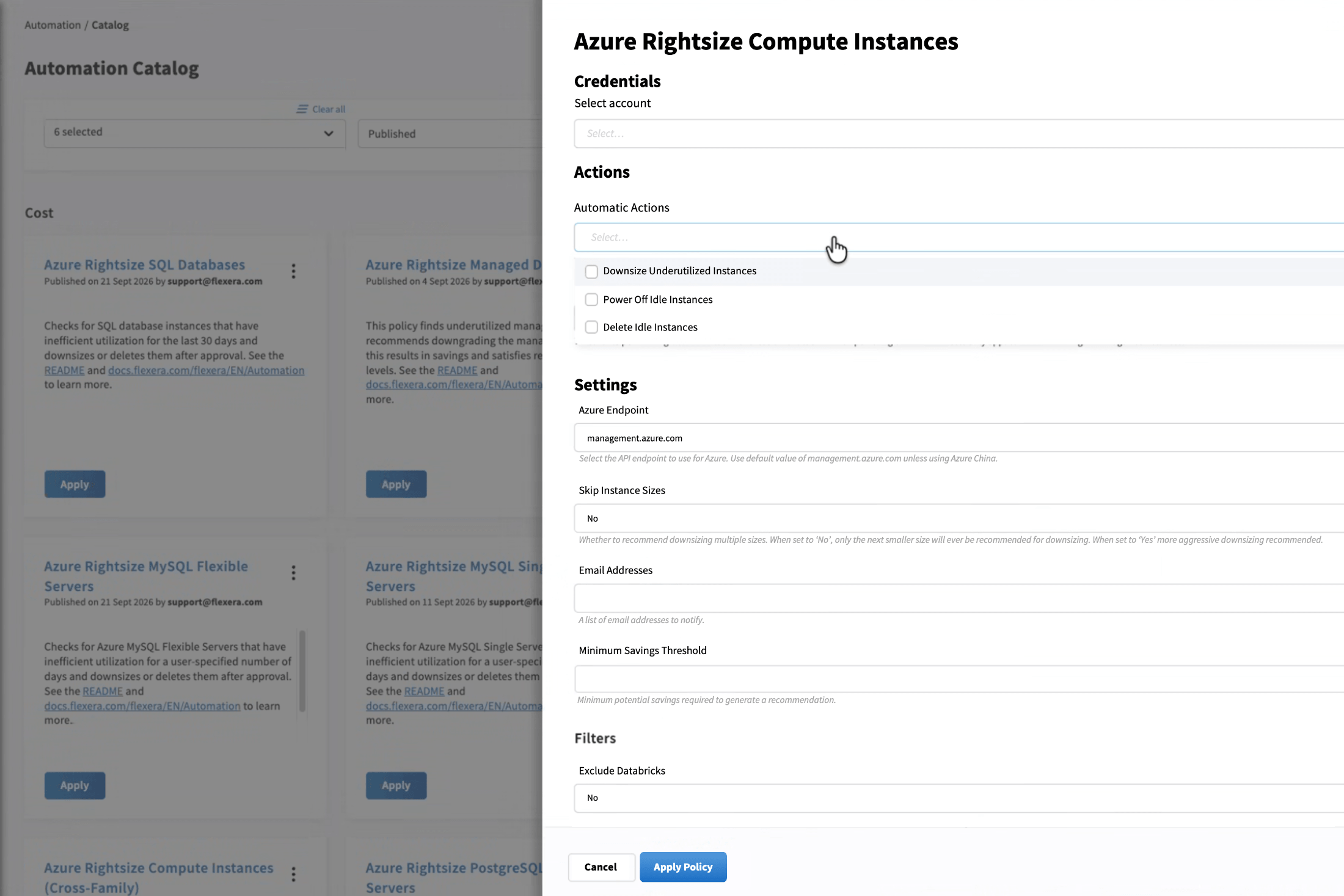
Tune rightsizing recommendations
Tune rightsizing recommendations
Set utilization thresholds, analysis periods, and workload requirements that align with rightsizing recommendations with FinOps and engineering priorities.
Approve actions before they’re applied
Approve actions before they’re applied
Require approval before changes are made and route recommendations through ServiceNow, Jira, and existing workflow tools for review by the appropriate teams.
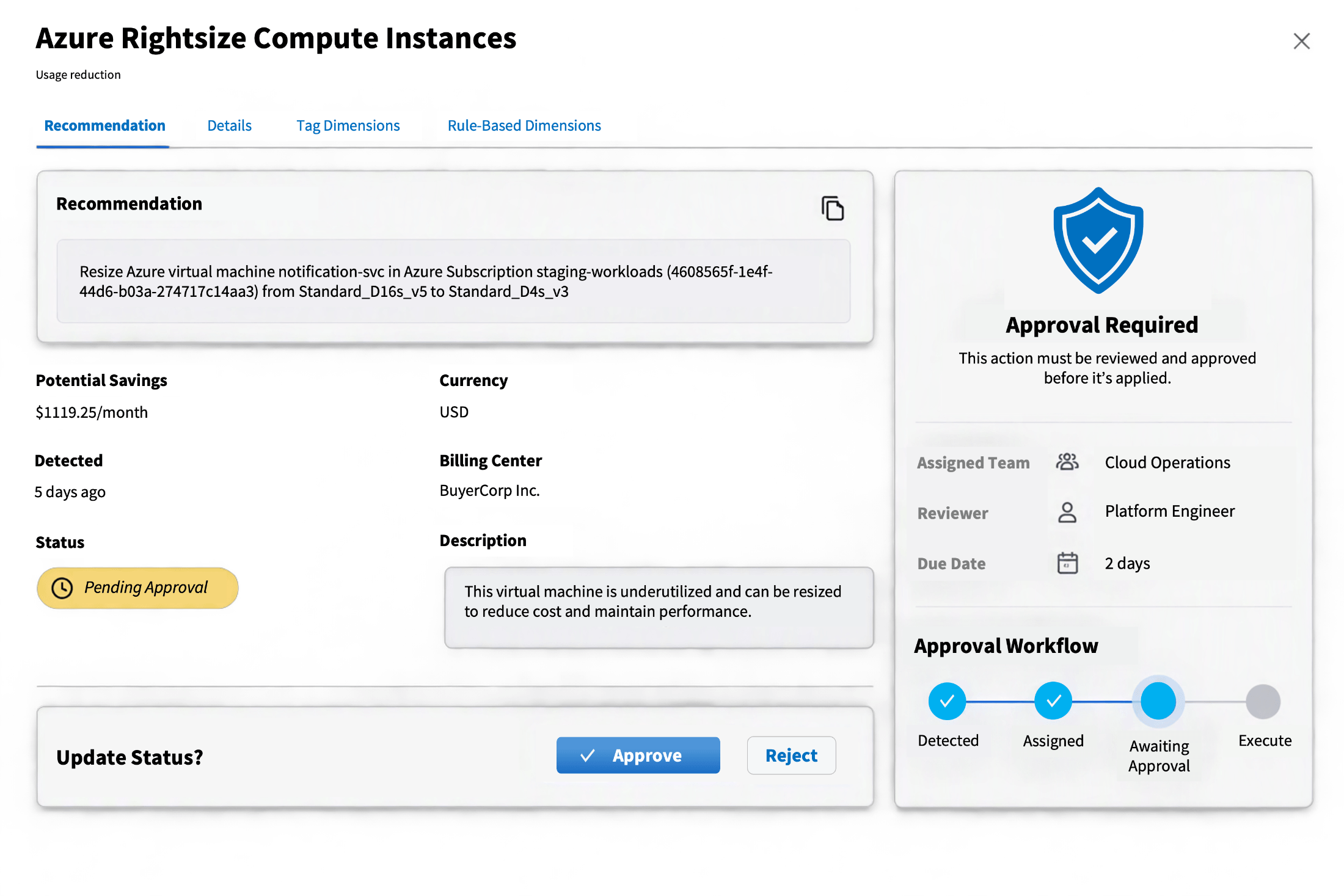
Determine the appropriate level of automation
Determine the appropriate level of automation
Decide whether optimization opportunities remain recommendation-only, require approval, or run automatically for specific workloads and action types.
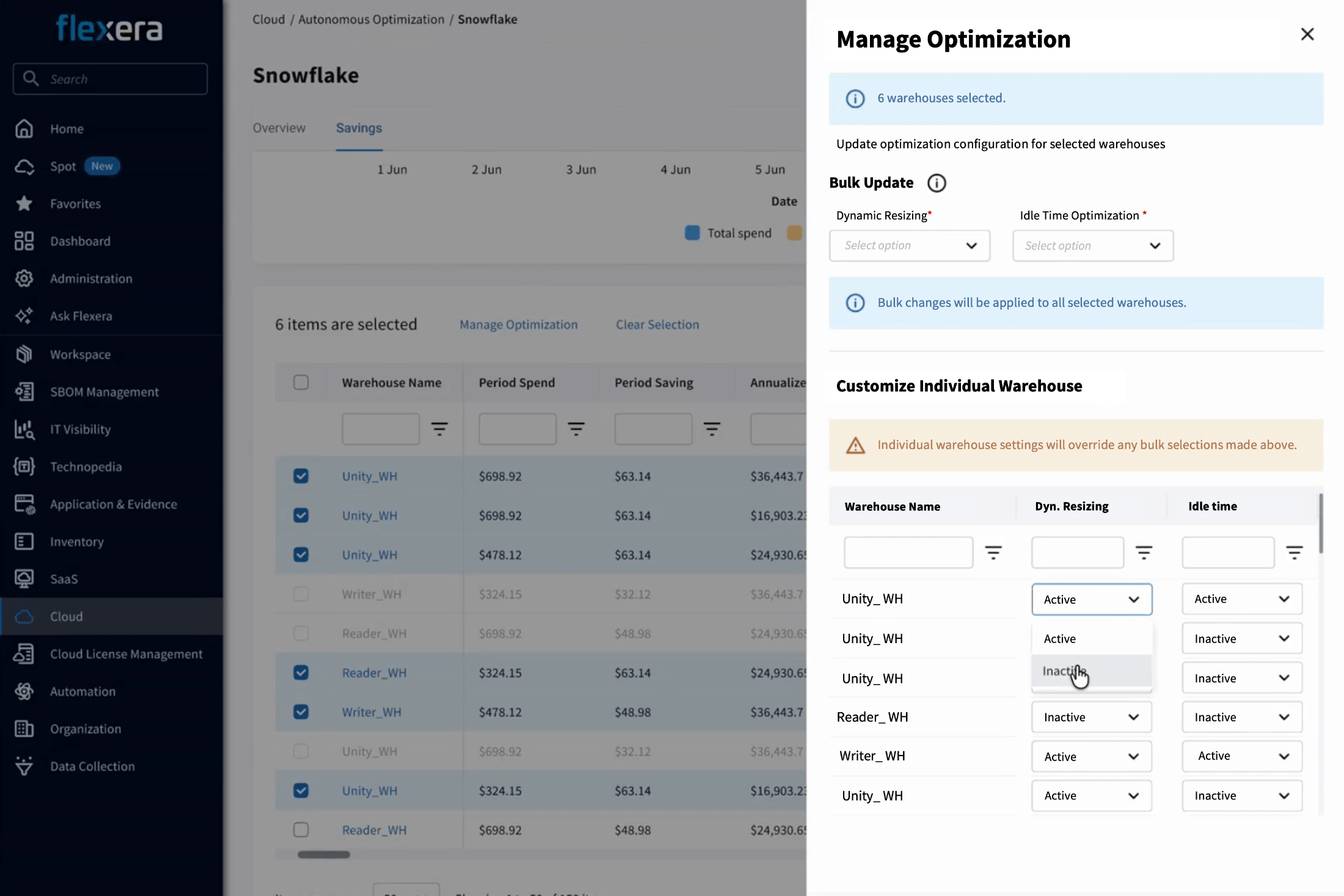
AUTOMATE
Autonomous optimization across VM workloads, containers, and data clouds
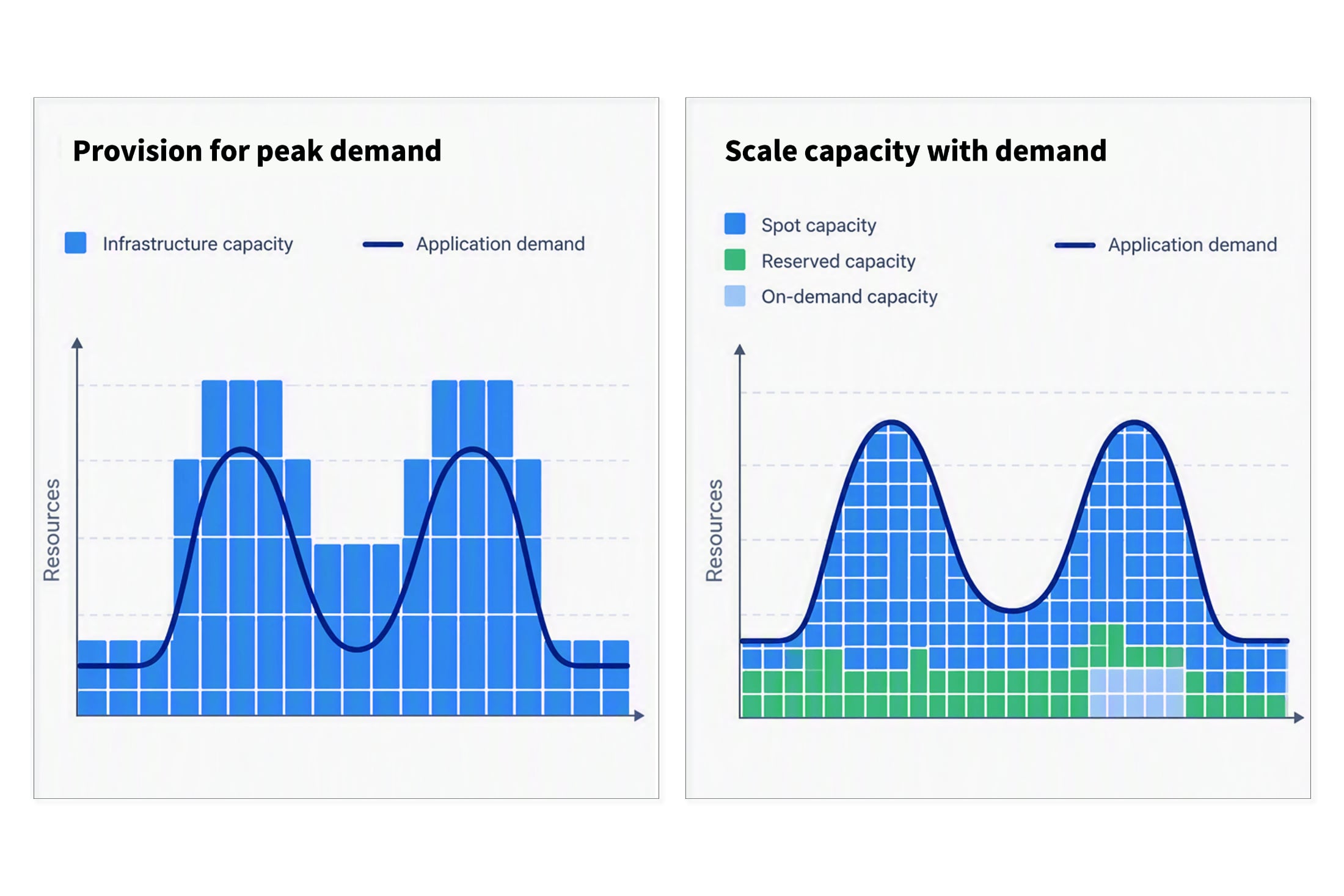
Scale capacity with application demand
Scale capacity with application demand
Align cluster and VM capacity with real-time demand. Flexera automatically scales infrastructure up or down to reduce waste while maintaining application performance.
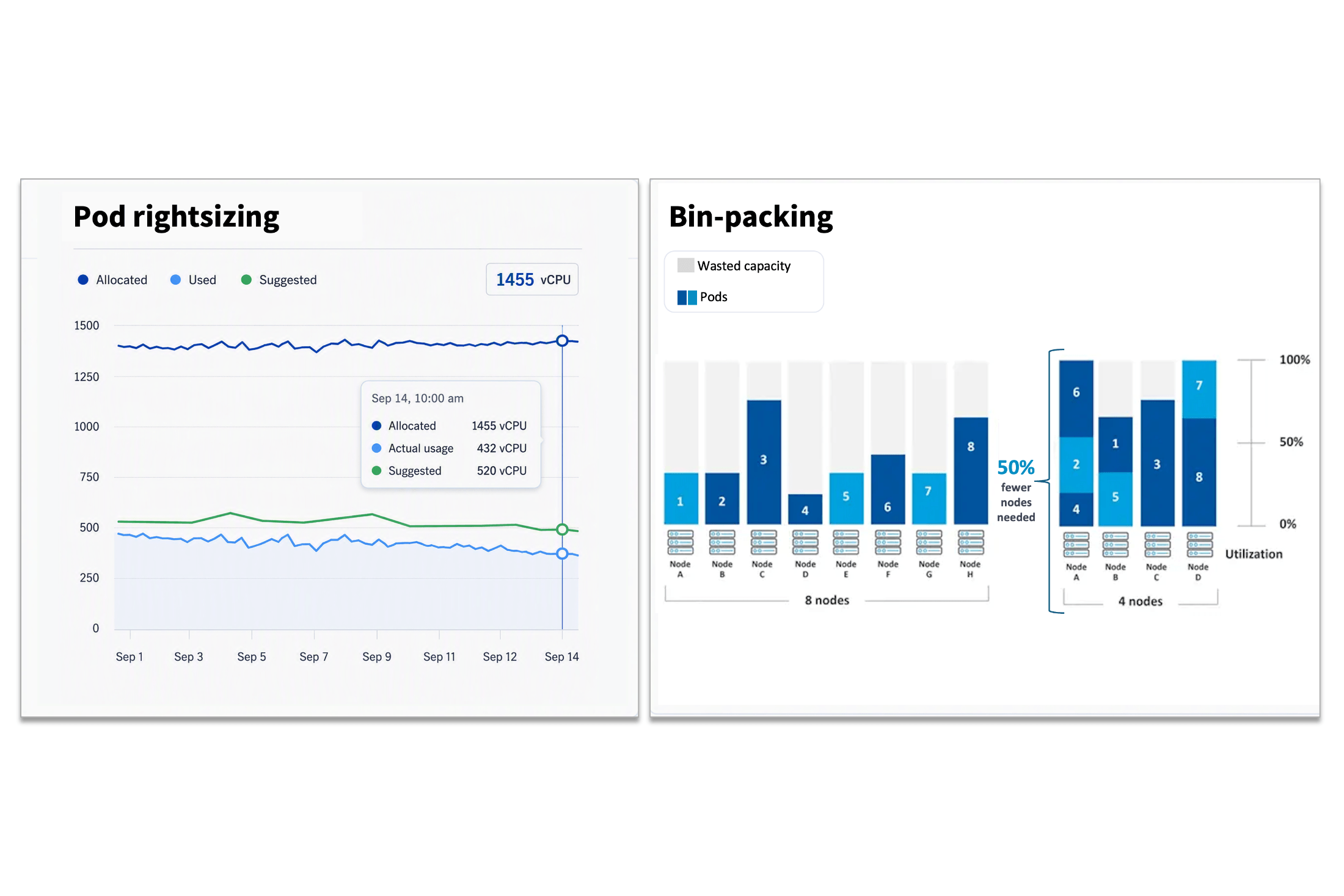
Rightsize and bin-pack pods
Rightsize and bin-pack pods
Improve your container efficiency by aligning pod resource requests with consumption and consolidating pods across nodes to enhance infrastructure utilization.
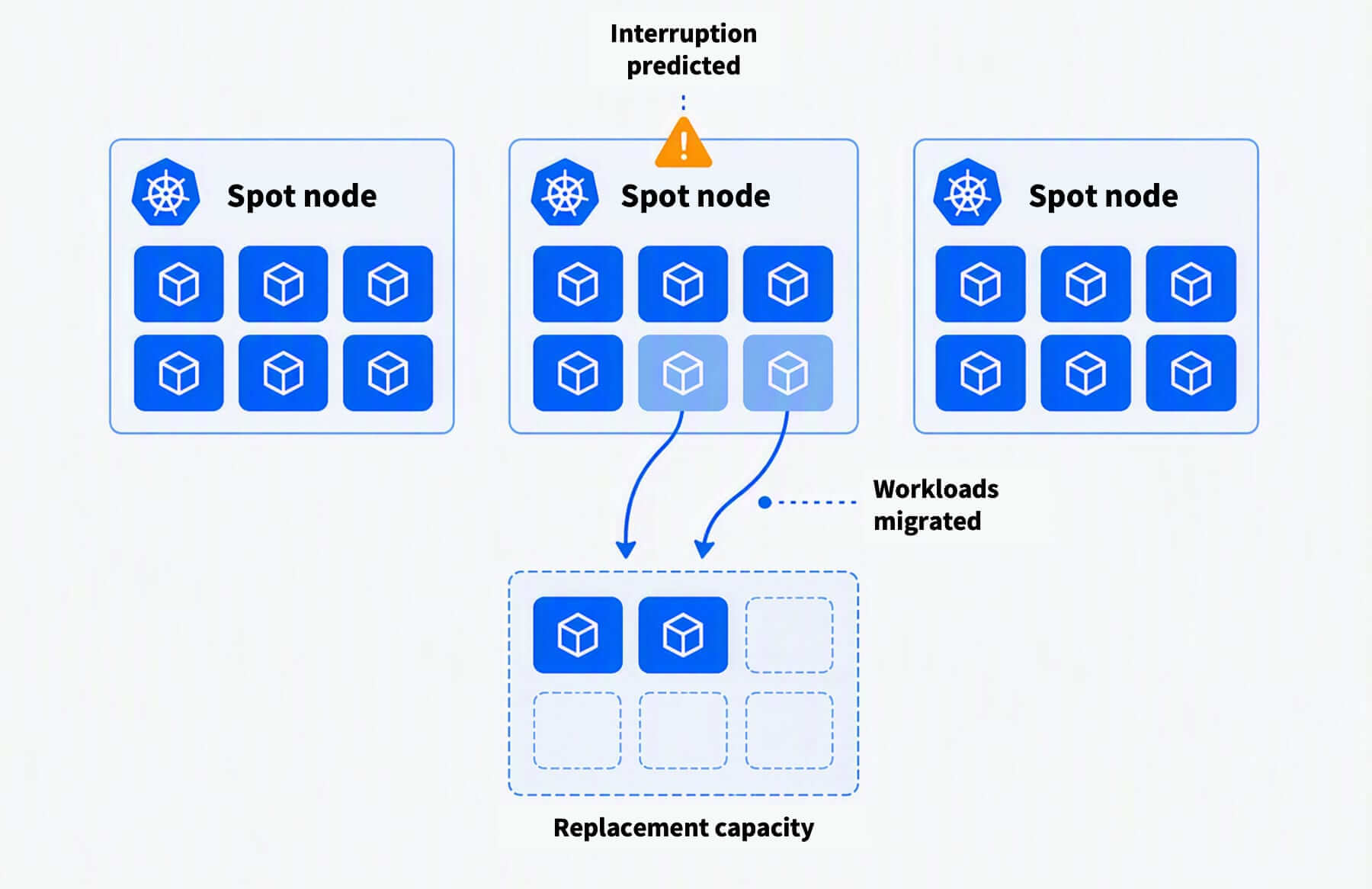
Maximize spot adoption without disruption
Maximize spot adoption without disruption
Run more of your workloads on the lowest-cost compute without compromising availability. Flexera predicts spot interruptions and moves workloads before they’re affected.
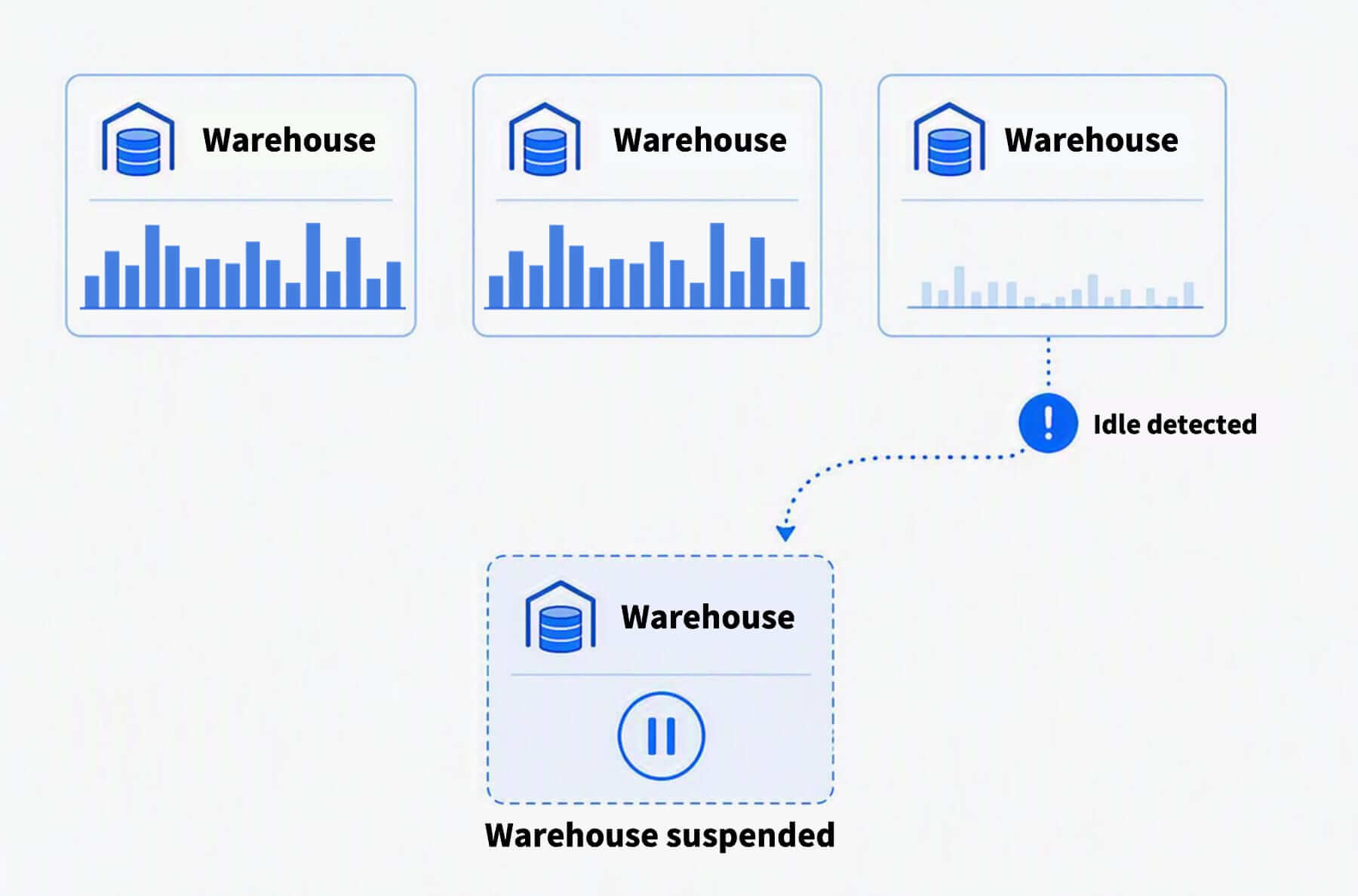
Reduce data cloud waste
Reduce data cloud waste
Optimize your Databricks and Snowflake spend by continuously monitoring warehouse activity and suspending idle compute without manual intervention.
Extend automation to rate optimization
Keep your commitments aligned with usage. Flexera’s ProsperOps manages your Reserved Instances, Savings Plans, and CUDs to improve savings automatically.
UNIFY
Coordinate rates and workloads with Unified Autonomous Optimization (UAO)
Rate optimization lowers the unit cost of cloud resources, while workload optimization reduces the infrastructure usage required to run them. When they operate separately, commitment coverage may not adapt to workload optimization changes. This can leave commitments underutilized, missed savings, and more time spent aligning FinOps and engineering across separate tools and processes.
Flexera is the only solution that brings rate and workload optimization together under a “single brain.” Unified Autonomous Optimization coordinates resource usage and commitment discount coverage in one closed-loop system, so changes on one side inform decisions on the other.
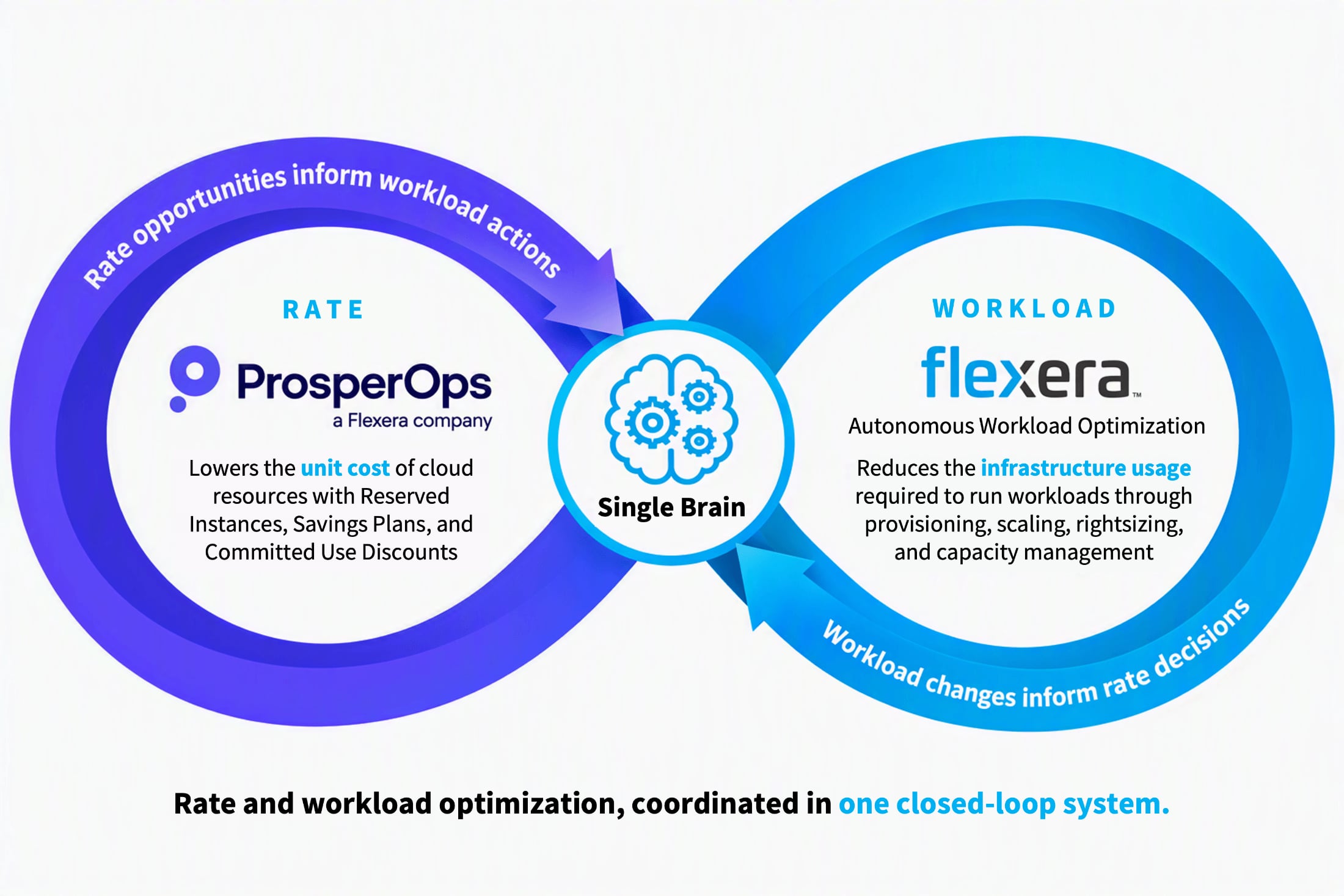
How Unified Autonomous Optimization works
UAO continuously analyzes cost and usage data to align resource usage with commitment coverage.
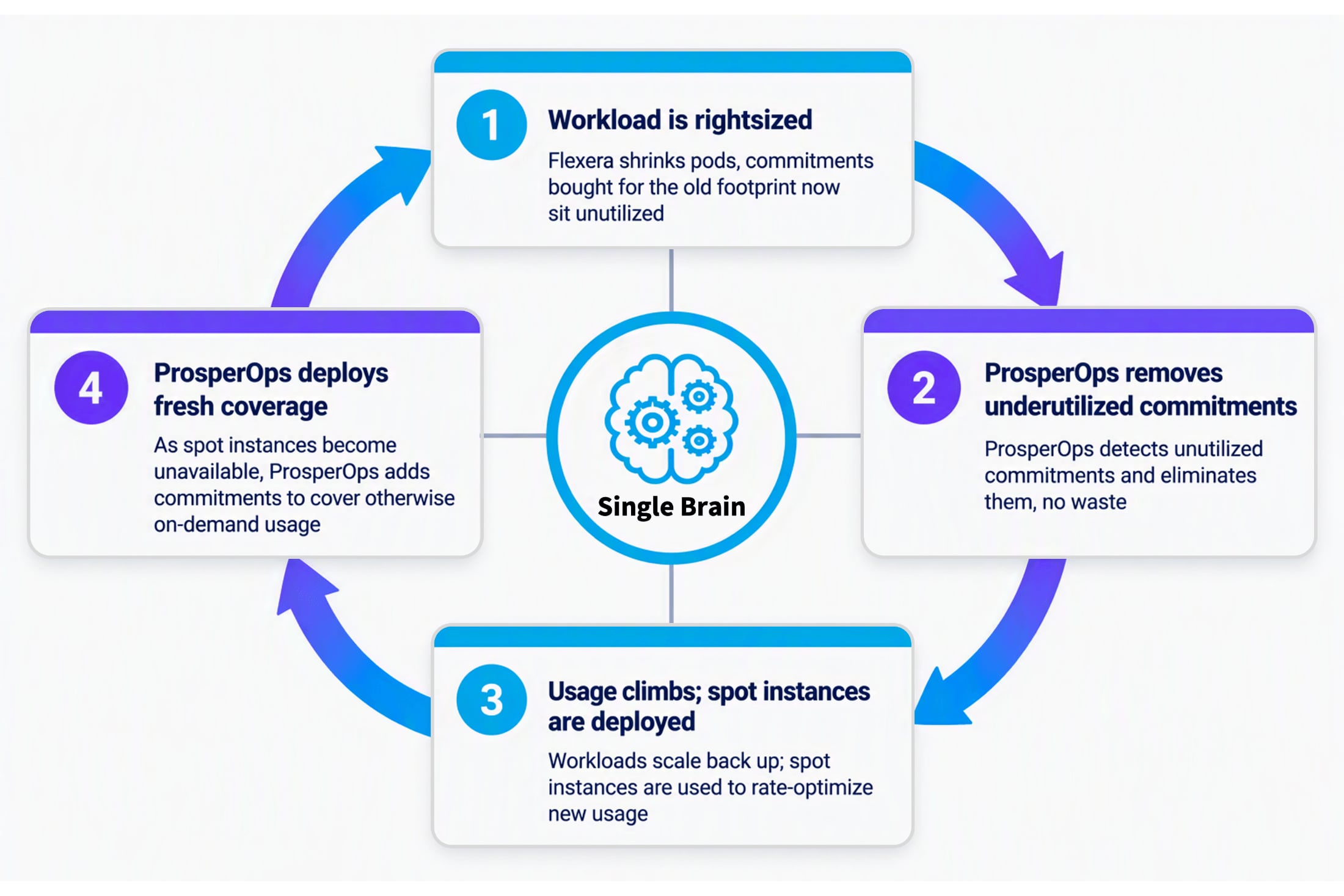
Result: One shared intelligence that informs every decision, so you use resources more efficiently at a lower cost.
Proven savings from workload optimization
Optimize Kubernetes at scale without sacrificing reliability
Hear how Flaschenpost approaches Kubernetes operations, platform architecture, and reliability with Flexera’s Autonomous Workload Optimization.

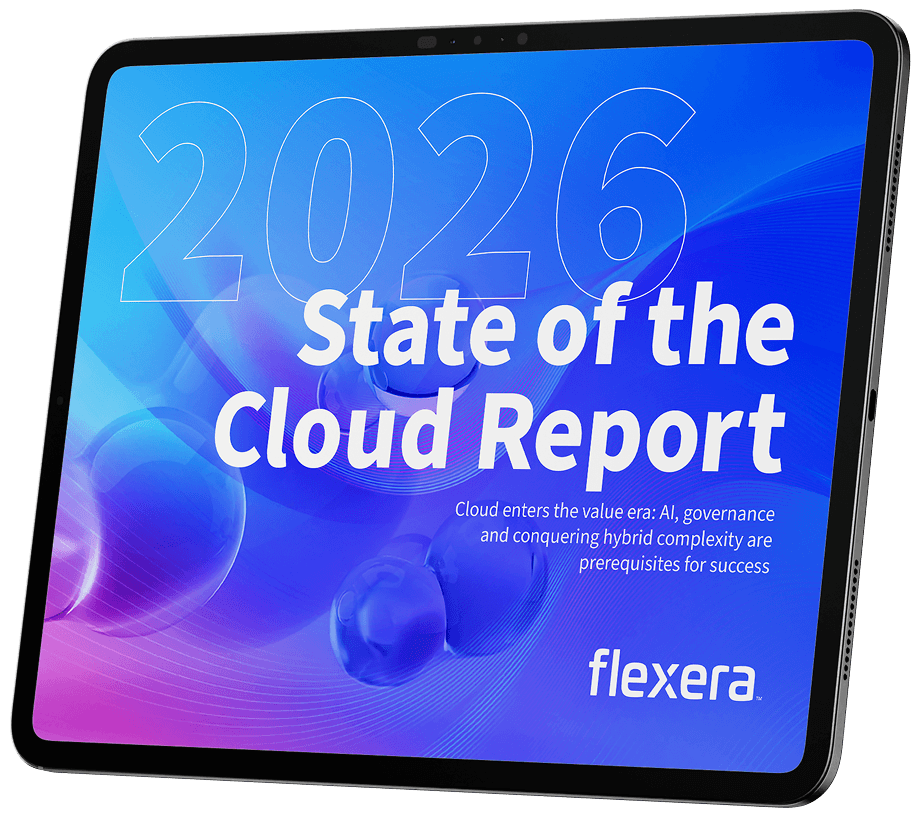
Cloud is entering the value era—but the journey isn’t finished.
49%
of teams now measure unit economics
64%
track value delivered to the business
29%
of cloud spend is still wasted
Why teams choose Flexera for workload optimization
- Recommendations from day one: Actionable recommendations start populating as soon as data is ingested, no lengthy setup before you see savings opportunities.
- Fits into how your teams already work: Integrations with Jira, ServiceNow, and Slack route recommendations and alerts into the tools engineering and FinOps already use, so optimization shapes itself to your workflows.
- Unified Autonomous Optimization: Workload changes and commitment coverage inform one another in a single closed-loop system, so savings and resource utilization improve together.
- Full spectrum of autonomy in one portfolio: Choose recommendations, policy-driven automation, or fully autonomous action, and adopt automation at your own pace.
- Engineering keeps control: Performance and reliability requirements govern what automation is allowed to do.
Get started
Put workload optimization into action
See where Flexera can help you reduce infrastructure waste, automate optimization, and protect workload performance.
Your workload optimization questions answered
Frequently asked questions
Flexera supports workload optimization across Kubernetes and containers, virtual machines, and data platforms including Databricks and Snowflake. Capabilities range from resource-level recommendations to autonomous rightsizing, scaling, workload placement, spot automation, and data cloud optimization.
Yes. Teams can begin with recommendations, require approval before actions are taken, or enable autonomous optimization for eligible workloads and actions. This allows engineering teams to adopt automation based on workload requirements and organizational readiness.
Optimization recommendations are not generated from a single fixed model. Flexera allows teams to understand and configure the criteria used to identify optimization opportunities, including utilization thresholds, analysis periods, and workload-specific requirements. By aligning recommendations with how engineering and FinOps teams evaluate resources, organizations can adopt optimization with greater confidence.
Flexera considers workload requirements and configured constraints when rightsizing, scaling, placing workloads, or selecting capacity. For spot instances, Flexera predicts interruptions and replaces at-risk capacity before workloads are affected.
Workload optimization and rate optimization operate as a coordinated system. As application demand changes, workload actions such as rightsizing, scaling, and placement automatically influence commitment decisions. Likewise, commitment changes influence how workloads are optimized. Unified Autonomous Optimization continuously evaluates both sides together, ensuring infrastructure and commitments remain aligned as conditions change.
Rightsizing involves analyzing the actual performance utilization (like CPU and memory) of a cloud instance over time to determine if it is over-provisioned. Flexera then recommends a smaller, more cost-effective instance type that can handle the workload without impacting performance.
Resources