Case Study
Flexera cuts internal Databricks spend by 17% with Data Cloud Optimization
Featured results
- 17% reduction in Databricks spend in the next billing cycle
- Zero adverse effects on production workloads
- 50+ recommendations implemented across hundreds of resources
- Savings realized within 30 days
At a glance
Organization: Flexera
Industry: High-tech software
Location: Chicago, IL
Company size: Enterprise (2,500+ employees)
Use cases: FinOps, AI Cost Management, SaaS Management, IT Asset Management
Solution: Flexera One Data Cloud Optimization (DCO)
As a leader in cloud financial management, Flexera has built a mature FinOps practice with forecasting, chargeback and real-time cost visibility already embedded in its operations. But despite these capabilities, Flexera encountered an unexpected challenge when Databricks costs began outpacing every other area of its cloud estate. As the company migrated key workloads to the platform, spending increased faster than anywhere else in its environment. The team could track total spend but lacked the granular visibility needed to understand what was driving it.
To regain control, Flexera applied its new Data Cloud Optimization (DCO) solution to its Databricks environment. DCO identified recommendations across hundreds of resources and provided relevant context behind each recommendation. Just as important, the recommendations were conservative enough that, after validating in a staging environment, engineering teams felt confident implementing over 50 of the recommendations in live production environments.
In just 30 days, Databricks spend decreased by 17%, with no adverse effects and no disruption to any project already underway.
The longer-term outcome was operational. DCO helped extend Flexera’s FinOps practice to data clouds by giving both engineering and FinOps teams direct access to recommendations and insights. Data engineers and developers now review DCO’s recommendations against both production and non-production environments on a two-week sprint cadence, making Databricks cost optimization a standing part of Flexera's software development lifecycle.

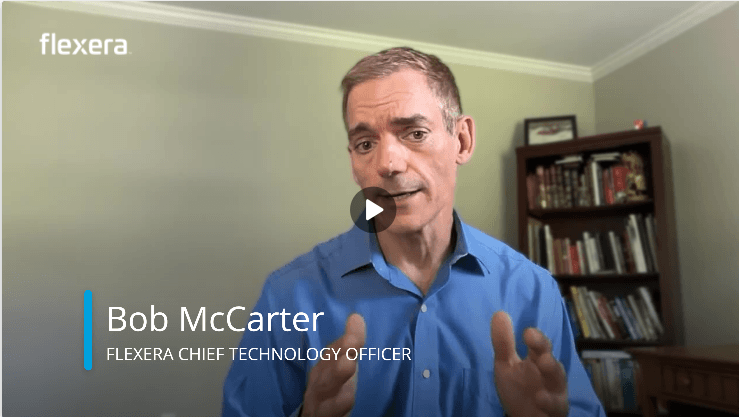
“Data Cloud Optimization has increased the organization's confidence from finance to engineering. The IT finance department now knows that we are using our Databricks dollars to deliver value efficiently. And with our engineers, it’s not just the FinOps team passing recommendations over the wall; both groups access and work from the same recommendations.”

Bob McCarter Chief Technology Officer, Flexera
The challenge
A growing cost problem inside a mature FinOps practice
Flexera's FinOps practice was well established long before Databricks became a cost question. It is cross-functional, operates in real time, and delivers visibility, forecasting, and chargeback across the business. On AWS, Microsoft Azure and Google Cloud, that discipline had been honed for over a decade. Subsequently, spend was well understood, increases were incremental, and bills were broadly in line with expectations.
Databricks behaved differently, and Bob McCarter, Flexera's Chief Technology Officer, traces the reason back to the architecture itself. The lakehouse model makes it straightforward to pull in large volumes of data and analyze them quickly, which is precisely why Flexera had been building on it for years across products serving customers. But that convenience carried a cost profile of its own.
As new workloads were migrated onto the platform, the curve steepened sharply. Running its normal monthly cadence of actuals against budget, the team saw anomalous cost spikes emerge, and the forecast showed a trend heading toward significant budget overrun.
The gap had less to do with awareness and more to do with resolution. Databricks-native tooling gave Flexera top-line cost and, at best, visibility down to the warehouse level. It didn’t explain what was happening beneath that. And while the FinOps team was strong, its members were not Databricks specialists, which was a meaningful constraint when the system being tuned is a complex data lake running live production workloads.
“Databricks makes it really easy to pull in large amounts of data and do analysis. While that's very convenient, it comes at a cost. We were seeing costs rise faster in Databricks than we've seen in other places.”
Bob McCarter Chief Technology Officer, Flexera
“We knew the total cost. What we didn't know was exactly where the cost was.”
Bob McCarter Chief Technology Officer, Flexera
The solution
Giving engineering teams the visibility to act
Flexera didn’t need another dashboard. The FinOps team already knew Databricks costs were rising; what it lacked was resource-level visibility to identify exactly where spending was occurring and what actions would reduce it safely.
When Flexera deployed DCO in its Databricks environment, McCarter established three requirements. Any recommendation had to be safe for production workloads. It couldn’t slow development teams or delay projects. And it had to drive optimization, not simply report on costs.
DCO delivered resource-level visibility across clusters, warehouses, products, and teams. More importantly, it translated that visibility into prioritized optimization recommendations, complete with the rationale behind each one.
That context proved critical. Engineering teams understood their environment better than anyone and were understandably cautious about making changes to production systems. By showing not only what to change but why, DCO helped establish confidence that the recommendations were conservative, practical and designed to avoid unintended consequences.
Making optimization part of every sprint
The most lasting change wasn’t the initial cost reduction, but the integration of cost management into engineering workflows. At first, FinOps used DCO to identify opportunities and share recommendations with engineering teams. Over time, that model evolved. Now, engineering teams have made it part of their own workflow.
Every two weeks, data engineers and developers review DCO recommendations alongside planned changes in both production and non-production environments. Cost optimization for Databricks is now built into the sprint cycle rather than treated as a separate initiative. The FinOps practice has been successfully extended to data cloud costs.

“In reviewing the DCO recommendations and the rationale for them, they realized these are pretty conservative, do-no-harm recommendations. That's what kicked it off. If we didn't have that kind of understanding, I think we could have faced resistance.”
Bob McCarter Chief Technology Officer, Flexera
“The recommendations we were getting from Databricks tended to be more architectural: how you should configure the system, how you should build things for these workloads. We weren't getting the kind of operational, day-to-day recommendations that Flexera One Data Cloud Optimization gave us.”
Bob McCarter Chief Technology Officer, Flexera
The result
17% lower spend in the next billing cycle
Flexera implemented DCO against its Databricks environment in late June 2026. Comparing the June spend with July spend, the first complete cycle following implementation, Databricks spend fell by 17%.
The reduction happened faster than McCarter expected. While he wasn't surprised that optimization opportunities existed, how much value the team uncovered and how quickly those savings materialized was eye-opening.
Just as important is what didn’t happen: Teams implemented DCO recommendations in live production environments without adverse effects, and no Databricks projects had to be paused or slowed to bring spend under control.
Giving teams ownership of cloud spend
The savings were significant. The larger impact was operational. McCarter summarizes the change in three areas: visibility, accountability and optimization. Visibility jumped from top-line and warehouse-level cost to granular, resource-level insight, along with an assessment of whether those resources were configured for the way they were actually being used.
Accountability changed even more. Traditional budgeting cycles often separate decisions from feedback by weeks or months. By shortening that feedback loop and connecting recommendations to specific actions, DCO helped teams understand the cost impact of their decisions much sooner. The result was greater confidence across both engineering and finance that Databricks investments were being used efficiently and aligned to business value.
“The surprise to me, frankly, was just how much savings we were able to achieve in such a short period of time and how we've been able to continue to see savings.”
Bob McCarter Chief Technology Officer, Flexera
“If you're accountable for something, you need to have the tools and the authority and the visibility to be able to live into that accountability. It really strengthened the accountability in a material way.”
Bob McCarter Chief Technology Officer, Flexera
Key takeaways from Flexera’s experience
Build trust with explainable recommendations
Teams are more likely to act when they understand the reasoning behind a recommendation, especially in production environments.
Make optimization part of the workflow
Cost optimization delivers the greatest value when it’s integrated into regular development cycles rather than treated as a one-time project.
Support accountability with visibility
Teams need the tools, authority and insight to influence spend and improve outcomes.
Additional Cases
The latest success stories from our customers
Next steps
Make smarter, data-driven decisions with Flexera One and the
Technology Intelligence Platform