Container Optimization
Take control of Kubernetes with Ocean, Flexera’s container optimization solution
Ocean, Flexera’s container optimization solution, offers optimal Kubernetes infrastructure scaling while solving Day 2 challenges with enterprise-grade serverless container automation. Built with powerful artificial intelligence (AI) and machine learning (ML) automation, Ocean ensures workloads have the right infrastructure and pod alignment, maintaining availability while fitting into your internal FinOps processes.
Recommended products
Kubernetes infrastructure optimization with Flexera



Enterprise-grade automation. Built for day 2.
Automating continuous optimization
Continuous cost optimization
Optimization and control at scale
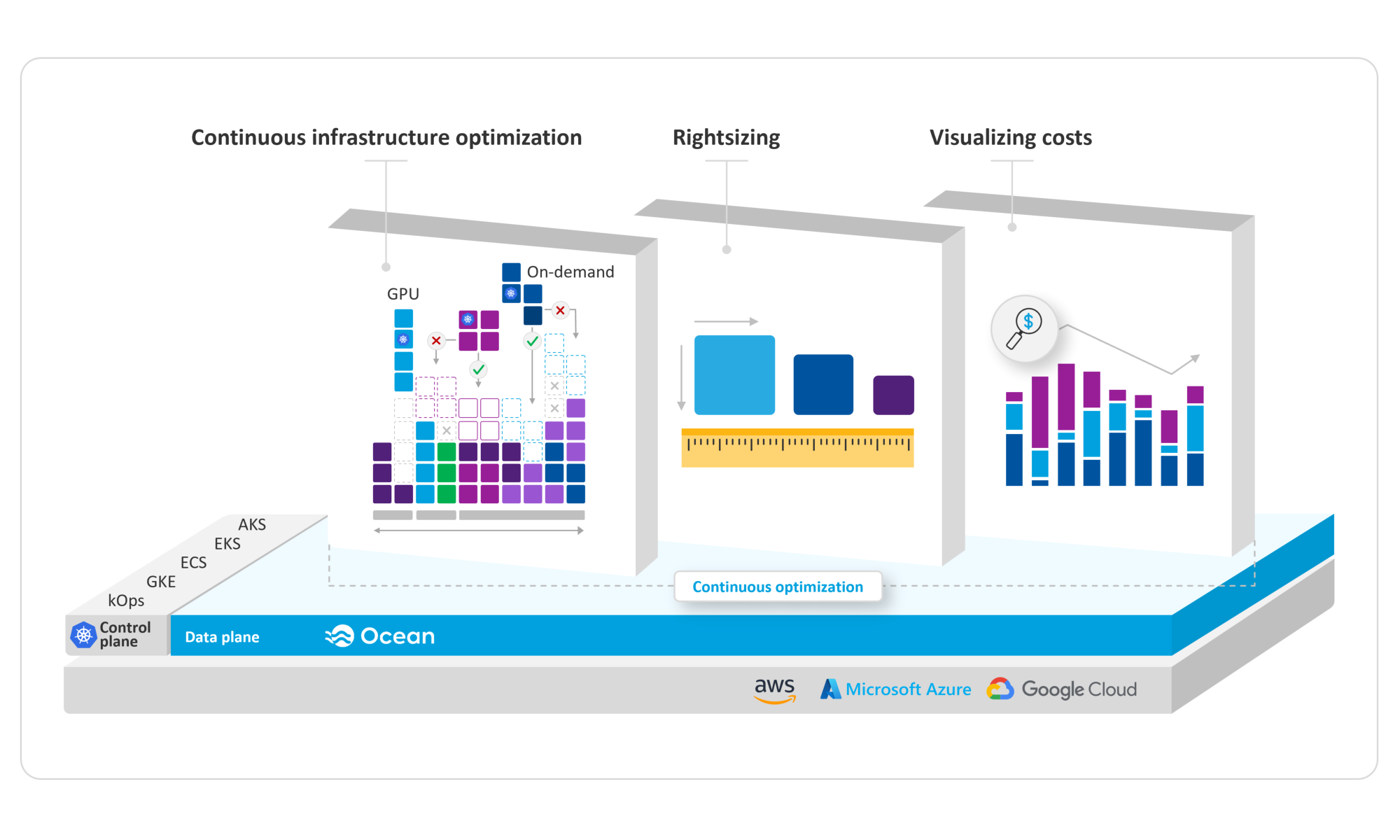
Kubernetes infrastructure automation
Kubernetes infrastructure automation
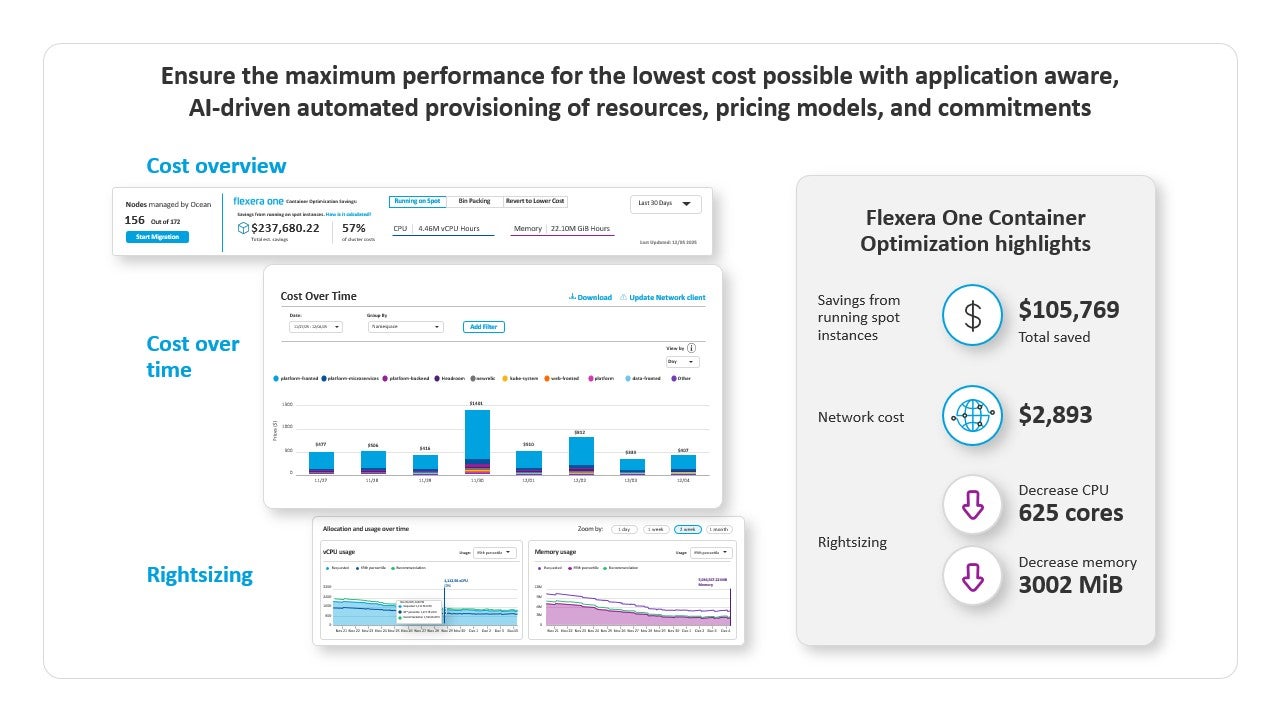
Achieve maximum performance at the lowest possible cost with application-aware AI/ML-driven provisioning and optimization of your infrastructure. Ensure infrastructure needs align with your internal FinOps practices, ensuring accurate Chargeback, Cost Attribution, and full cloud commitment utilization.
Remain high-performing
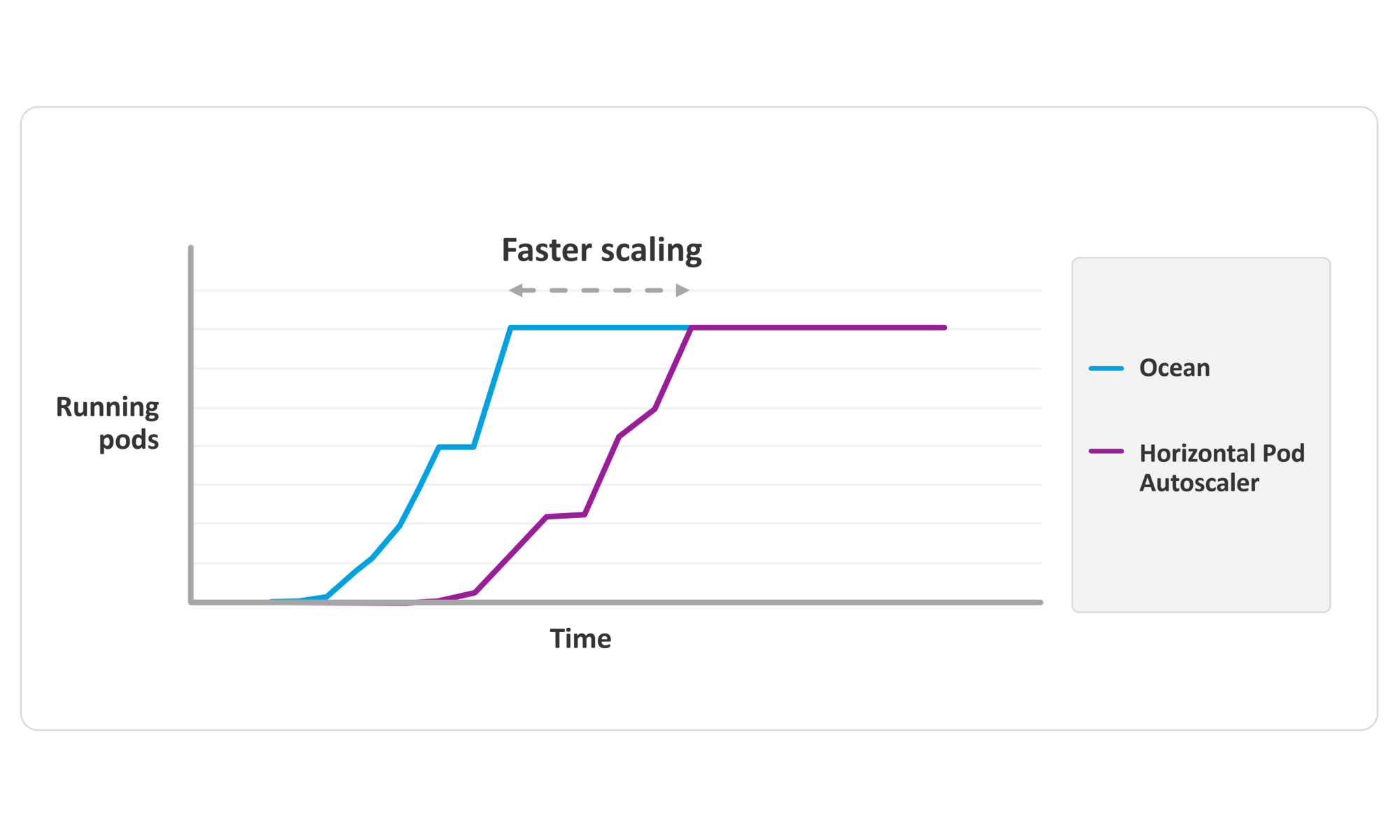
Fastest cluster autoscaling
Your infrastructure adapts almost instantly to workload-driven changes using Ocean’s event-based controller, ensuring your infrastructure remains high-performing based on your workload’s specific features.
Maximize utilization
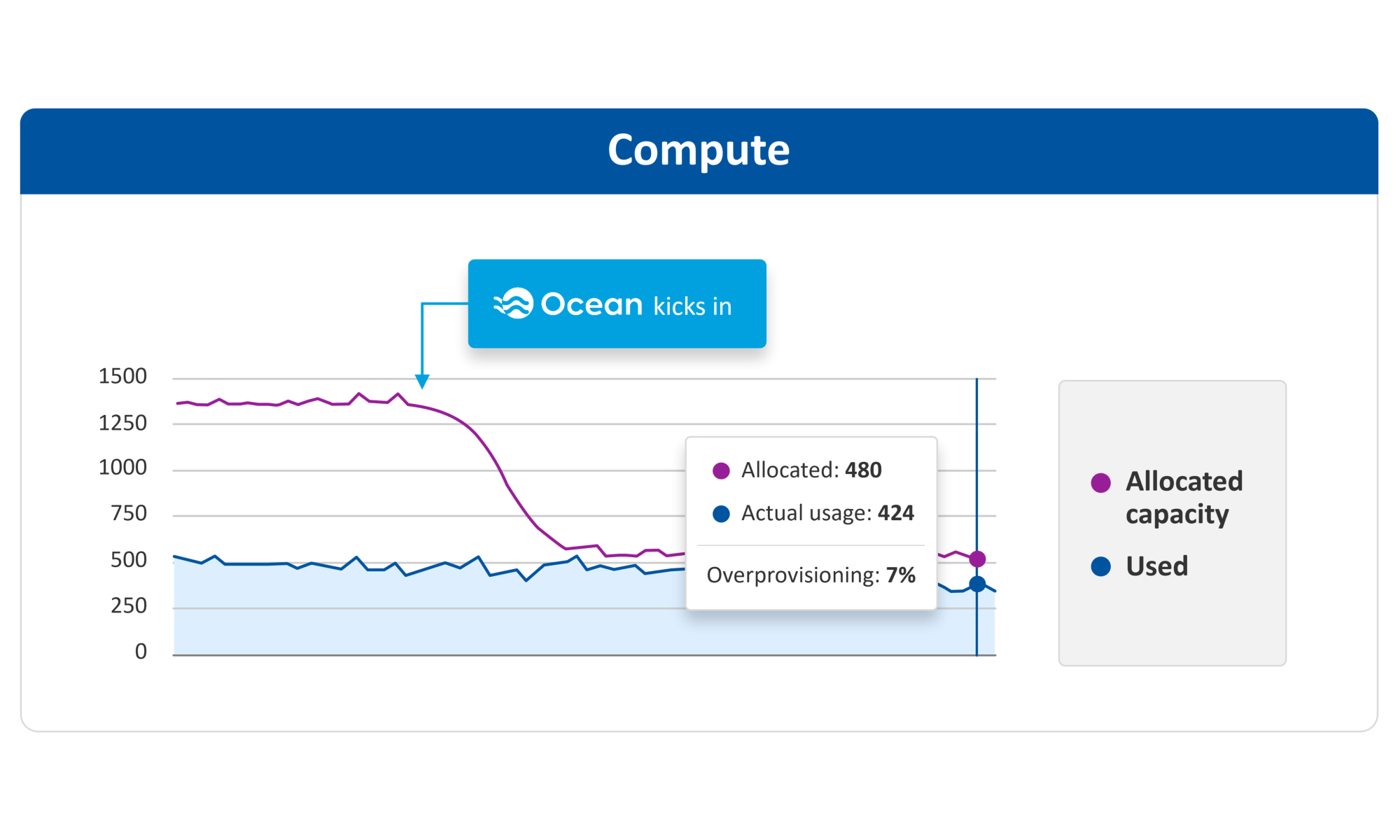
The automated infrastructure you need, when you need it
Gone are the days of manually scaling events by having your SREs and DevOps teams guessing metrics. Maximize utilization and improve efficiency with tailored recommendations and fully automated rightsizing of compute resources in your environment.
Automate containerized applications
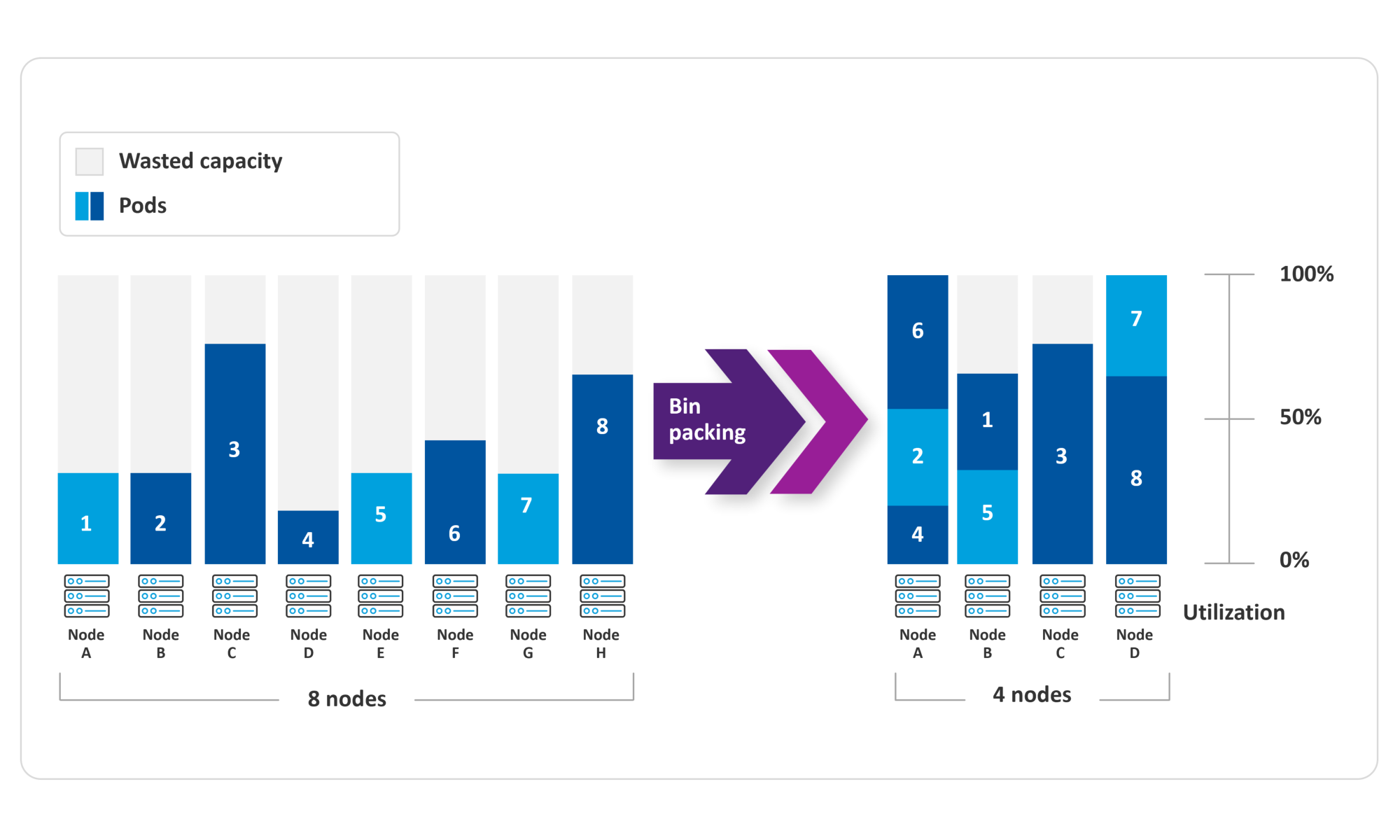
Nonstop bin-packing
Selecting the right resources for cloud-based workloads takes time, trial and error. Flexera’s Ocean automates your containerized workloads to ensure optimal resource utilization, minimizes wasted capacity while automating headroom operations for your cluster(s) to ensure availability.
Improve efficiency
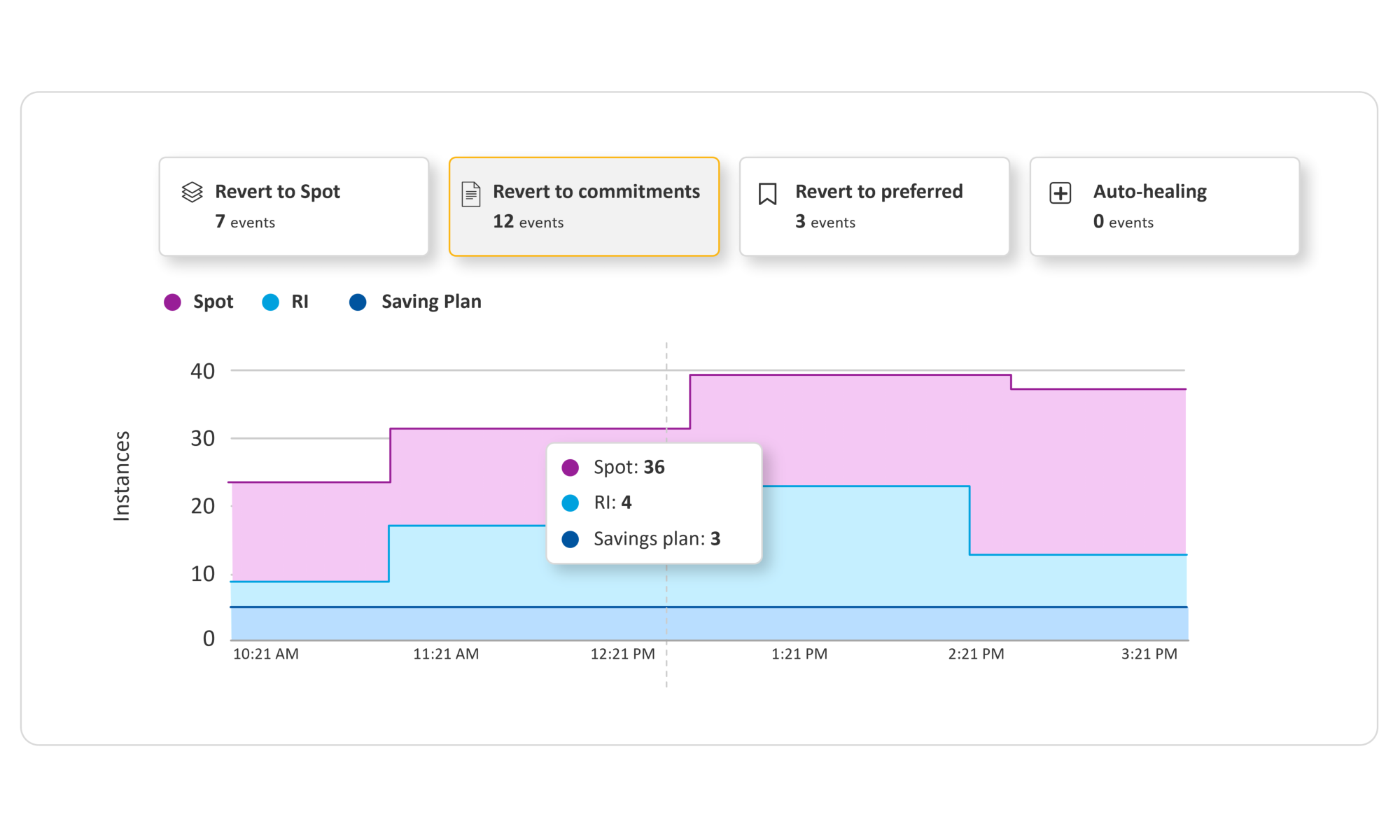
Maximize cloud commitment utilization
You have invested time, effort, and money in your commitment strategy. Ensure your commitments are fully utilized before provisioning on-demand or preemptible instances.
More than just compute
Built for FinOps
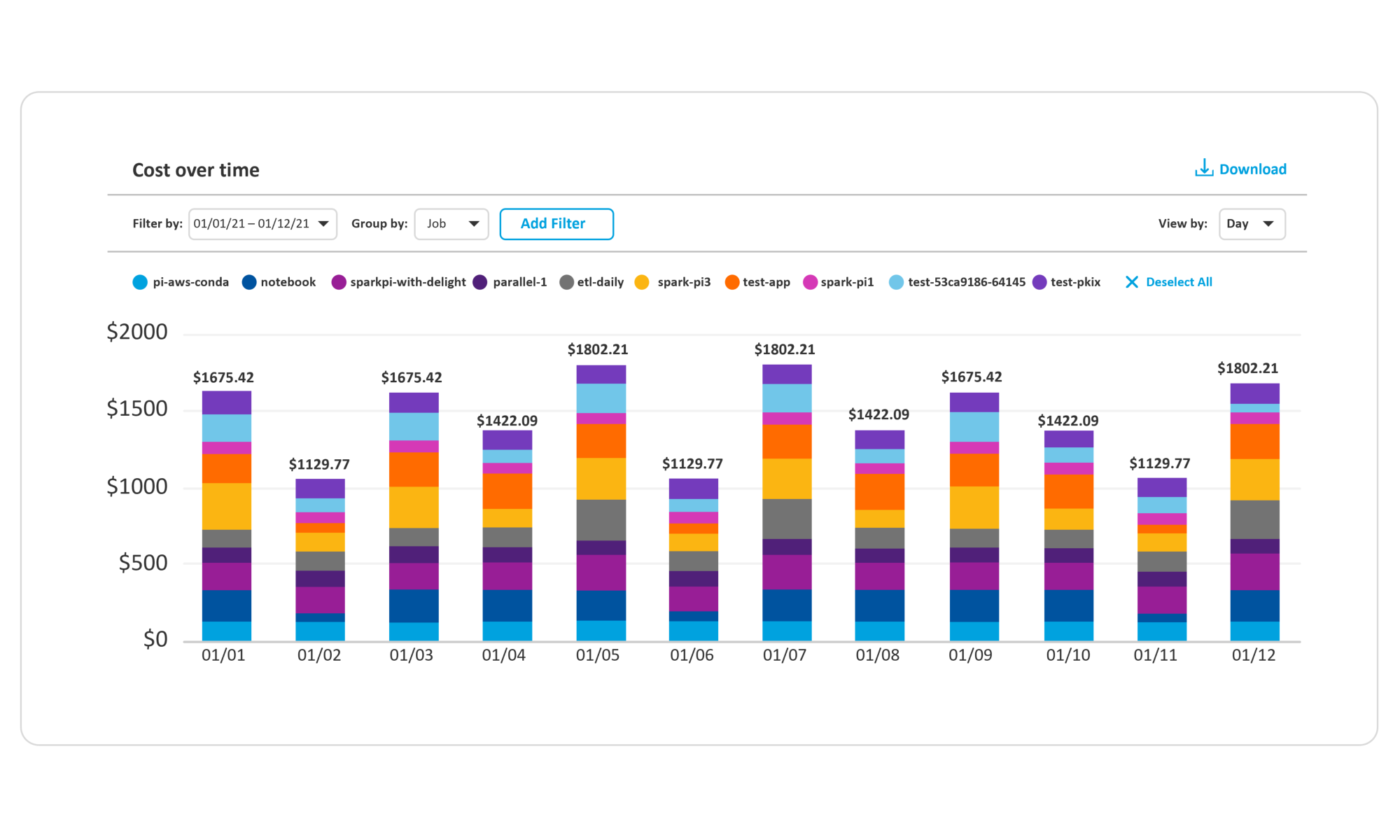
Kubernetes infrastructure is more than just compute. Designing for performance requires a comprehensive view of your cloud environments. Ocean ensures visibility into compute, storage, and network resources, providing a complete, FinOps principles-aligned perspective of your environments and enabling chargeback without the need for hours of tagging efforts.
Smooth integration
Built to run your way
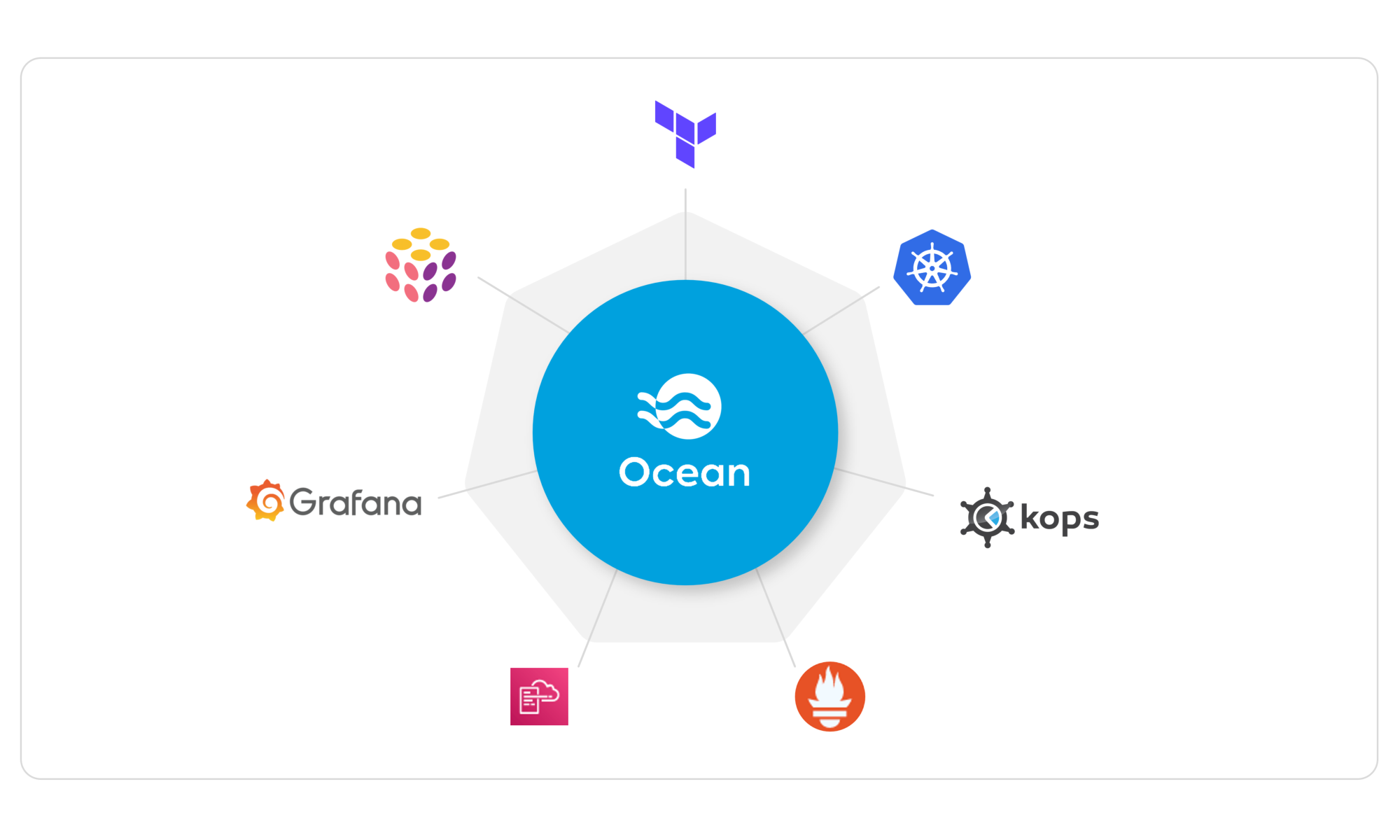
DevOps and platform engineering are complex tasks. The last thing you need is another tool attempting to alter existing workflows. Ocean integrates smoothly into your organization. It offers integrations with infrastructure-as-code tools and control planes like kOps and eksctl, available through the console or API access.
Recognized leadership
Ocean outperforms in GigaOm Radar for Kubernetes Management
Ocean was recognized as the sole leader and outperformer in the 2024 GigaOm Radar for Kubernetes Resource Management.
The Flexera difference
Enable FinOps and DevOps collaboration
One of the top challenges repeatedly cited by FinOps practitioners is empowering engineers to act on cost optimization recommendations. Container Optimization dynamically optimizes container infrastructure, reducing costs and manual effort, and allowing engineers to focus on their primary responsibilities.
Drive FinOps
- Optimized scaling – proactively identifies underutilized nodes and bin-packs their pods more efficiently to reduce cluster costs
- Rightsizing – continuously monitors CPU, memory, and disk space utilization, and can automatically downsize underused machines or display recommendations
- Commitments and spot instances – checks for available discounted resources – such as spot virtual machines, and instances covered by Reserved Instances or Savings Plans – to minimize the usage of pricey on-demand compute
- VM type management - launches the most cost-effective machine family based on the specifications and actual needs of scheduled workloads
- Cluster orientation – minimizes spend on non-critical clusters, optimizing each cluster for cost, performance, or an elegant balance of both
- Cost analysis – provides granular breakdown of compute, storage, and network costs, enabling accurate chargeback without extensive resource tagging
Automate DevOps
- Virtual node groups (VNGs)– supports multiple infrastructure configurations (e.g., multiple operating systems or significantly different autoscaling and security policies), so multiple applications can run on the same cluster, which greatly reduces infrastructure complexity and sprawl
- Instant, event-driven autoscaling – responds in real-time to workload changes with 60% faster pod autoscaling than polling-based autoscalers
- Optimized headroom – intelligent algorithm applies dynamic headroom as a first-line response to scaling events, minimizing overprovisioning
- One-click cluster rolls – aligns cluster infrastructure with new images, user data, or security groups in batched rollouts without detaching nodes in the cluster
- K8s version auto-updates – automatically updates EKS AMI, AKS, or GKE control plane versions to help maintain the overall security and performance of your clusters
- IaC and API compatible – supports infrastructure configuration via Terraform, kOps, eksctl, CloudFormation, or via our API
- View in Grafana & Prometheus – can display the Container Optimization dashboard in Grafana or Prometheus for real-time anomaly detection
Flexera integrates with your top technology vendors

How it works
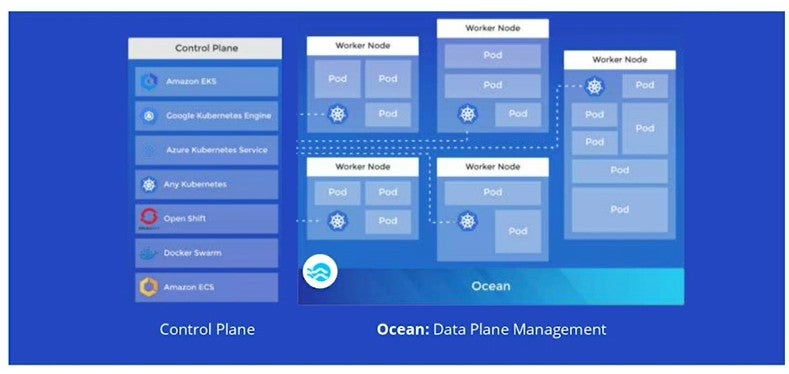
- Ocean controller pod resides within the Kubernetes cluster, collects metrics and events, and executes cluster operations on behalf of the Ocean SaaS platform.
- A one-way secured link pushes events to the Ocean SaaS for business logic and capacity scaling activities.
- Ocean's SaaS layer then builds cluster topology. It applies cost and performance optimization algorithms to predict resource needs, autoscale, and optimize instances across on-demand, commitment-covered, or spot VMs.

Flexera One helped us implement optimization across the board... We were able to migrate most of our workloads to spot instances and therefore save greatly on our OpEx. Ocean brought our costs down by about 70%.

Mattheiu Antoine Staff Systems Development Engineer, JUMO

Thanks to Flexera One, cost optimization is now built into how we scale and manage our underlying infrastructure. Naturally, these costs savings are invested back in the business.
Frequently asked questions
Cloud-native workloads are hard to optimize due to the nature of distributed microservices; There are just so many moving parts! Multiple layers of abstraction on top of the actual servers, overwhelming amounts of logs, tricky performance vs. cost trade-offs, easy-to-make configuration mistakes, and a fragmented ecosystem of tools that don't always integrate seamlessly makes container optimization inhumanely complex – even for a highly experienced DevOps team.
Ocean automates nearly all container / Kubernetes scaling, optimization, and maintenance tasks, to reduce human overhead and errors. With Container Optimization, you can easily separate required headroom from idle resources that can be removed. It also offers granular analytics for compute, storage, and network costs for accurate allocation, showback, and chargeback.
Most waste comes from over-provisioning CPU/memory. To reduce overprovisioning, Ocean automatically rightsizes CPU and memory requests and limits according to actual usage, ensuring workloads are performant on smaller, more cost-efficient nodes.
Ocean also optimizes pod scheduling by bin packing, making sure each server’s capacity is fully used, allowing the same pods to run on fewer nodes.
Another culprit of waste is idle compute outside of business hours, especially in Development and QA clusters. Ocean’s shutdown scheduler turns the workload off during nights and weekends.
Idle disk space can also result in unnecessary costs. Ocean applies dynamic storage volumes to resize underused PVCs (Persistent Volume Claims).
Oversized container images also add usage and cost. Ocean’s controller uses a minimal container image, so it does not significantly increase the footprint or resource consumption within your Kubernetes cluster.
Ocean seamlessly integrates into your DevOps engineers’ current tooling, so they can manage it without ever accessing its UI. Autoscaling policies can be coded through Terraform or CloudFormation. It integrates with both Vertical Pod Autoscaler(VPA) and Horizontal Pod Autoscaler(HPA), reconciling their frequent conflicts. And it works with Grafana or Prometheus to continuously identify underused workloads and obsolete Namespaces, ConfigMaps, and PVCs (Persistent Volume Claims).
Flexera’s Ocean centers on a small controller (pod) that sits in your protected cluster(s). By monitoring near-real time performance across the entire cluster, we can deliver AI/ML-powered optimization recommendations that manage infrastructure, pod placement, network performance, headroomand more. Ocean can automate the execution of balancing of your workloads to ensure durability and availability, freeing up time and resources for your DevOps and Platform Engineering teams to focus on more pressing issues than infrastructure management
Yes! Flexera provides enterprise-grade durability with award-winning 24x7x365 global support and is backed by a 99.999% service availability guarantee. For more details on the SLA and SLOs for Ocean, please get in touch with your account team.
Flexera’s Ocean is cloud agnostic by design and works seamlessly with the following popular managed container services:
- AWS (Amazon Elastic Kubernetes Service (EKS) and Amazon Elastic Container Service (ECS))
- Microsoft Azure (Azure Kubernetes Service (AKS))
- Google Cloud (Google Kubernetes Engine (GKE))
Absolutely! Ocean integrates with popular CI/CD pipelines and infrastructure-as-code tools and embraces DevOps workflows without disrupting existing processes. This ensures smooth automation and optimization within your current development ecosystem.
Ocean bridges both FinOps and CloudOps. It aligns with the FinOps Foundation framework for cloud cost governance while providing DevOps and platform teams with automated resource optimization cost management to overcome operational bottlenecks right out of the box.
Yes. Ocean is available in both the AWS Marketplace and Microsoft Azure Marketplaces. In many cases, purchases via marketplace transactions can be applied toward retiring financial commitments to your cloud service provider.
(Please confirm eligibility with your Flexera Account Team, as certain restrictions may apply)
In Short? No. They’re built with the same principles but do fundamentally different things. Ocean is built to optimize and enhance Kubernetes workloads, while Virtual Machine Optimization is built for traditional Virtual Machine server-based workloads. There’a crossover with the behind-the-scenes recommendations, but they are different products.
Resources
Boost your knowledge of FinOps for Kubernetes
Get my free savings analysis
Secure read-only access. Metadata only—no changes to your production environment