
FinOps X 2026 has wrapped up and this recap will help you catch up on what happened throughout the session. The headline takeaway: AI spend has officially jumped from an engineering-level concern to a boardroom-level one. This year’s event ran four days (June 8 to 11) at the Marriott Marquis San Diego Marina, pulled in more than 2,500 practitioners and packed in 260+ speakers across keynotes, breakout sessions, chalk talk workshops and lightning talks.
This FinOps X 2026 recap breaks down every major announcement and session from the conference. We’re right in the middle of this story too. Flexera and our ProsperOps team brought four of the biggest product announcements to the table, which we cover in the Day 2 section.
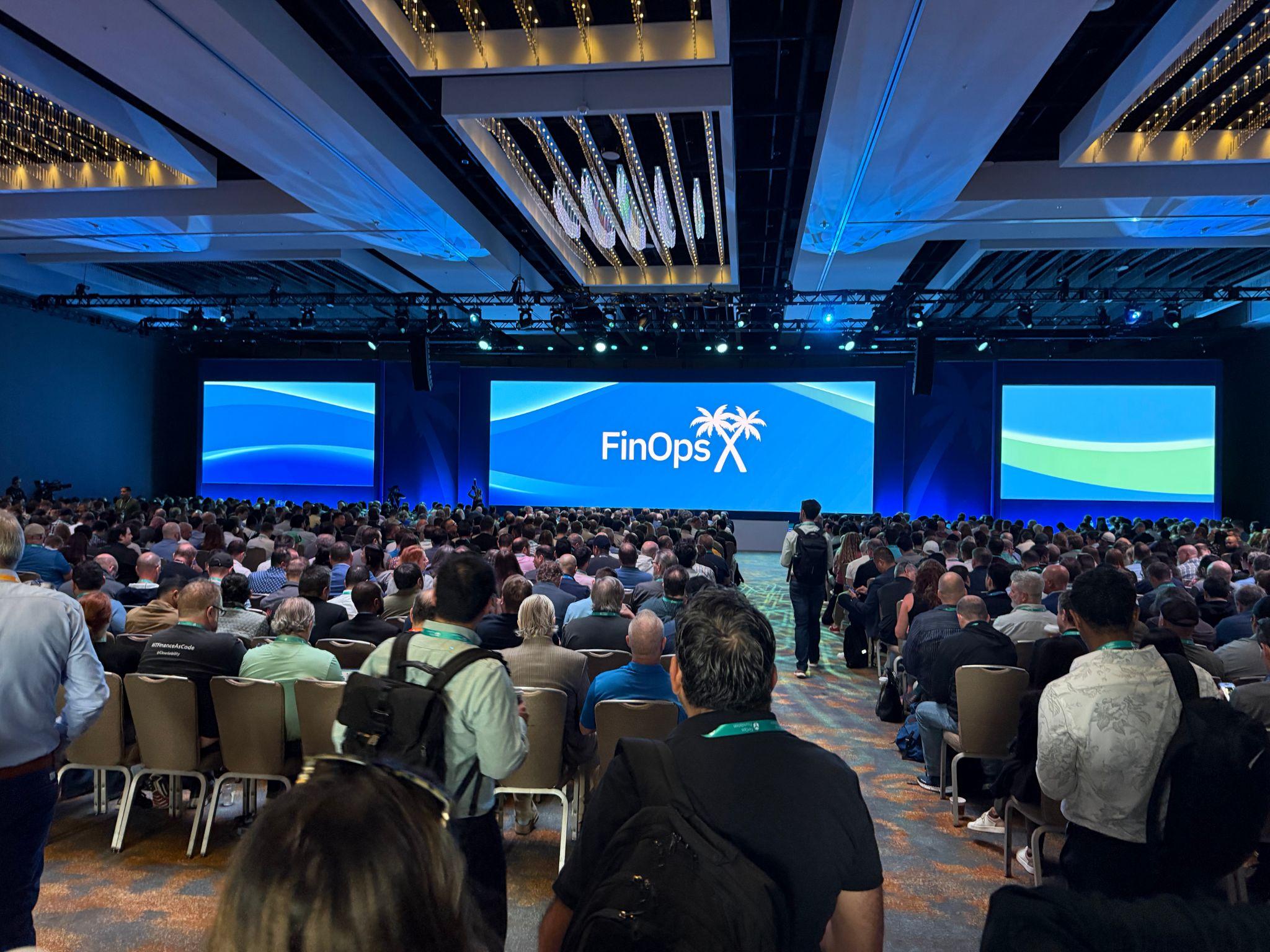
The FinOps X 2026 keynote stage in San Diego
Overview: what was announced at FinOps X
Before we get into detail, here’s a quick summary of everything that came out of FinOps X 2026.
| FinOps X 2026 Announcement | From | Status | Summary |
| TokenomicsFoundation | Linux Foundation, working with the FinOps Foundation | Intent to launch announced June 3, 2026 | A new sister foundation building open standards, benchmarks and best practices for AI token economics |
| FOCUS 1.4 | FinOps Foundation | Ratified June 4, 2026 | Adds invoice reconciliation, deeper commitment data and stricter data-integrity rules to the open billing spec |
| FOCUS 1.5 roadmap | FinOps Foundation | Previewed, targeted for around year-end 2026 | Brings token and model identity, plus a new Price Sheet dataset, into the spec |
| FOCUS Certified Conformant program | FinOps Foundation | Open for data generators | A conformance badge for billing-data providers whose exports match the FOCUS spec |
| FOCUS MCP Server | FinOps Foundation | Available | Lets AI agents pull the current FOCUS spec on demand instead of static documentation |
| AI Value certification | FinOps Foundation | Refreshed and live | An updated, rebranded successor to the original FinOps for AI certification |
| Technology Value certification | FinOps Foundation | New, available now | Covers public cloud, SaaS, data cloud platforms and data center spend in one credential |
| AWS FinOps Agent | AWS | Public preview | An agentic assistant for cost Q&A, anomaly investigationand recurring reporting |
| AWS Target Coverage for Savings Plans | AWS | Generally available | Set coverage targets directly in the AWS console |
| AWS Automatic Cost and Forecast Explanations | AWS | Generally available | One-click root cause analysis on cost spikes |
| AWS Additional Idle Resource Recommendations | AWS | Generally available | More than twice as many idle-resource recommendations surfaced for cleanup |
| AWS Granular Cost Attribution for Amazon Bedrock | AWS | Generally available | Per-app, per-agent, per-user cost attribution on Bedrock calls |
| AWS Credit Level Sharing | AWS | Generally available | Finer control over how commitment credits get shared across accounts |
| AWS Improved Credit Transparency | AWS | Generally available | A dedicated console page tracking every credit and where it landed |
| AWS State of Cost Efficiency Report | AWS | Published | A benchmarking report built on AWS’s Cost Efficiency metric, drawn from more than 71,000 customers |
| Google Cloud Spend Caps | Google Cloud | Private preview since April 2026 | Automated, non-destructive spend ceilings for AI Studio, the Gemini Enterprise Agent Platform, Cloud Run and Maps |
| Google FinOps AI Explainability Agent | Google Cloud | Available | Explains AI cost drivers by model, modality and token direction |
| Google Cloud FOCUS 1.2 support | Google Cloud | Expanded | Adds billing account groups, commitment tracking and a refreshed export |
| Microsoft IQ | Microsoft | Generally available, announced at Build 2026 | A shared context layer for AI agents, made up of Work IQ, Fabric IQ, Foundry IQ and Web IQ |
| Microsoft Foundry model router and ROI measurement | Microsoft | Model router live; ROI measurement in private preview | Routes requests across an 11,000-plus model catalog and compares agent cost against business value |
| MCP-based cost guidance in developer tools | Microsoft | Available | Brings pricing and architecture guidance into the tools developers already use |
| Oracle FOCUS 1.3 support and cost intelligence layer | Oracle | Available | FOCUS export support plus APIs, MCP servers and natural-language query across cost data |
| IBM CloudabilityConversational Insights | IBM (Apptio) | Preview, broader availability expected later in 2026 | Plain-language Q&A layered on Cloudability |
| IBM Cloudability MCP Server | IBM (Apptio) | Available | Pre-digests Cloudability’s API surface for AI agents |
| Flexera FinOps Assist | Flexera | Early access | Natural-language cost Q&A inside Flexera One Cloud Cost Optimization |
| Flexera AI Spend Management platform | Flexera | Early access | Tracks AI cost across applications, agents, models, data platforms and compute |
| ProsperOps Unified Autonomous Rate and Workload Optimization | ProsperOps, a Flexera company | Generally available June 10, 2026 | Coordinates rate optimization and workload optimization as one system |
| ProsperOps+ | ProsperOps, a Flexera company | Available | An outcome-based pricing bundle pairing ProsperOpswith any Flexera FinOps product |
| Tokenomicon | Linux Foundation | Announced, flagship debuts June 2027 | A new conference dedicated to AI economics, with FinOps X continuing as a co-located track |
All key announcements from FinOps X 2026
The big theme
AI spend has officially moved from engineering-level concern to boardroom-level one. The cost of tokens is now the fastest-growing expense in enterprise tech budgets. The problem is that traditional FinOps tools aren’t equipped to handle this kind of tracking. This was the main theme at FinOps X 2026 and by the end of the conference, it led to a new foundation, a new conference, new certifications and a whole bunch of brand new product announcements from almost every major vendor on the floor.
Here’s the condensed version before we get into the day-by-day detail.
New foundations and conferences
The Tokenomics Foundation was announced as a new Linux Foundation program to build open standards for AI cost management, with Accenture, Booking.com, Flexera, Google Cloud, IBM, JPMorganChase, KPMG, Microsoft, Nebius, Oracle, Salesforce, SAPand ServiceNow as early supporters. Tokenomicon was announced as the successor event to FinOps X, with its flagship debut in San Diego, June 7-10, 2027.
FOCUS spec updates
- FOCUS 1.4, which was approved on June 4, invoice reconciliation, expanded commitment data and data integrity rules
- FOCUS 1.5 roadmap confirmed for December 2026, bringing native AI token tracking and a Price Sheet dataset.
- FinOps Certified FOCUS generator program launched; AWS and Nebius earned the first badges
New certifications
The AI Value certification (refreshed from the old FinOps for AI exam) and Technology Value certification (new, covers cloud, SaaS, data center and AI) are both live at learn.finops.org.
AI agents and standards
The FOCUS MCP Server went live, an endpoint that lets AI assistants pull the current FOCUS spec on demand instead of relying on static documentation that goes stale.
Vendor Highlights – AWS
Target Coverage for Savings Plans, Automatic Cost Explanations, Additional Idle Resource Recommendations, Granular Bedrock Attribution, Credit Level Sharing and Improved Credit Transparency all went generally available. AWS FinOps Agent is now in public preview, with natural language cost Q&A, anomaly investigation, and Jira/Slack integration
Vendor Highlights – Google Cloud
Spend Caps are in private preview, covering AI Studio, Gemini Enterprise Agent Platform, Cloud Run, Cloud Run Functions and Maps. The FinOps AI Explainability Agent is generally available, breaking down AI expenses by model, modality and token direction.
Vendor Highlights – Microsoft
- Microsoft IQ (generally available since Build 2026) combines Work IQ, Fabric IQ, Foundry IQ and Web IQ into a shared intelligence layer for agents
- The Microsoft Foundry model router is live across an 11,000-plus model catalog
- Agent ROI measurement in private preview
- Azure MCP Server embeds cost guidance directly into developer tools.
Vendor Highlights – Oracle
FOCUS 1.3 support is live, alongside a new cost intelligence layer with APIs, MCP servers and natural-language query capability.
Vendor Highlights – IBM Cloudability
Conversational Insights is in preview. The Cloudability MCP Server is available now.
Vendor Highlights – Flexera/ProsperOps
FinOps Assist is in early access. The Flexera AI Spend Management platform is in early access. Unified Autonomous Optimization from ProsperOps became generally available on June 10. ProsperOps+ is available now.
Now let’s get into the detail, day by day.
Day-by-day announcements and updates from FinOps X 2026
Featured speakers on day 1:
- J.R. Storment (FinOps Foundation)
- Frederik Pohl and Maida Nazifi (SAP)
- Mike Eisenstein (Accenture)
- Pooja Kumar (Prudential)
- Bradford Lyman (AWS)
- Courtney Totten (Shutterstock)
- Cyril Belikoff (Microsoft)
The wild west of AI, token economics and the evolving role of FinOps
This year’s FinOps X 2026 opened with a confession and a forecast.
The confession? AI spending is already out of control at a lot of organizations and the tools/frameworks we’ve been using to manage cloud costs don’t fully cover it.
The forecast? Global token consumption is projected to reach 120 quadrillion tokens per month by 2030, a 24x increase from today (Source: Goldman Sachs Research).
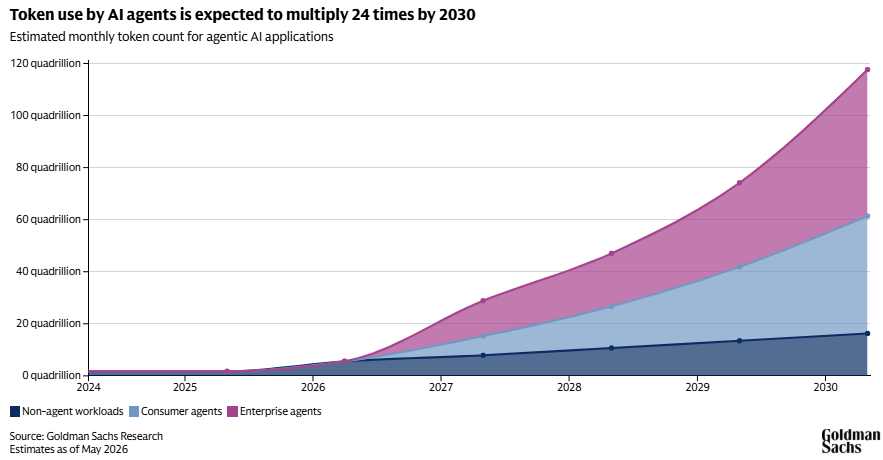
Estimated monthly token count for agentic AI applications (Source: Goldman Sachs Research)
Those two facts pretty much sum up the vibe of the entire Day 1. The day brought a new foundation, a preview of a new conference, seven AWS product launches, a major Microsoft platform update and a rethink of what FinOps is actually for. Here’s everything announced on Day 1.
How the token panic started
J.R. Storment, executive director of the FinOps Foundation, opened by framing tokens as the new atomic unit of technology spend, then spent a chunk of his time explaining why almost nobody is equipped to manage that unit yet.
He walked the crowd through the history of AI adoption, tracing a line from the first FinOps X in Austin (held just a few months before ChatGPT changed everything) to the present, mapping out four rough eras along the way.
Era 1 began in late 2022 when ChatGPT launched. AI went from a research concept to something millions of people actually used overnight.
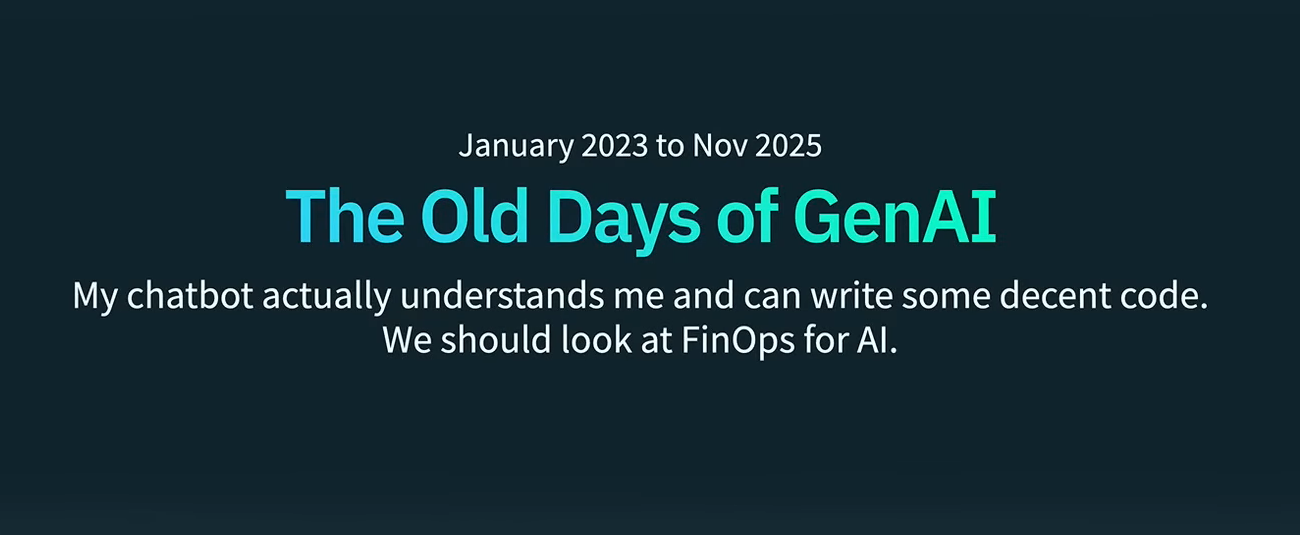
Era 1 of generative AI, presented by J.R. Storment at FinOps X 2026 (Source: FinOps X)
Era 2 started around November 2025. Major model providers shipped releases significant enough to shift industry perception. Code quality improved dramatically. Reasoning improved. Agentic use cases became credible at enterprise scale. Linus Torvalds, creator of the Linux kernel and a Linux Foundation Fellow (the same organization that houses the FinOps Foundation), had famously said AI was “fine, but don’t use it for anything important” earlier that year. By the time he returned from the holidays in January 2026 with a side project he’d built over the break, his views had shifted. That, Storment noted, was happening with millions of developers all over the world.
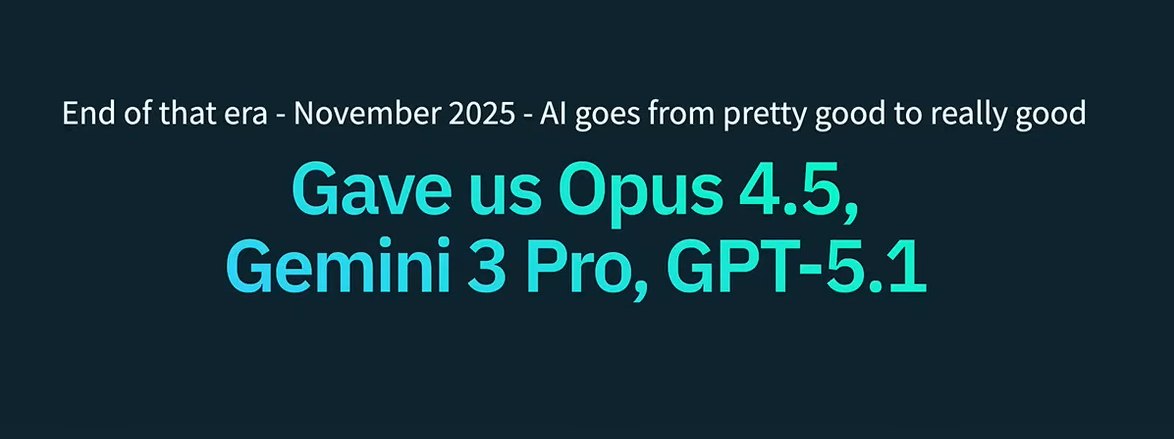
Era 2 of generative AI, presented by J.R. Storment at FinOps X 2026 (Source: FinOps X)
Era 3, running roughly from November 2025 through March 2026, was what Storment called the “good old days of AI“: an era of all-you-can-eat token subscriptions, token leaderboards and tokenmaxxing.
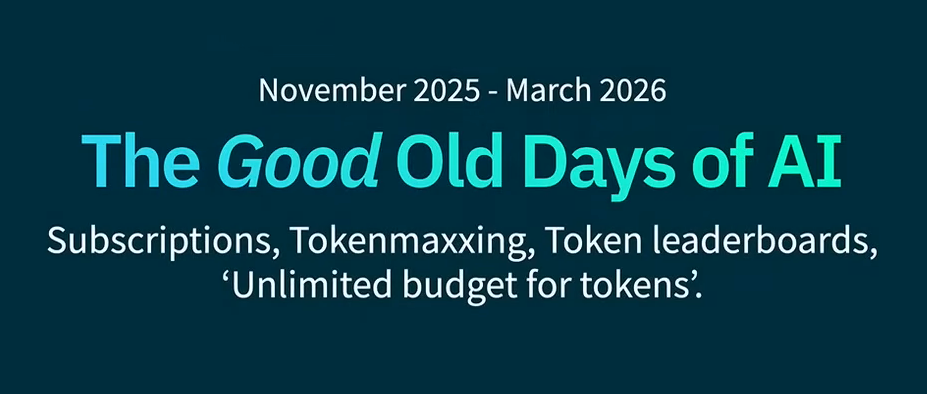
Era 3 of generative AI, presented by J.R. Storment at FinOps X 2026 (Source: FinOps X)
Era 4 began in April 2026 and Storment called it the “great token panic“. It started when Uber’s CTO publicly revealed the company had burned through its entire AI budget in just four months. Uber wasn’t alone. A wave of similar stories followed in April and May as organizations across industries faced the same reckoning.
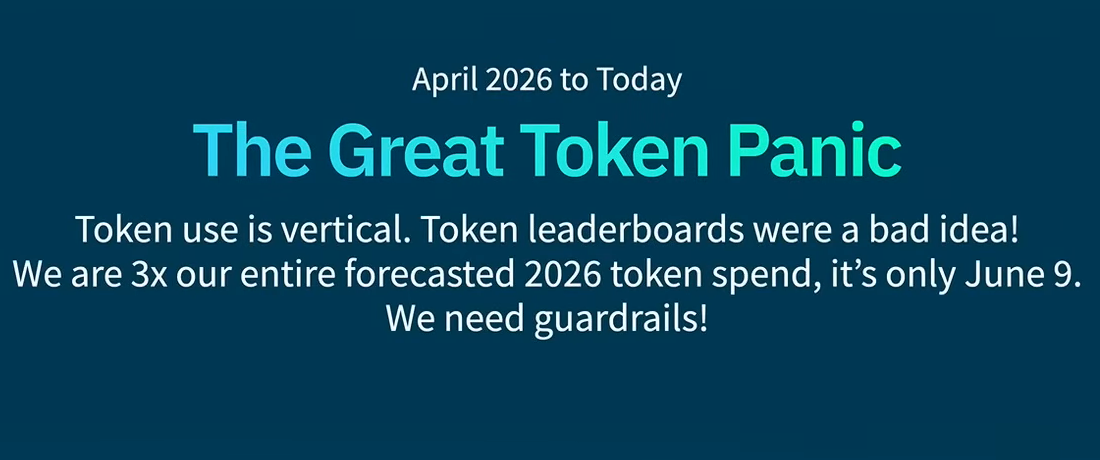
Era 4 of generative AI “the great token panic”, presented by J.R. Storment at FinOps X 2026 (Source: FinOps X)
Storment pointed to two factors driving the surge in token usage. The first is the expansion of context windows. Today’s large language models can handle millions of tokens in a single inference call, a huge jump from the tens of thousands they could handle 18 months ago. More context means more compute per inference and costs climb right along with it.
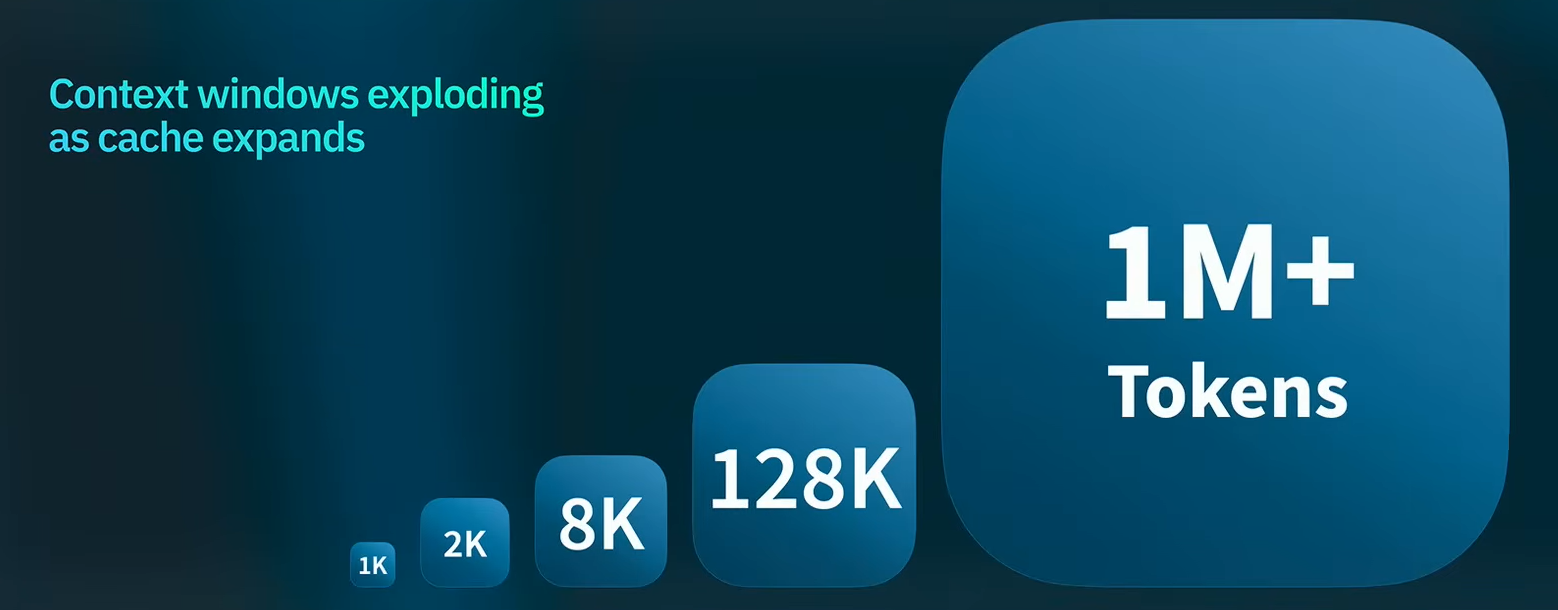
The rapid growth of LLM context windows, presented by J.R. Storment at FinOps X 2026 (Source: FinOps X)
The second factor is agentic AI. These agents are relentless and do not stop when something fails. They retry, loop, self-correct and chain model calls in ways that compound token consumption far beyond what any direct human interaction with a model produces.
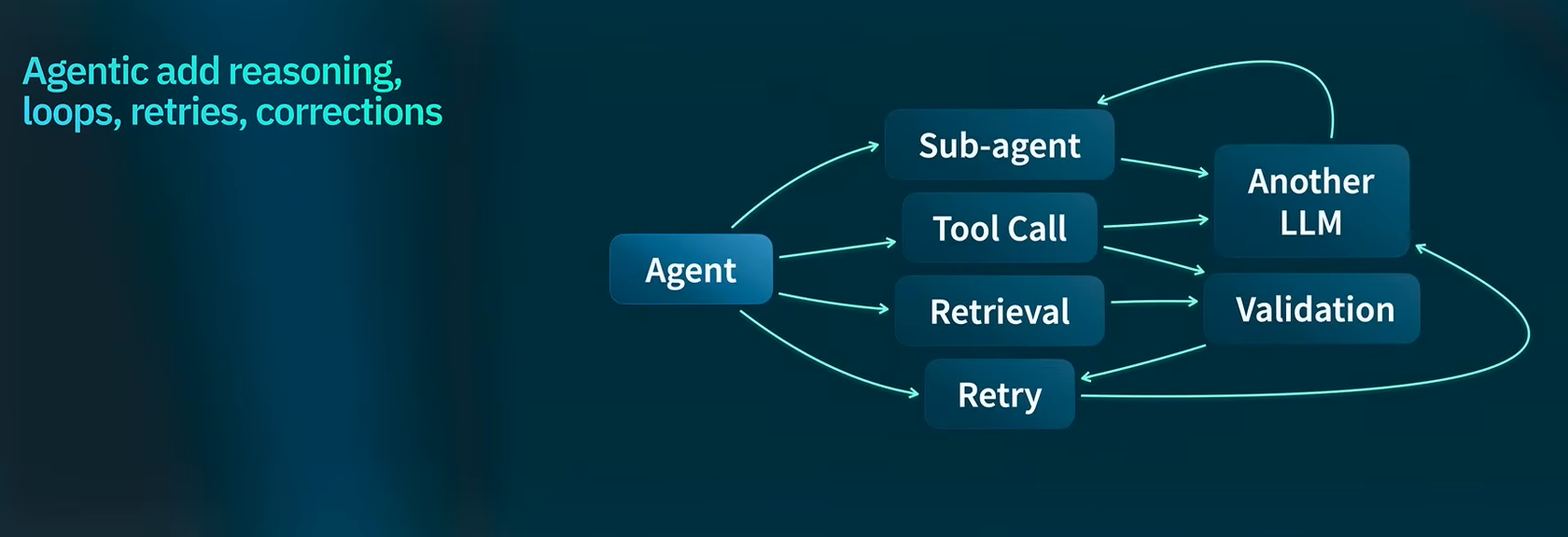
AI agent looping through retries and tool calls, presented by J.R. Storment at FinOps X 2026 (Source: FinOps X)
Storment also flagged something most teams miss entirely: the key-value (KV) cache, the mechanism models use to store previously computed attention data so they don’t recompute it on every turn of a conversation. At scale, KV cache management carries real compute and storage cost and those costs rarely show up on a standard bill.
He then discussed the present pricing issue for AI. He stated that the cost per token dropped dramatically between 2023 and late 2025. However, prices have been relatively stable since November 2025 due to global GPU supply restrictions, longer commitment terms and raw material costs. His thesis is that the assumption that token prices would continue to fall is no longer valid and any FinOps team that plans around it is budgeting for a market that no longer exists.
How tokenomics got its name
Storment’s answer to all of this is a new term: tokenomics. He boiled it down to three layers.
What is Tokenomics?
Tokenomics is the emerging discipline of converting energy and capital into AI tokens (the production layer), consuming those tokens efficiently (the consumption layer) and mapping that spend to measurable business outcomes (the value layer).
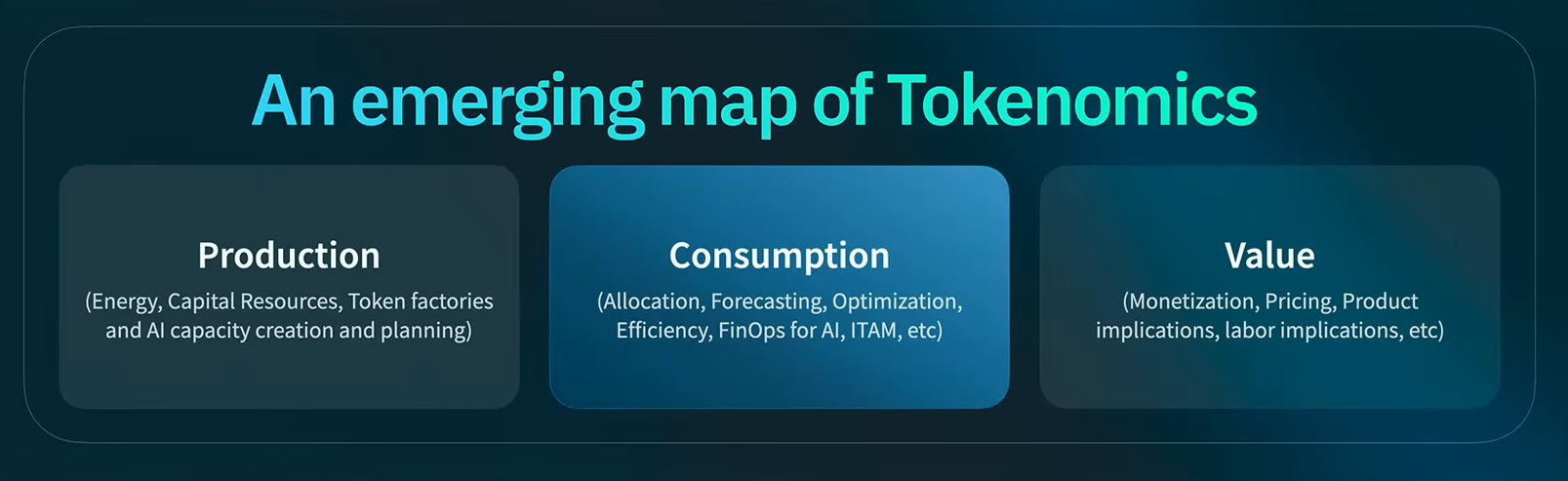
The three layers (production layer, a consumption layer and a value layer) of Tokenomics, presented by J.R. Storment at FinOps X 2026 (Source: FinOps X)
The production layer is where tokens actually get made, whether that’s a hyperscaler’s own data center, a leased GPU cluster, or increasingly a sovereign “token factory” as governments push for domestic AI capacity. The same underlying model output can be sourced through several different providers and billed in completely different ways depending on the path.
The consumption layer is the one FinOps practitioners will recognize, just with new line items added: model routing, caching, context window management, prompt design, forecasting, plus newer cost centers like orchestration overhead and vector database spend.
The value layer is the hardest of the three, because it’s where the question that actually matters lives: what is the business getting back for this money? It’s also where software pricing is getting rewritten, as vendors shift from seat-based licensing toward pricing tied to token use.
FinOps, by design, assumes the resources you manage already exist. Tokenomics starts a step earlier, right at the point creators make tokens. That is exactly why Storment argued the discipline needs its own foundation instead of just another working group inside FinOps.
He made it clear that tokenomics is a young field with many unanswered questions. What are the right metrics to use? How do you price for AI experiment failure? How do token allocations impact business pricing models later on? Because of all these unknowns, the next announcement landed heavily.
The Tokenomics Foundation
On June 3 – days ahead of the conference – the Linux Foundation announced its intent to launch the Tokenomics Foundation: a new program to build the standards, benchmarks and best practices that don’t yet exist for AI cost management. Storment brought it to the main stage with a list of early supporters: Accenture, Booking.com, Flexera, Google Cloud, IBM, JPMorganChase, KPMG, Microsoft, Nebius, Oracle, Salesforce, SAP, ServiceNow and more.
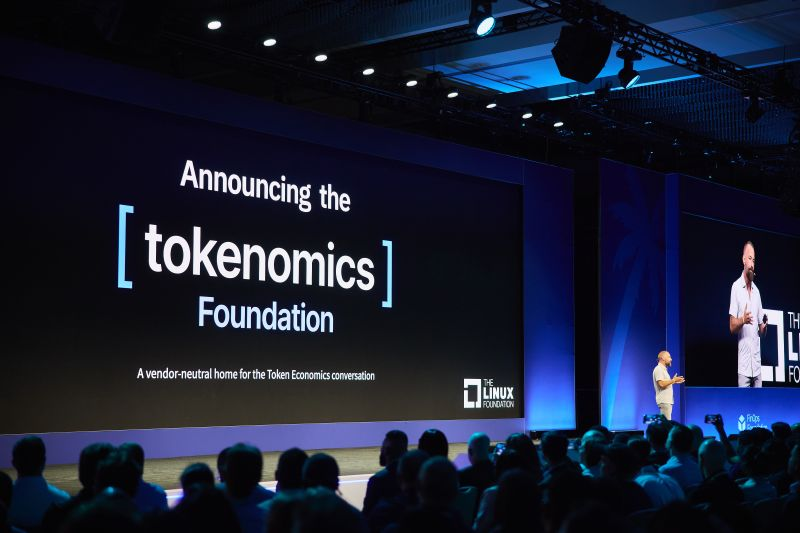
J.R. Storment announcing the Tokenomics Foundation at FinOps X 2026
The Tokenomics Foundation runs alongside the FinOps Foundation, not in its place. The FinOps Foundation keeps its community of tens of thousands of practitioners (spanning 93 of the Fortune 100), its framework, its certifications and its working groups exactly as they are. The Tokenomics Foundation gets its own governing board, its own technical committee and member working groups focused specifically on token economics.
The idea is to bring together the whole AI supply chain, not just the big cloud players. That means inference providers, neoclouds, hardware providers and others all get a seat at the table. These newer players are bringing new problems with them and they need a dedicated space to work through them, as Storment put it.
Speakers on Day 1 of FinOps X 2026
A run of practitioners and executives took the stage next to share how AI spend is actually playing out inside their organizations.
SAP brings FinOps to AI at global scale
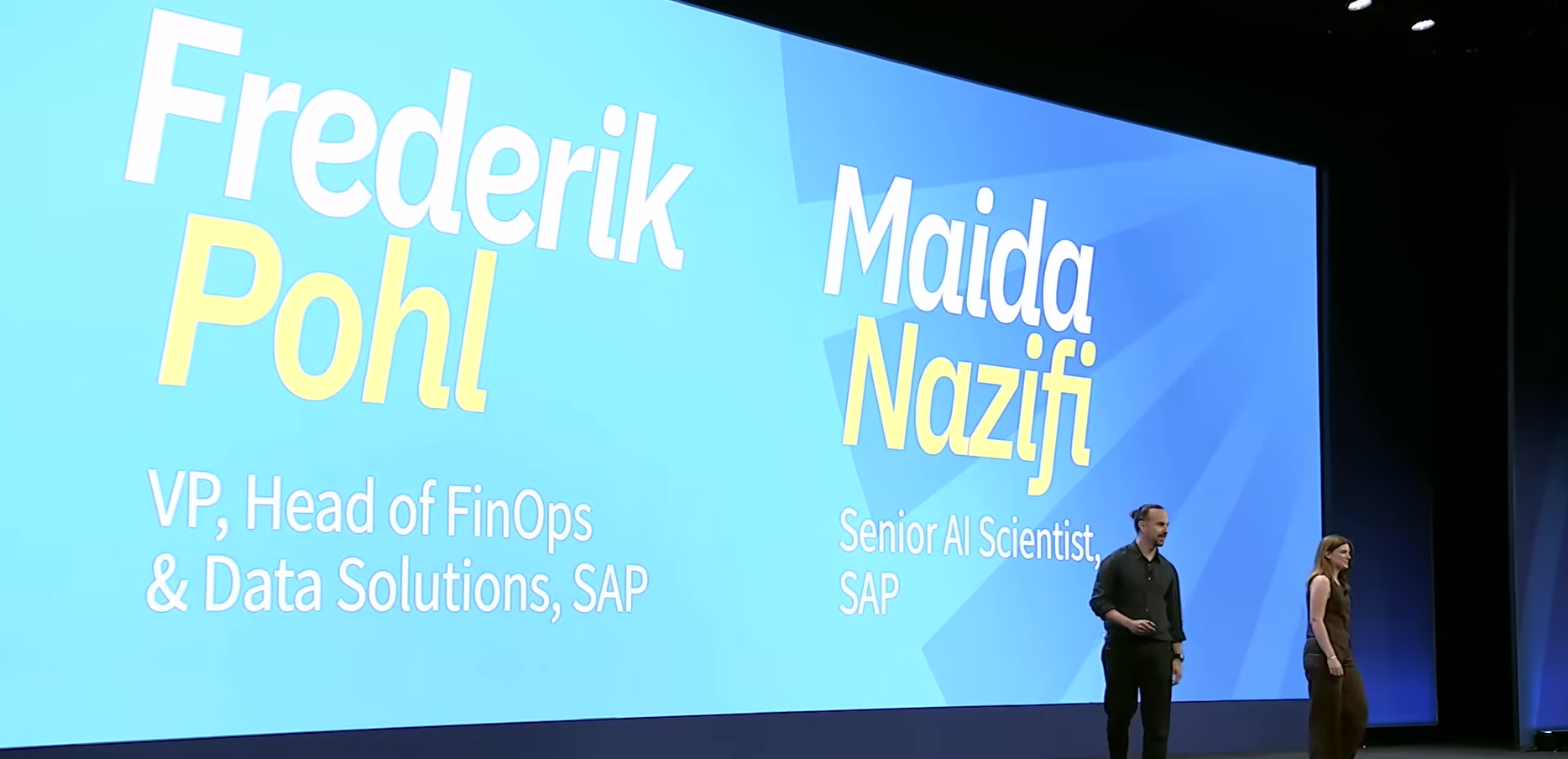
Frederik Pohl and Maida Nazifi from SAP presenting at FinOps X 2026
Frederik Pohl, head of FinOps and data solutions at SAP and Maida Nazifi, senior AI scientist at SAP, brought twelve months of the company’s own token consumption data to the stage. The curve, in Nazifi’s words, was essentially exponential.

SAP’s token consumption curve over the past year, presented by Frederik Pohl and Maida Nazifi (Source: FinOps X)
SAP runs AI at a scale that dwarfs most enterprises and its leadership has said publicly the company is “all in” on AI. Token volume and spend back that up. Their core finding: even as cost per token dropped sharply since 2023, total AI spend kept climbing anyway, doubling over the period they tracked. Pohl described this as a textbook case of Jevons paradox: as tokens get cheaper, organizations use far more of them and total spend climbs regardless.
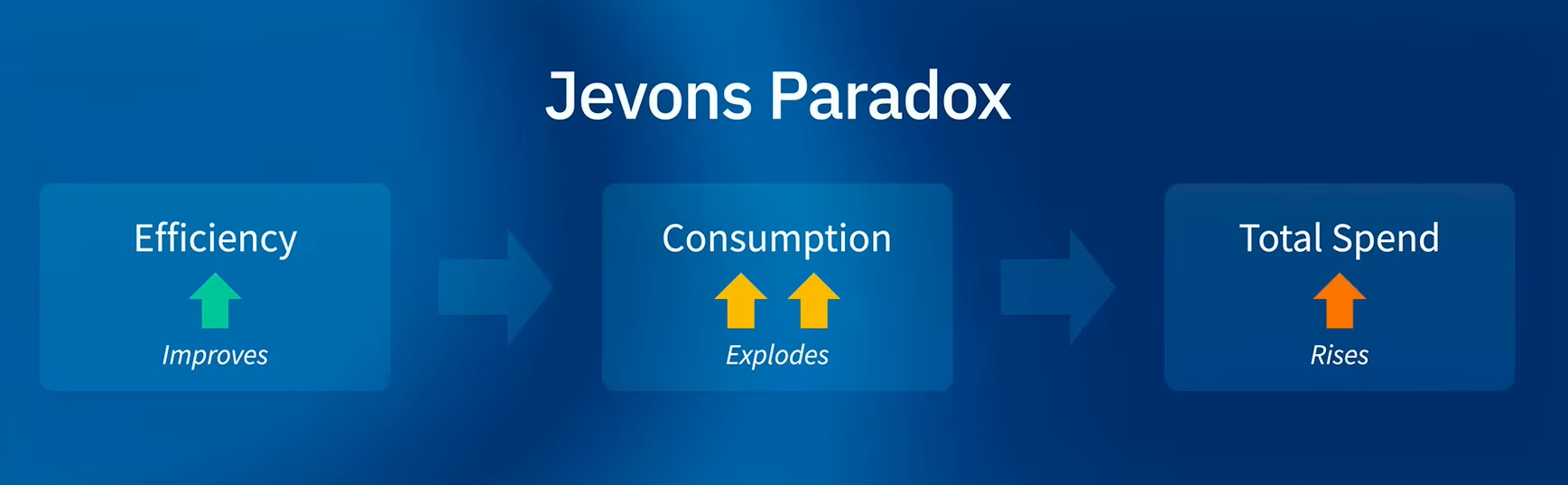
Jevons paradox in action, presented by Frederik Pohl at FinOps X 2026 (Source: FinOps X)
They also flagged factors that get missed when teams fixate on unit price alone: hardware costs are rising, supply chains stay tight and token prices have sat flat since November 2025.
Pohl argued the cloud FinOps playbook doesn’t carry over cleanly to AI. Cloud resources follow multi-year depreciation; AI models can be functionally outdated in under six months. Cloud cost scales fairly predictably with the compute you add; a single AI token can hide a lot of variable cost underneath it, including KV cache, retries and context overhead. Cloud’s classic optimization levers (rightsizing, spot instances, reserved capacity) have AI equivalents, but they’re different tools entirely: model routing, prompt engineering, token caching and context window management.
Nazifi laid out the three-pillar framework SAP built to manage it.
- Pillar 1: spend visibility, meaning what’s being spent, where and on which models. This is what earns executive attention and opens the door to everything else
- Pillar 2: economics, meaning metrics like cache token ratio, token-to-spend drift and cost per inference
- Pillar 3: value, meaning cost per use case, inference cost by revenue line and return on investment (ROI) by AI feature. This is where FinOps stops counting and starts shaping technology decisions
Accenture on stretching the FinOps remit in two directions at once
Mike Eisenstein, global practice lead for technology value at Accenture, then joined the stage and opened with a story. A CIO told him their organization had spent $250,000 on Claude in a single Wednesday. Four weeks later, that same organization was tracking $400,000 a week.
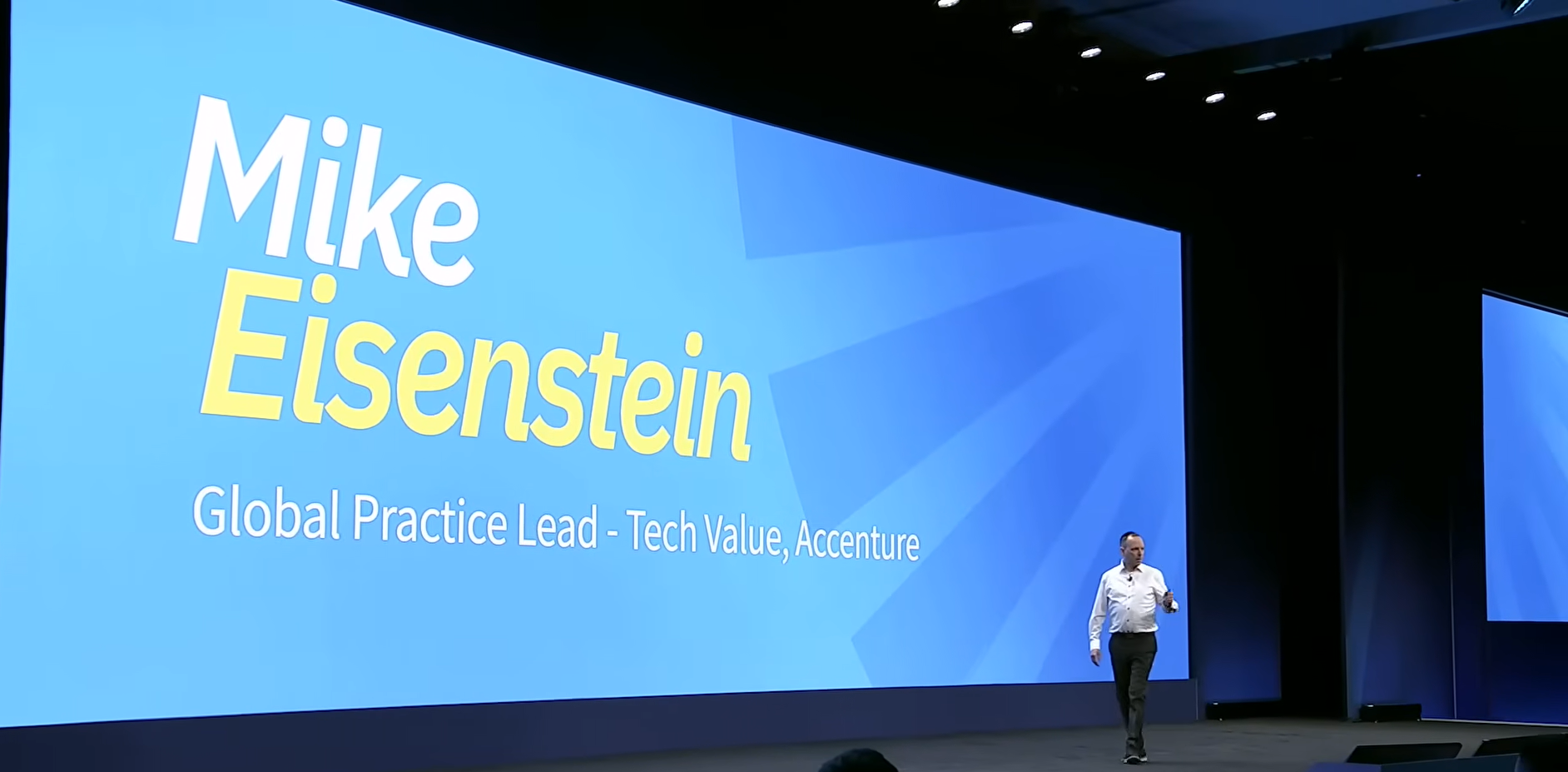
Mike Eisenstein from Accenture presenting at FinOps X 2026
Eisenstein linked that to familiar FinOps failure patterns, like a Lambda function spinning out of control or a BigQuery query that suddenly costs a million dollars in a day. The difference with AI is that the risk usually comes from many workloads acting together rather than one rogue event and the usual safeguards don’t catch it the same way. There’s rarely a clean kill switch.
AI has pulled FinOps in two directions at once, in his telling.
Horizontally, practitioners now need a working knowledge of things that used to sit well outside FinOps, like network proxy configuration, desktop policy and API call metadata.
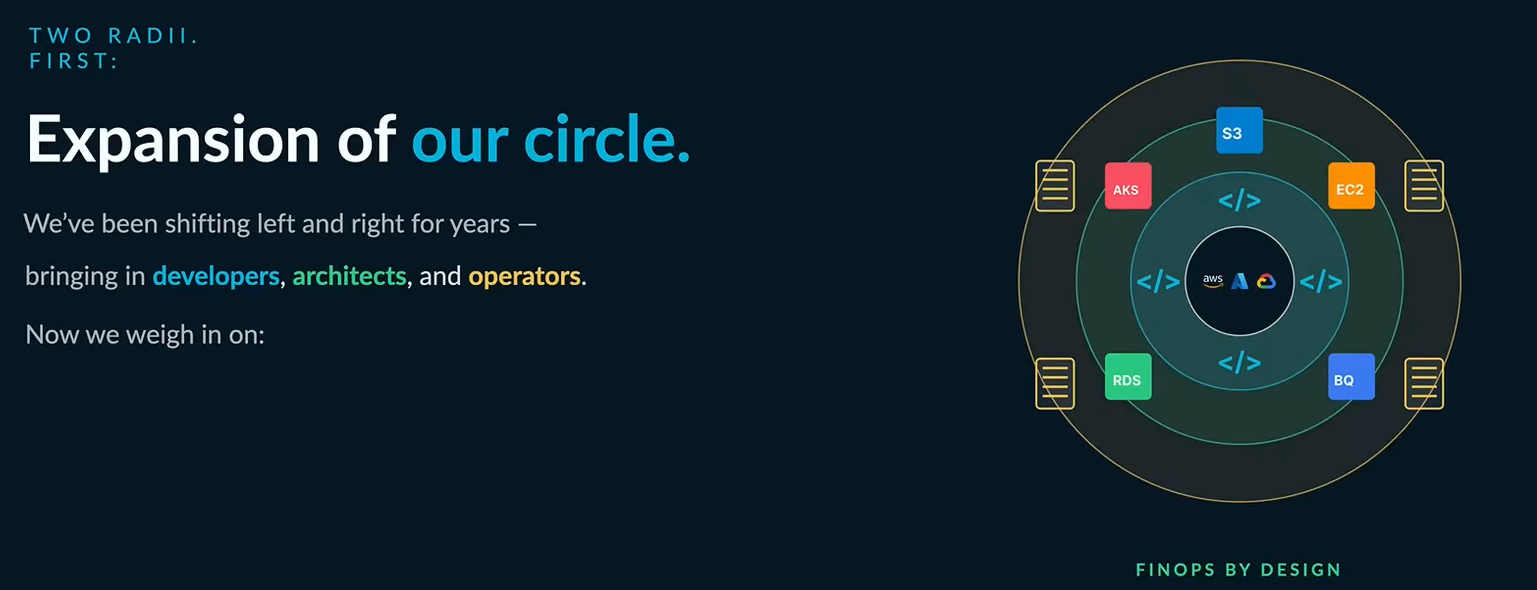
FinOps stretching horizontally into new technical territory, presented by Mike Eisenstein at FinOps X 2026 (Source: FinOps X)
Vertically, AI token costs have earned FinOps an audience in the boardroom that years of internal cost-reporting roadshows never managed to secure.
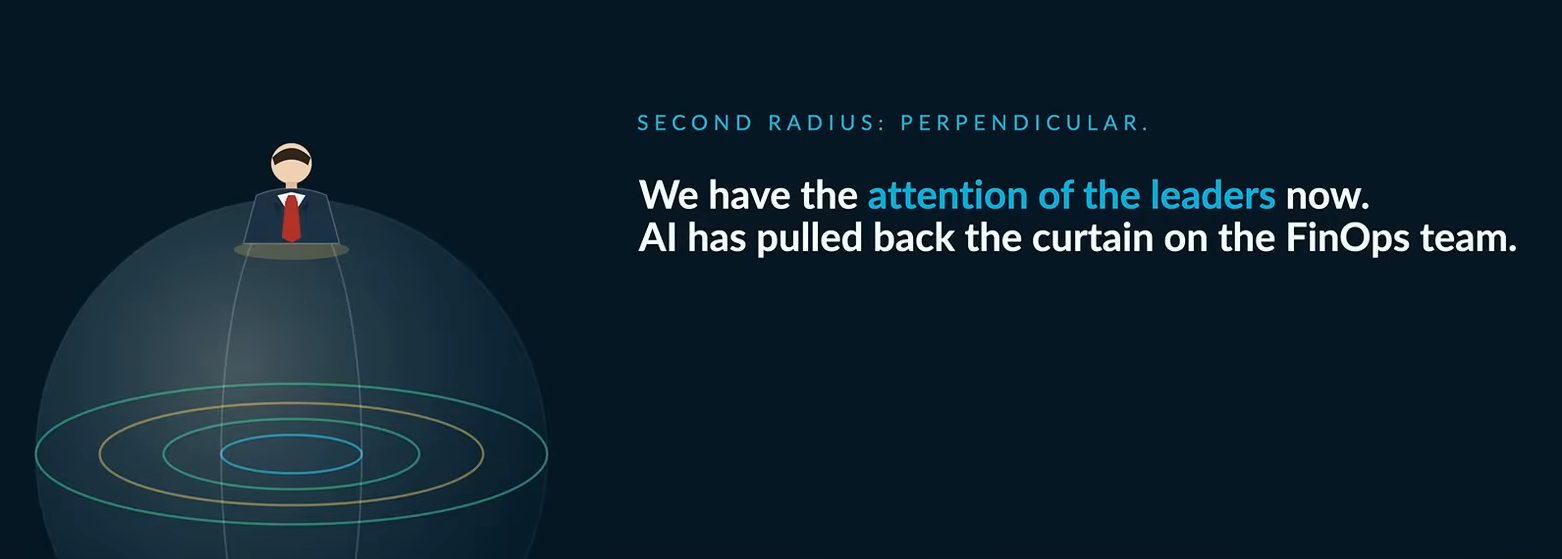
FinOps stretching vertically, all the way to the boardroom, presented by Mike Eisenstein at FinOps X 2026 (Source: FinOps X)
Eisenstein also pushed back on the standard “show your savings” framing FinOps teams default to. When a business does something it’s never done before, or an AI-enabled process costs more upfront than the manual version it replaces, that framing breaks down. The job becomes defining, measuring and governing the cost of business outcomes, a different conversation than chargeback and showback.
His advice: stop translating FinOps work into FinOps language for senior leadership. Speak in terms of projects, channels and margins. Learn how each business leader measures their own function and tie AI spend to those metrics directly.
His closing line, paraphrased: FinOps doesn’t just get a seat at the table anymore. Practitioners help set the agenda.
Storment: Jobs aren’t disappearing, they’re changing
Storment returned briefly to address the anxiety in the room directly, using spreadsheets as his analogy. Lotus 1-2-3 and Microsoft Excel decimated traditional bookkeeping roles in the early 1980s and headcount in the field fell dramatically. However, a new generation of finance experts emerged, capable of performing analytical tasks that the preceding generation could not do by hand, he stated.
His main point for the FinOps crowd: the tools are getting more capable and the stakes are higher and practitioners who adapt will end up doing work that wasn’t possible before.
Prudential names the three lies FinOps teams tell themselves
Pooja Kumar, VP of cloud strategy at Prudential, gave one of the more pointed talks of the morning. Her argument was that traditional FinOps, as most organizations actually practice it, was already losing relevance before AI showed up. AI just made the gap impossible to ignore.
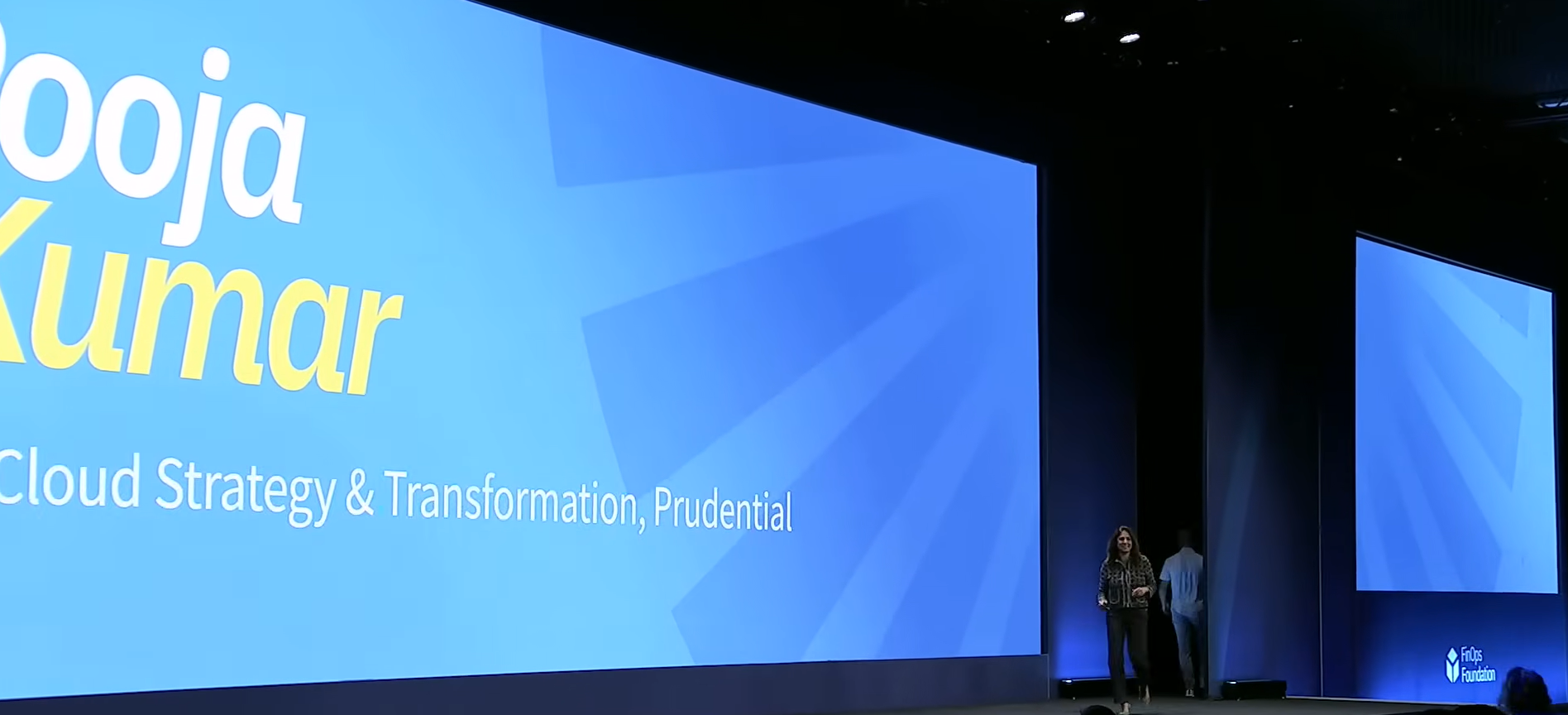
Pooja Kumar from Prudential presenting at FinOps X 2026
She laid out a few things FinOps teams tell themselves that aren’t quite true.
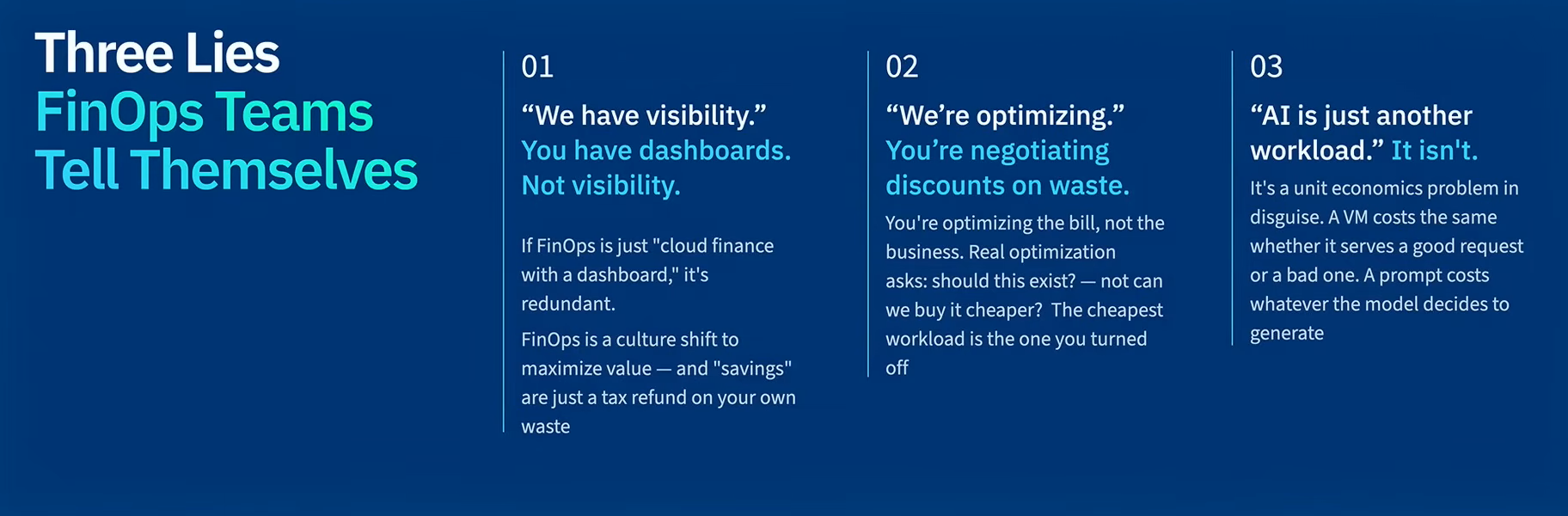
Three common but flawed assumptions FinOps teams make, presented by Pooja Kumar at FinOps X 2026 (Source: FinOps X)
Lie 1: “We have visibility”. Most teams have a dashboard. A dashboard isn’t visibility. It tells you what the bill says. It doesn’t tell you how many model calls a single user prompt is triggering underneath, or how agent chains are compounding costs in ways that don’t surface in standard reporting.
Lie 2: “We’re optimizing”. Most teams optimize the bill. Optimizing the bill is not the same as optimizing the business outcome. If AI spend is generating the wrong outcomes at an efficient cost, the efficiency is irrelevant.
Lie 3: “AI is just another workload”. This is the most damaging. A virtual machine (VM) costs roughly the same to process a good request or a bad one. A prompt costs exactly what the model decides to generate. Chain agents together and those costs compound in ways that no standard FinOps dashboard is designed to track.
Her response: shift up to get executive alignment before costs spiral, shift left to build cost controls into the deployment pipeline before anything reaches production and what she called shift wild, her term for using AI to govern AI, which she expects to define the next stage of FinOps maturity.
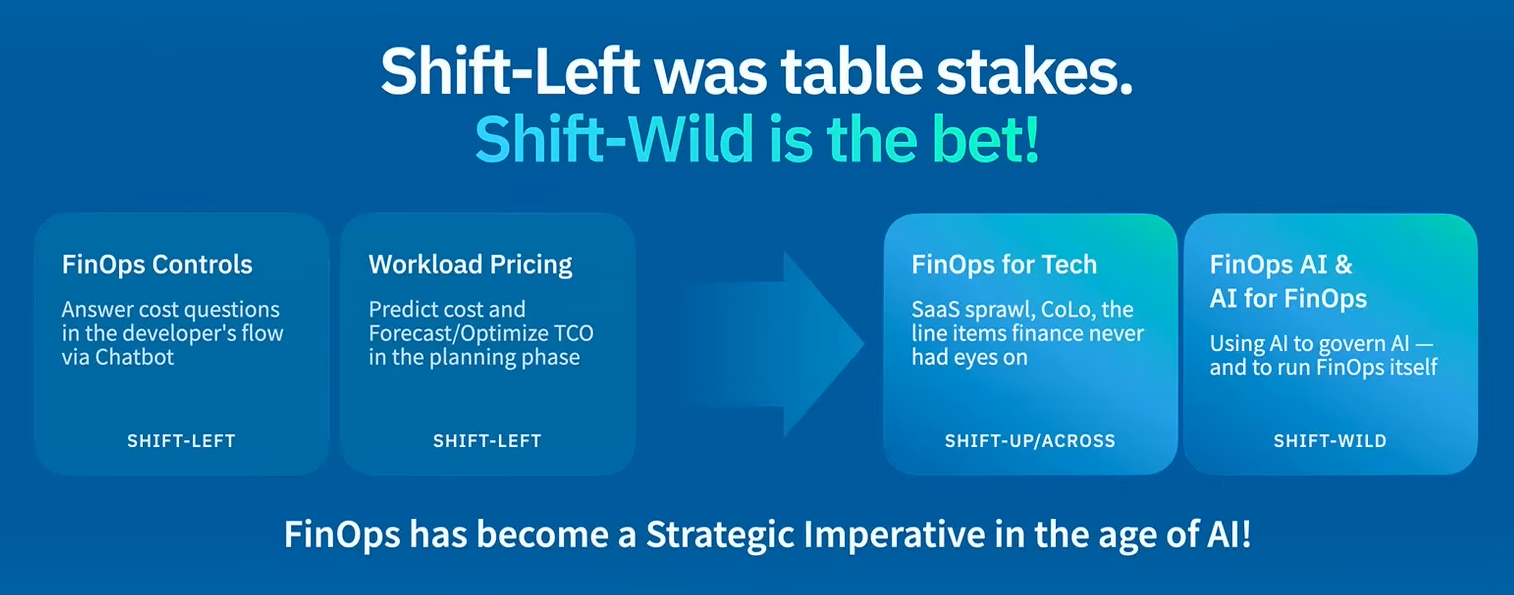
Prudential’s shift up, shift left and shift wild model, presented by Pooja Kumar at FinOps X 2026 (Source: FinOps X)
Her message was very clear-cut. If your team spends most of its time building dashboards, managing tagging compliance and preparing chargeback reports, those functions are candidates for automation. The practitioners who stay indispensable will be the ones moving up the value chain into token economics and AI-driven business outcome analysis.
Two new FinOps certifications
The FinOps Foundation used day 1 to lock in a refreshed certification path, two new credentials in total.
First, the FinOps for AI certification has been updated and rebranded as the AI Value certification. The badge changed and the content has been substantially revised to reflect how much the field has moved since the original certification launched at FinOps X 2025.
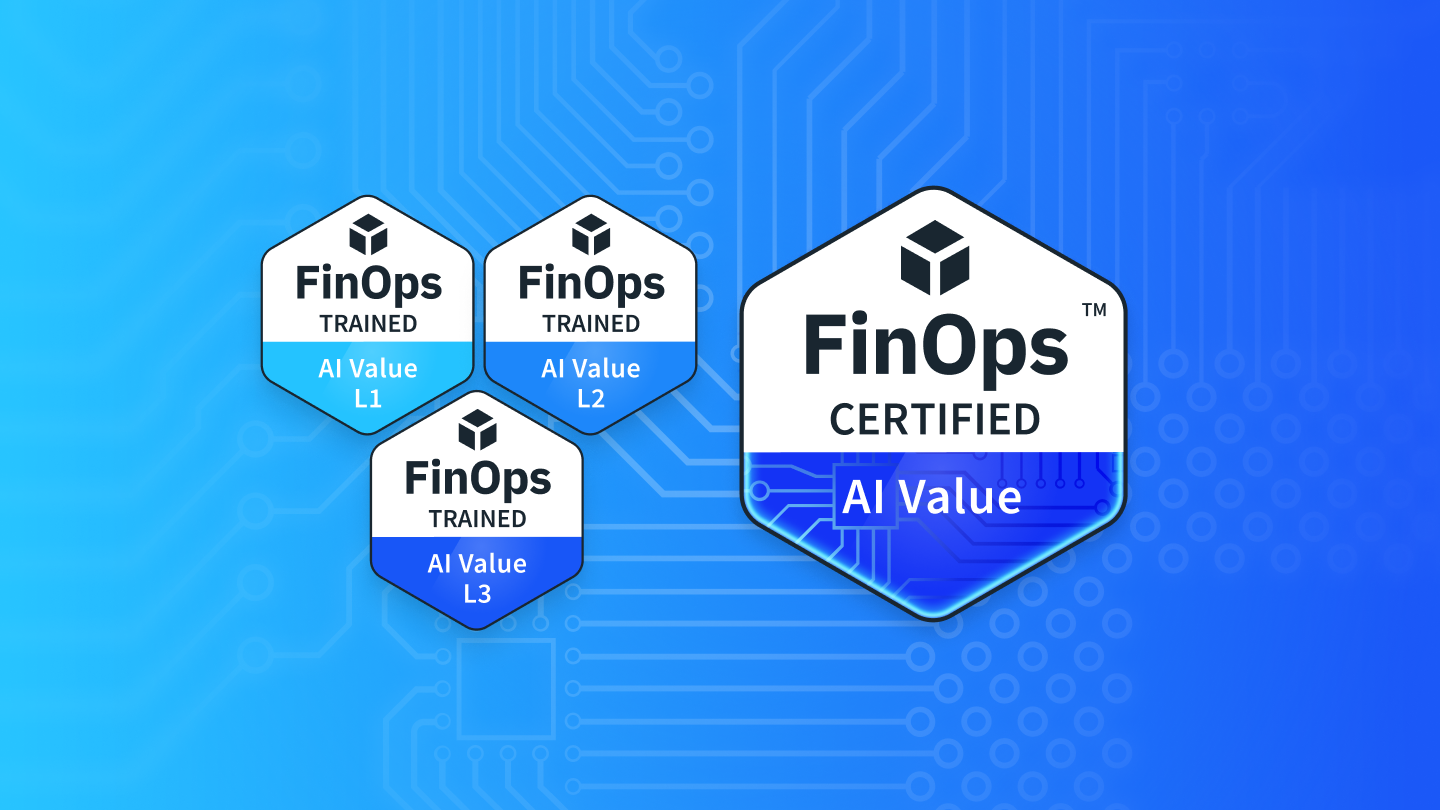
The refreshed FinOps AI Value certification – FinOps X 2026 (Source: learn.finops.org)
Second, a brand-new Technology Value certification is now available. This builds on the FinOps Framework 2026 to cover a broader view of technology spend management, including data center, SaaS and public cloud alongside AI.
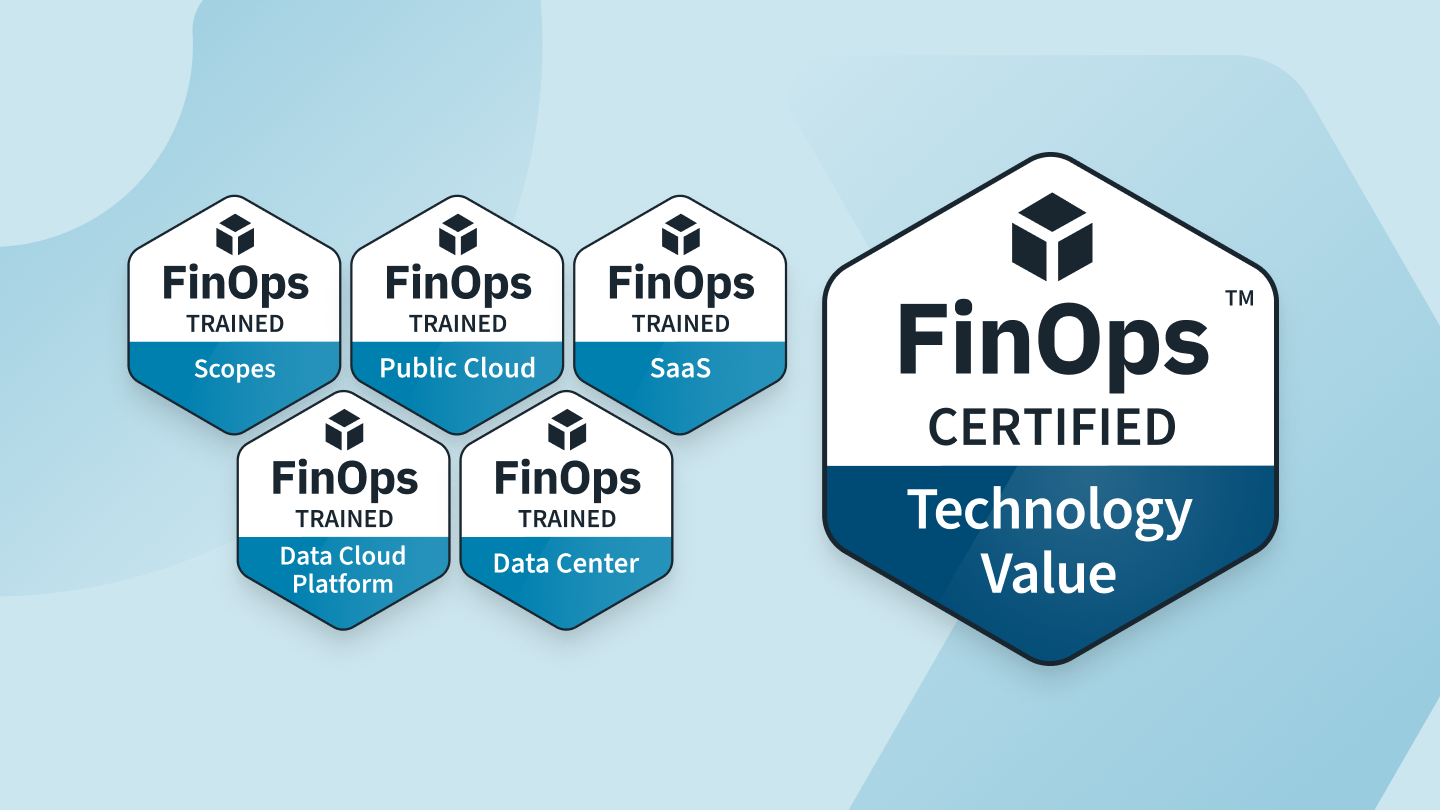
The new FinOps Technology Value certification – FinOps X 2026 (Source: learn.finops.org)
The path to FinOps Certified Professional has also been simplified. Practitioners now start with either FinOps Certified Practitioner or FinOps Certified Engineer, then complete three intermediate certifications (FOCUS Analyst, AI Value and Technology Value) to qualify for Professional status.
All of it is live now at learn.finops.org.
FOCUS updates on Day 1
The FinOps Open Cost and Usage Specification (FOCUS) had a busy Day 1, with three distinct announcements.
1) The FinOps Certified FOCUS Generator program
The Foundation launched a new certification for billing-data generators. It involves the FinOps Foundation’s governing board and staff reviewing and auditing a generator’s output against the FOCUS specification to confirm it meets defined quality standards. Two providers earned the inaugural certifications on Day 1:
- AWS
- Nebius
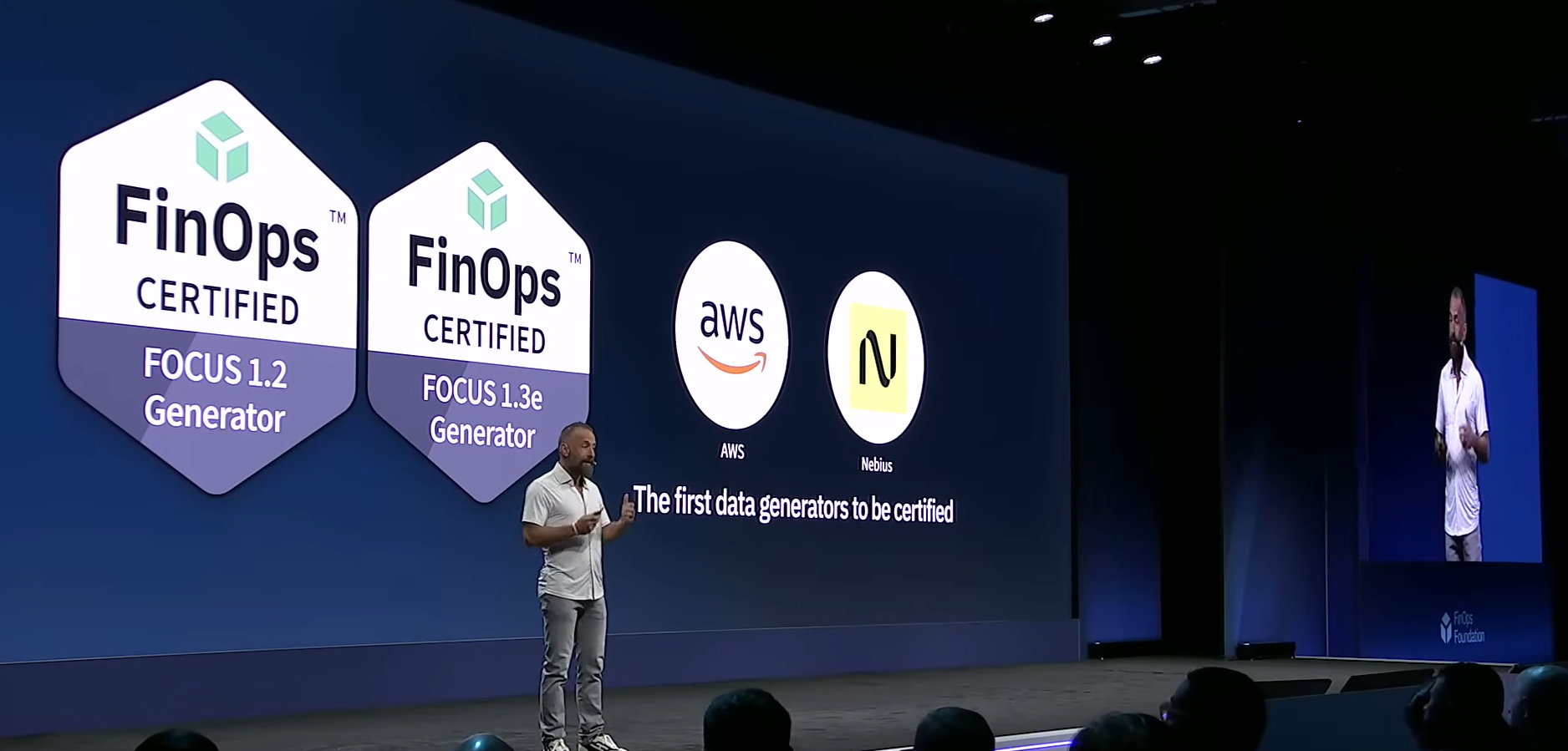
Storment announcing AWS and Nebius as the first two billing-data generators to earn FOCUS Certified Generator status at FinOps X 2026
2) FOCUS MCP server
Following Anthropic’s donation of MCP to the Agentic AI Foundation (AAIF), a directed fund under the Linux Foundation, in December 2025, the FinOps Foundation built a FOCUS MCP Server. Practitioners can now pull the latest version of the FOCUS specification directly into any MCP-compatible model without manually re-importing documentation each time it updates. Small in scope, but practically useful as FOCUS evolves and as more practitioners use AI-assisted tooling to work with billing data.
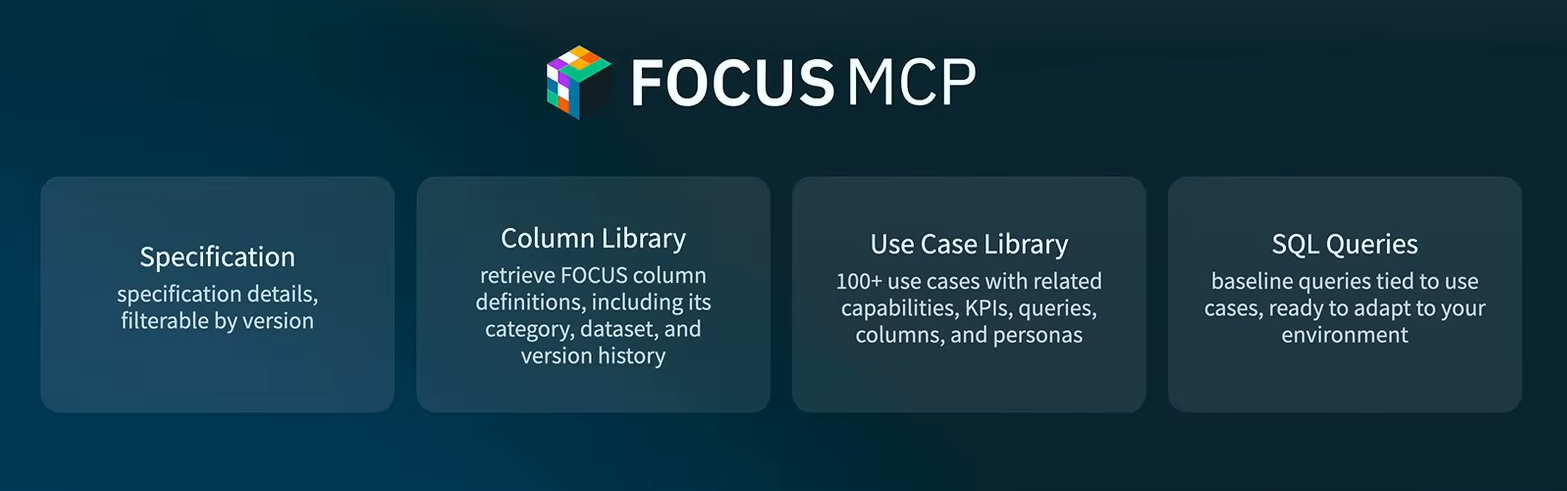
FinOps X 2026 slide introducing the FOCUS MCP Server
3) FOCUS 1.4
Storment also gave a short preview of FOCUS 1.4 on day 1, noting the full announcement and technical detail would land on day 2. We cover that in full below.
FOCUS 1.4 is the first release designed to let engineering, finance and FinOps teams work from the same billing facts without provider-specific tooling. It closes three specific gaps: consistent cost recognition across providers through a provider-agnostic covered and covering charge framework, end-to-end invoice reconciliation through the new datasets and data integrity standards rigorous enough for FOCUS to serve as a billing system of record.
Looking beyond 1.4, the FOCUS steering committee is already working on 1.5 and 1.6, where native AI token tracking and unit economics are expected to enter the specification.
AWS shows up with seven brand new announcements
Bradford Lyman, director of product management at AWS, took the stage with seven announcements organized around three priorities: making optimization easy to implement at scale; making every dollar visible and aligned to business value; and making FinOps effortless, intelligent and autonomous.
Bradford Lyman from AWS presenting at FinOps X 2026
Bradford Lyman announced that AWS is introducing seven new things. Here are all seven announcements.
Optimization at scale
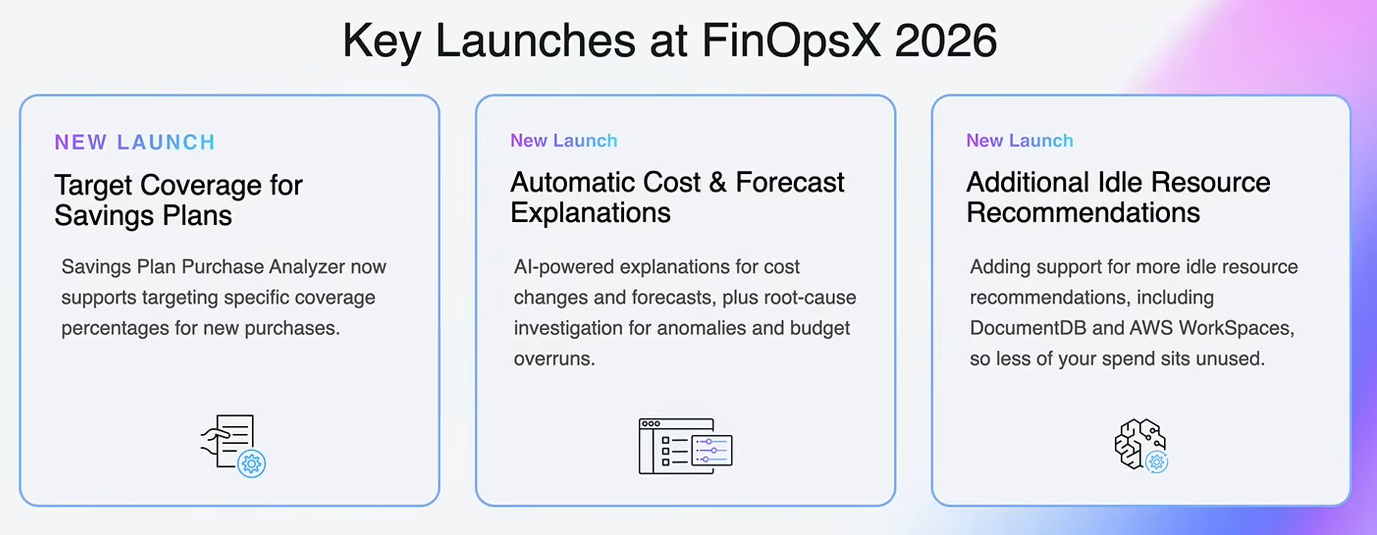
AWS key launches, presented by Bradford Lyman at FinOps X 2026 (Source: FinOps X)
Target Coverage for Savings Plans is now available directly in the AWS Console. Previously, practitioners used the Savings Plan Purchase Analyzer and then manually adjusted recommendations against internal rules. Now you can build your target coverage into the console and receive recommendations against it immediately, cutting the gap between analysis and action.
Automatic cost and forecast explanations are now available throughout the console. Push a button on any unexpected cost spike and you get an immediate root cause analysis.
Additional Idle Resource Recommendations: AWS now generates more than twice as many idle resource recommendations, providing practitioners with more cleanup opportunities and cost savings possibilities, regardless of whether the cleanup is performed by a person or an autonomous agent.
Visibility and business alignment
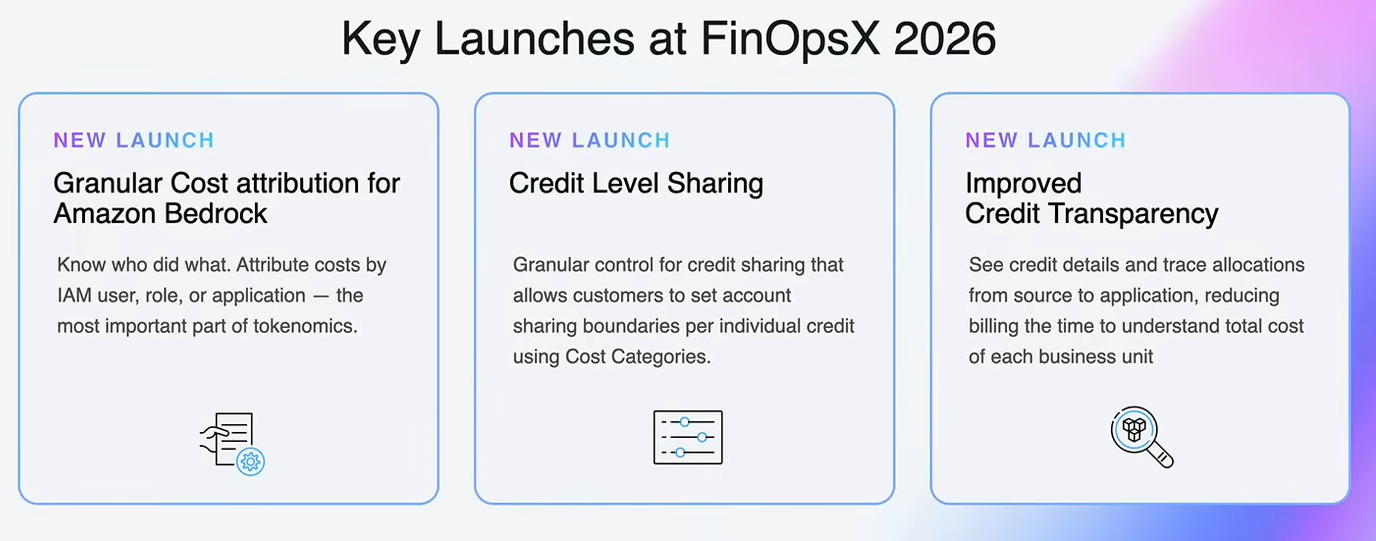
AWS key launches, presented by Bradford Lyman at FinOps X 2026 (Source: FinOps X)
Granular cost attribution for Amazon Bedrock is live. Any application, agent or individual user calling Amazon Bedrock can now have their model calls and session-level costs attributed individually.
Credit Level Sharing gives finer-grained control over how commitment credits get distributed across accounts
Improved Credit Transparency adds a dedicated console page showing every credit earned, the remaining balance and which workloads used it, which Lyman called the most credit visibility AWS has ever shipped
Around the same time, AWS also published its State of Cost Efficiency Report, a benchmarking analysis built on its own Cost Efficiency metric. The report draws on more than 71,000 anonymized, opted-in AWS customers and found a median efficiency score of 83 out of 100, with a mean of 79, a gap explained by a long tail of less-optimized accounts. It’s a useful number to bring back to your own team if you want a peer benchmark instead of an internal target pulled from thin air.
The AWS FinOps Agent
The headline announcement was the AWS FinOps Agent, now in public preview.
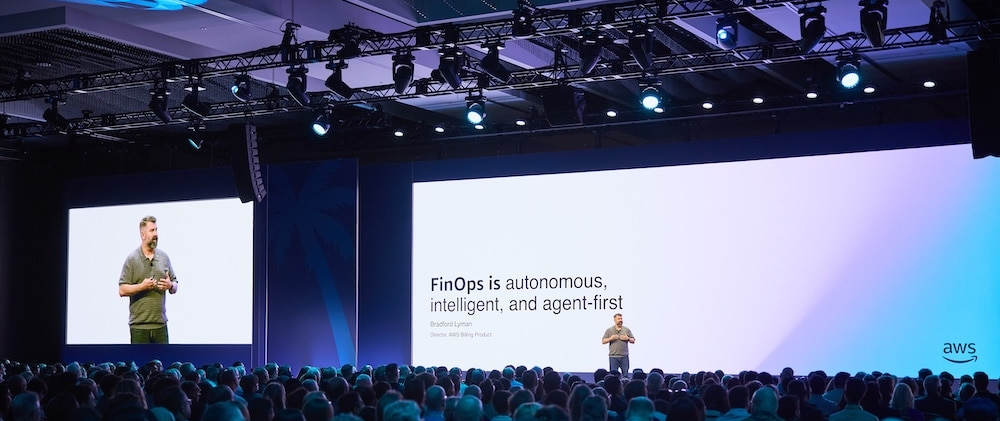
Bradford Lyman announcing AWS FinOps Agent at FinOps X 2025
This is an agentic AI solution built on top of AWS Cost Explorer, Cost Anomaly Detection, Cost Optimization Hub and AWS Compute Optimizer. It handles:
- Natural language cost questions, answered with data from your actual Cost Explorer and usage history
- Cost and usage report generation in HTML, PDF or PowerPoint format, delivered on a schedule you define
- Right-sizing, idle resource and Savings Plan recommendations, surfaced automatically from Cost Optimization Hub and Compute Optimizer
- Anomaly detection and root cause analysis, correlating cost spikes with AWS CloudTrail events to identify what changed and who owns it
- Jira ticket creation for the engineering team responsible for the affected resource, so issues reach the right person instead of a shared queue
You can run it on a schedule, trigger it off anomaly detection, or let it operate autonomously within AWS’s built-in guardrails, with optional human approval workflows for teams that want a check before action.
The AWS FinOps Agent is currently available in the US East (N. Virginia) region, covers cost and usage data across other AWS regions (excluding AWS GovCloud and AWS China) and is free during the preview period, subject to a monthly usage limit. More regions are on the way.
Shutterstock renames its FinOps function
Courtney Totten, CIO, CISO and CTO at Shutterstock, opened with a story familiar to anyone whose AI strategy got reduced by leadership to “give people the best tools possible”.
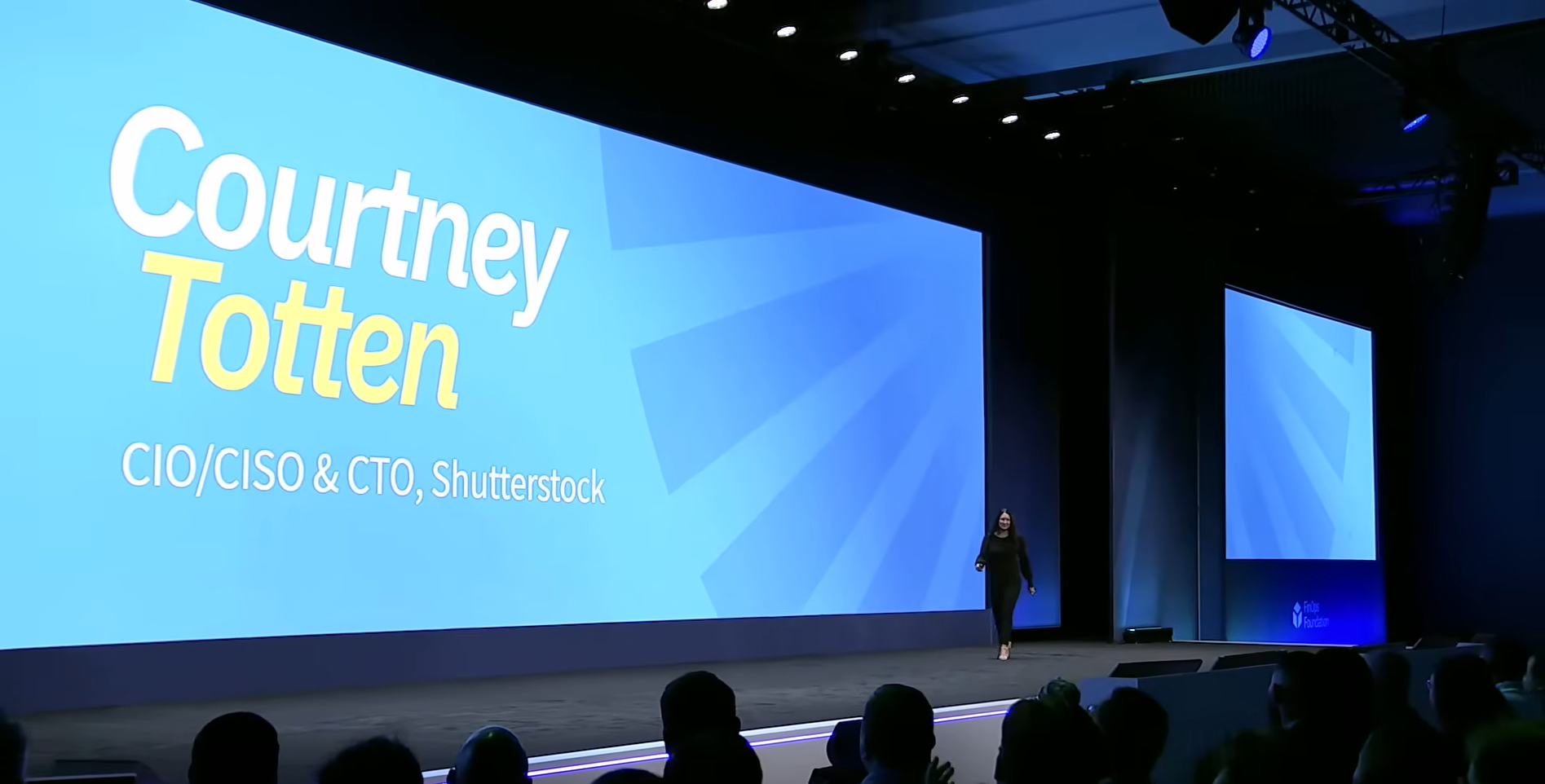
Courtney Totten from Shutterstock presenting at FinOps X 2026
Totten said output tokens make up roughly 75% of Shutterstock’s total token use, which makes every customer-facing interaction a direct cost driver. Model routing is a core FinOps function at the company now, not an afterthought.
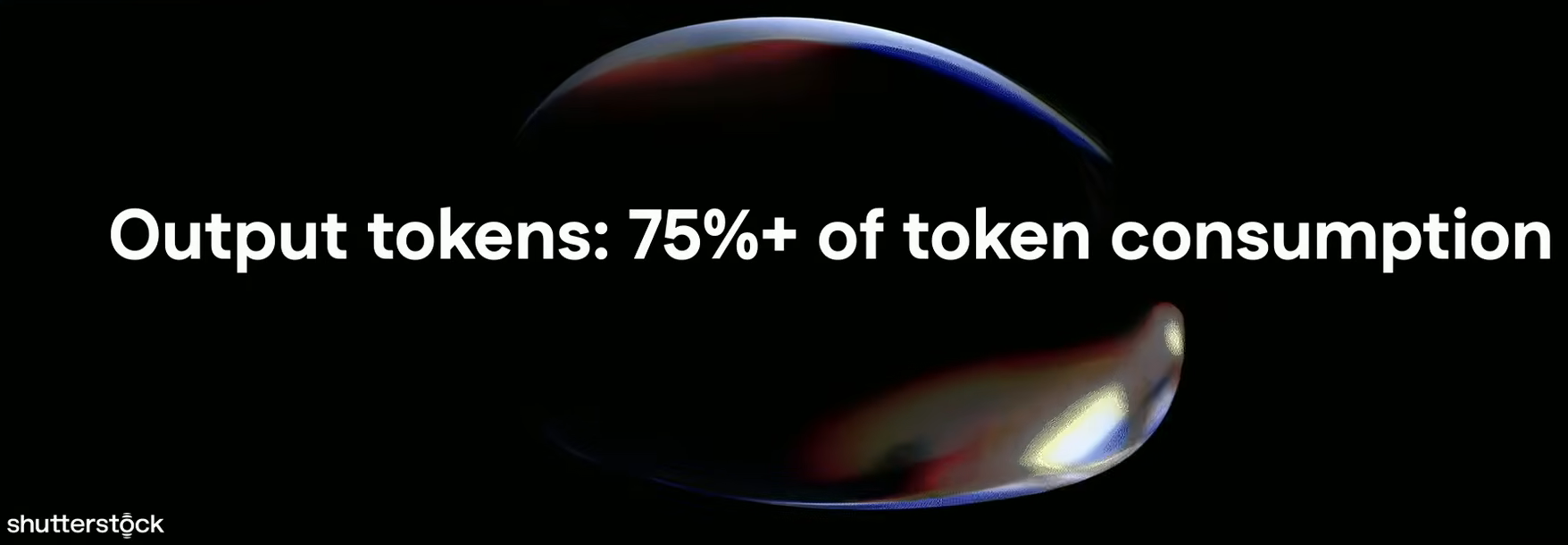
Output tokens making up roughly 75% of Shutterstock’s total token consumption, presented by Courtney Totten at FinOps X 2026 (Source: FinOps X)
Her team renamed the function “AI and Cloud FinOps” and centralized AI spend ownership under it. One early result: they found $250,000 in unused vendor commitments set to expire. That money was going out the door regardless and once it surfaced to the wider organization, a business unit stepped up to absorb the commitment and redirect it toward revenue-generating work. That’s the practical case for treating FinOps as a top-down mandate rather than a cost-center function.
Her advice to the room was simple: start small, start now, iterate quickly and lock in executive sponsorship before anything else, because leadership that isn’t seeing the data regularly will default to assumptions and those assumptions tend to be expensive.
Microsoft’s four shifts
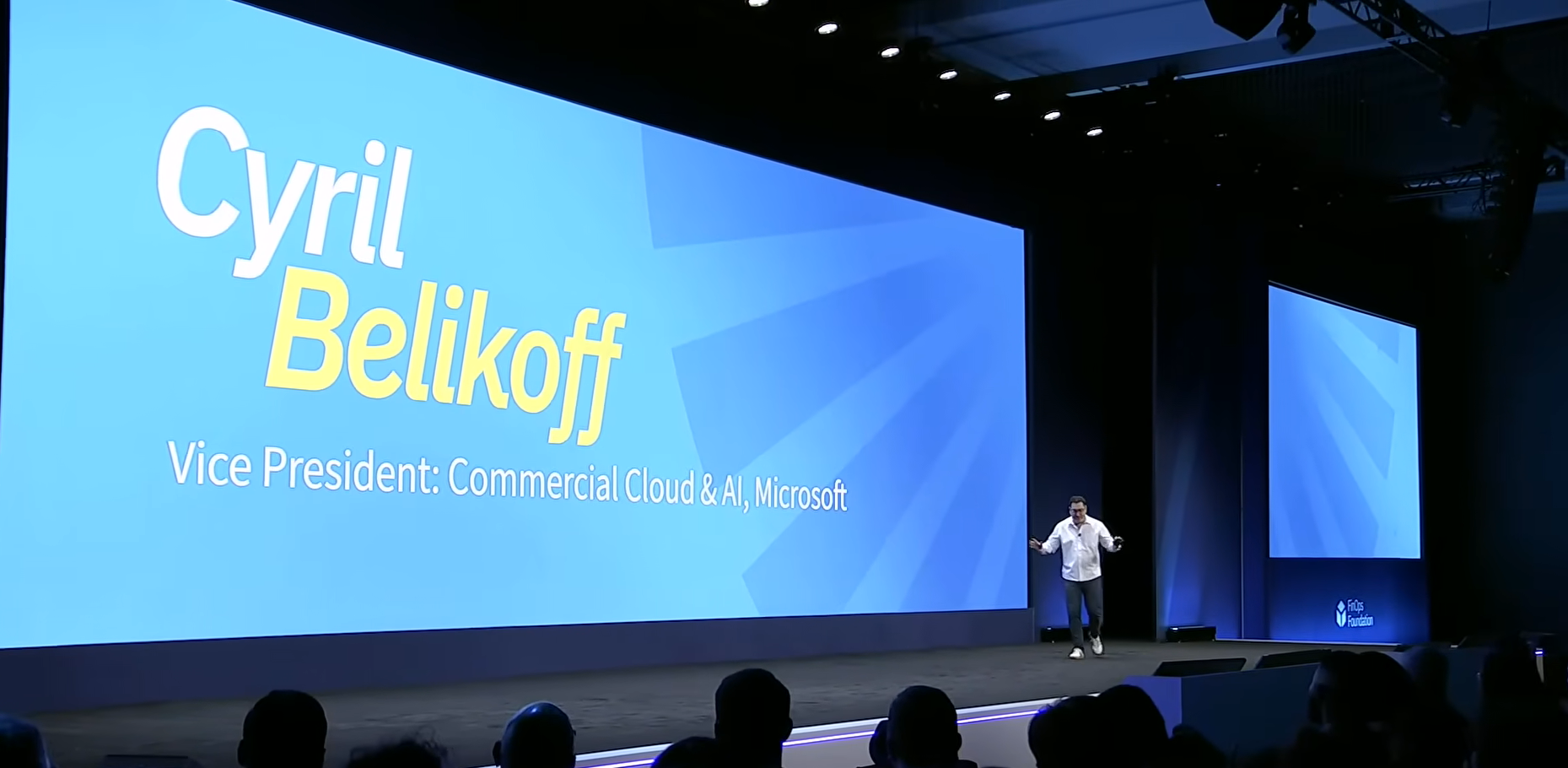
Cyril Belikoff from Microsoft presenting at FinOps X 2026\
Cyril Belikoff, vice president of commercial cloud and AI marketing at Microsoft, closed day 1 of FinOps X 2026 by outlining four major shifts reshaping how enterprises manage AI. His message was clear: the move from AI experimentation to production requires a new FinOps mindset. Managing cloud costs alone is no longer enough. Organizations must understand the relationship between AI cost, performance and business value.
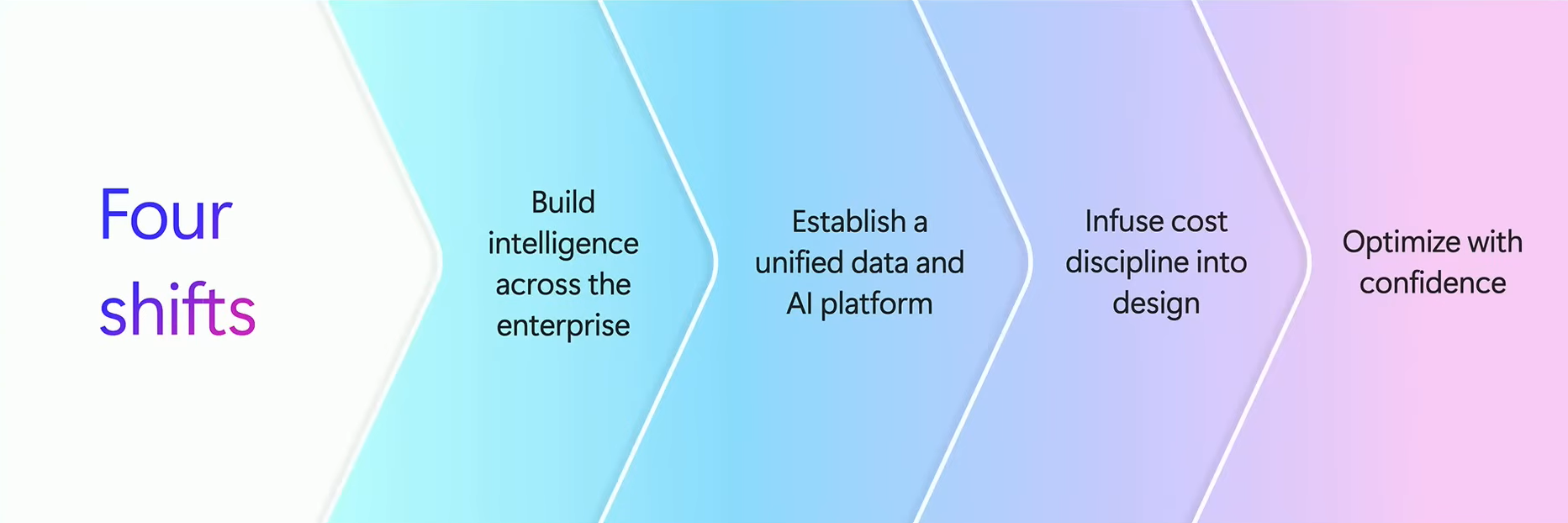
Microsoft’s four shifts in enterprise AI cost management, presented by Cyril Belikoff at FinOps X 2026 (Source: FinOps X)
Shift 1: Build a shared intelligence layer
The first shift Belikoff highlighted was the intelligence problem.
Many organizations are building AI agents that maintain their own context and repeatedly retrieve the same organizational knowledge. That creates unnecessary token consumption, increases costs and makes governance harder.
As Belikoff put it, “your tokens will kill you”.
Microsoft’s answer is Microsoft IQ, a shared intelligence layer that allows agents to access common organizational context instead of rebuilding it from scratch. The platform combines four components:
- Work IQ, which brings signals from Microsoft 365 data
- Fabric IQ, which models business data and processes
- Foundry IQ, which provides reusable knowledge retrieval capabilities for agents
- Web IQ, which adds real-time information from the open web
The goal is simple. An organization should build its intelligence layer once and allow many agents and models to access the same context.
Shift 2: Move toward a unified data and AI platform
The second shift focuses on eliminating fragmentation across data platforms, AI models and governance.
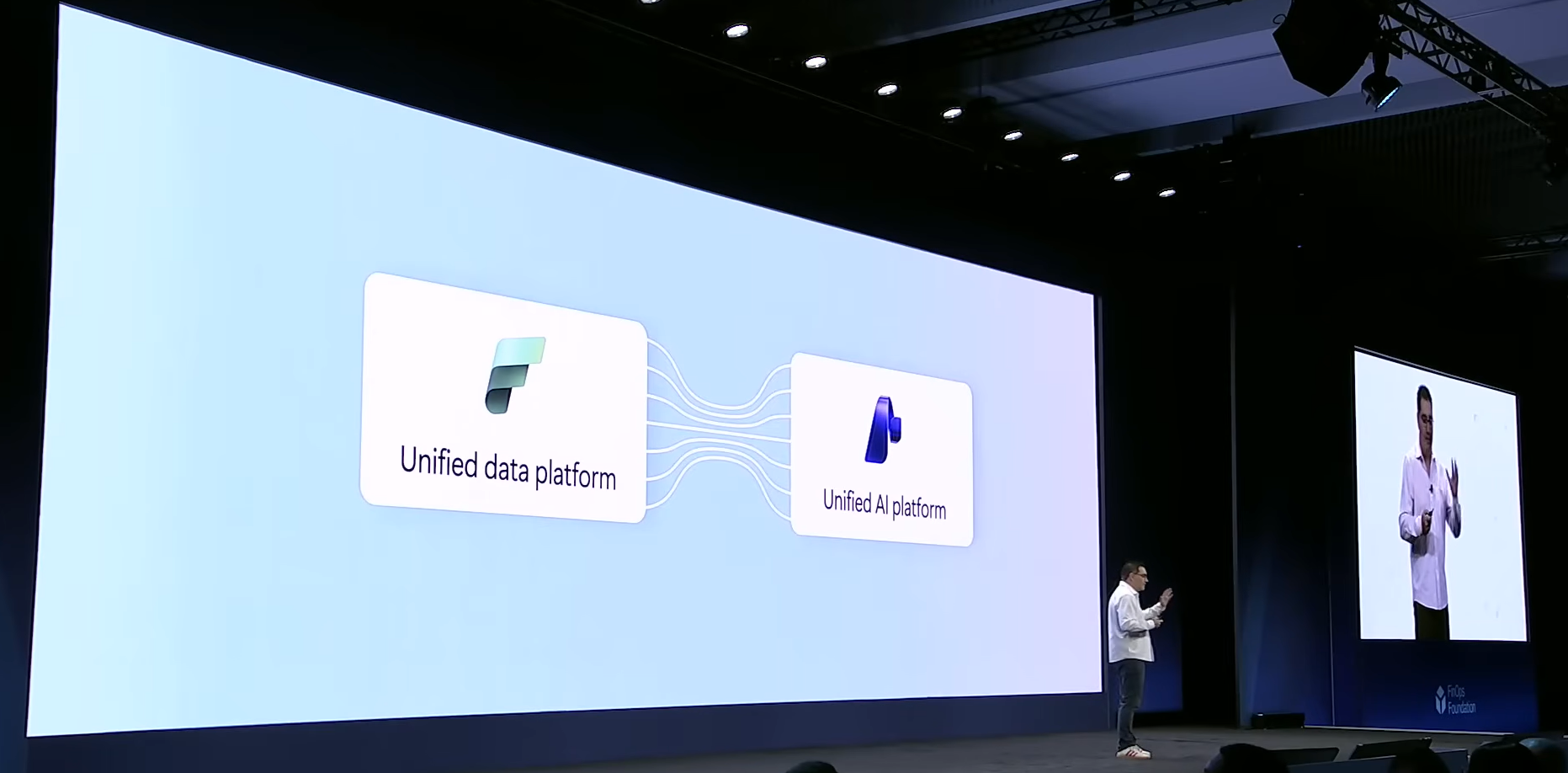
Cyril Belikoff presenting Microsoft’s unified data and AI platform – FinOps X 2026
Belikoff highlighted Microsoft Foundry, which provides access to more than 11,000 AI models. He noted that the best model is not always the most powerful one. A smaller, lower-cost model may provide better economics for a specific task.
Using a racing analogy, he explained that developers often want “the Ferrari of models all day, every day”, but a different model may be cheaper or better suited for a particular workload.
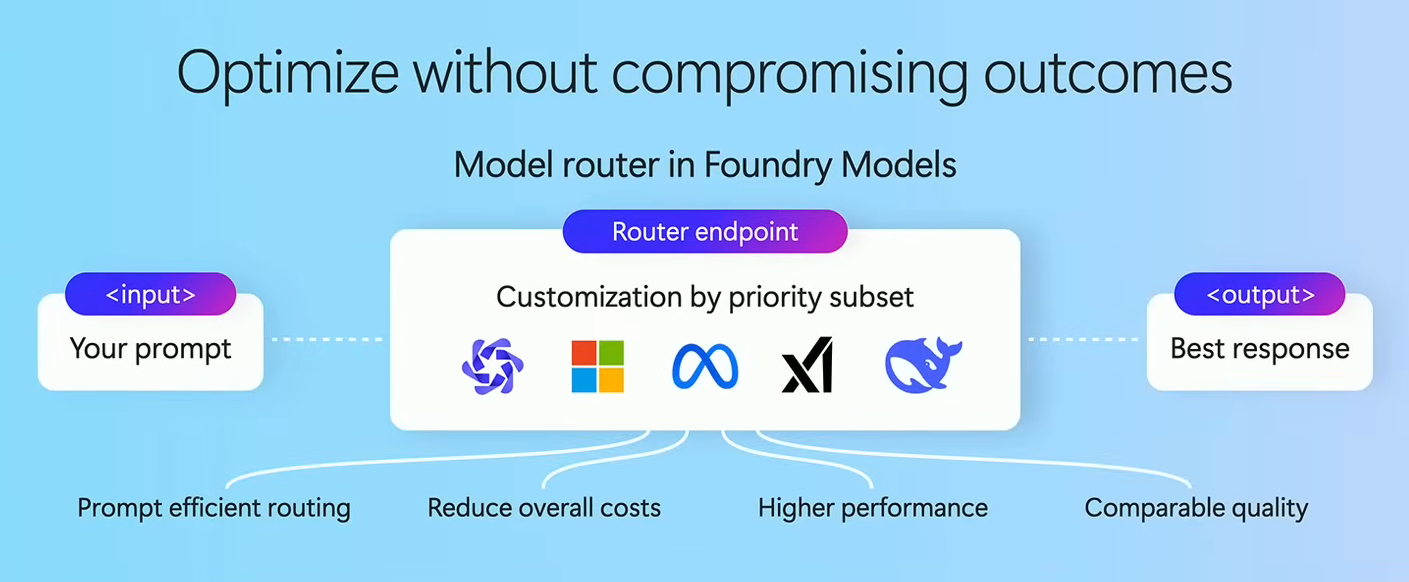
Microsoft Foundry’s model router, presented by Cyril Belikoff at FinOps X 2026 (Source: FinOps X)
To address this, Microsoft Foundry includes a model router that evaluates requests and automatically selects the most appropriate model based on business rules, cost and performance considerations.
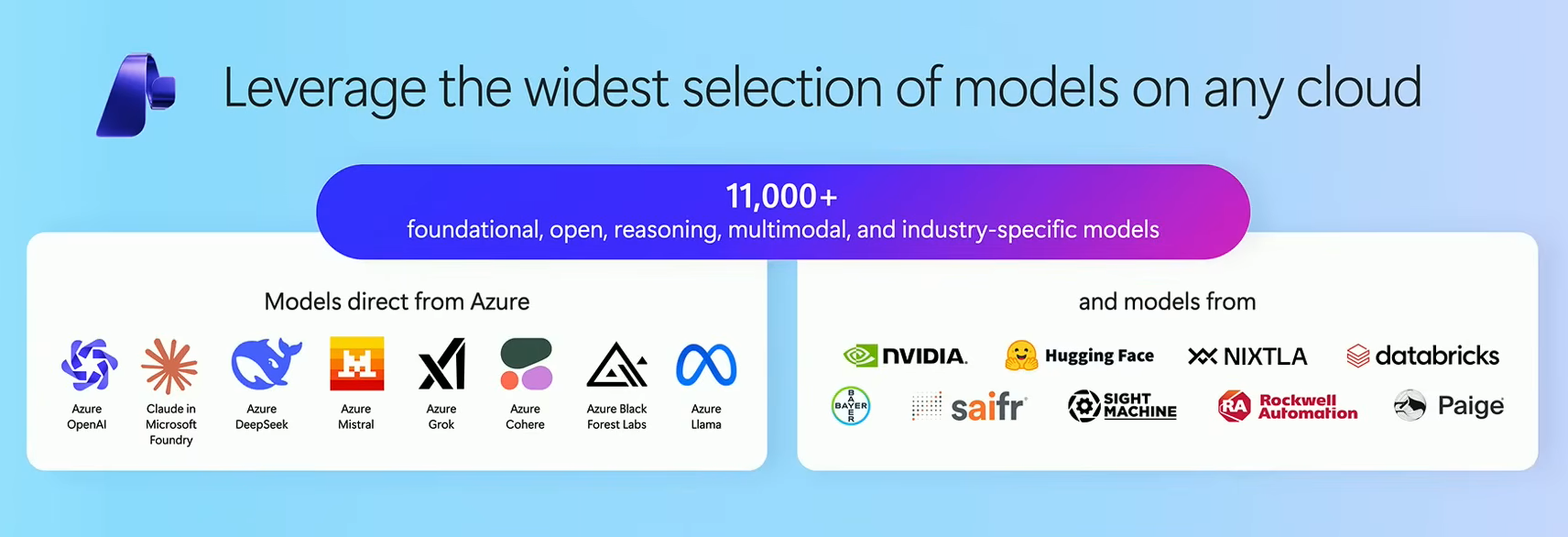
Microsoft Foundry’s model catalog, presented by Cyril Belikoff at FinOps X 2026 (Source: FinOps X)
Microsoft also announced Agent ROI in private preview within Microsoft Foundry. The capability allows organizations to compare business value and token costs side by side, making AI investment decisions based on measurable outcomes instead of cost alone.
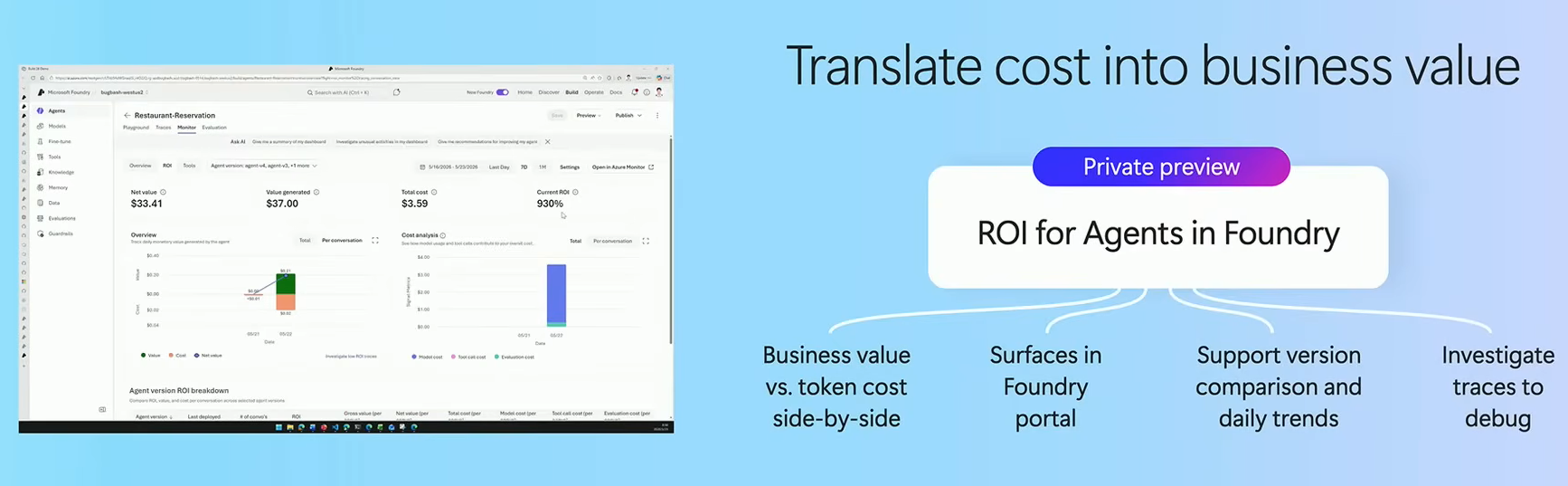
Microsoft ROI measurement for agents, presented by Cyril Belikoff at FinOps X 2026 (Source: FinOps X)
Shift 3: Bring FinOps into the developer workflow
The third shift is FinOps by design.
Belikoff argued that cost decisions should happen during development, not after applications reach production. Since AI pricing and performance change quickly, organizations need continuous evaluation rather than occasional reviews.
To support this approach, Microsoft introduced Azure MCP Server, which brings pricing insights, architectural trade-offs and Azure guidance directly into the developer workflow. Instead of checking a separate dashboard, developers can evaluate cost and design decisions through natural language interactions with their AI tools.
As Belikoff said, “Why does it have to be in a dashboard? It needs to be in the hands of everybody in your organization”.
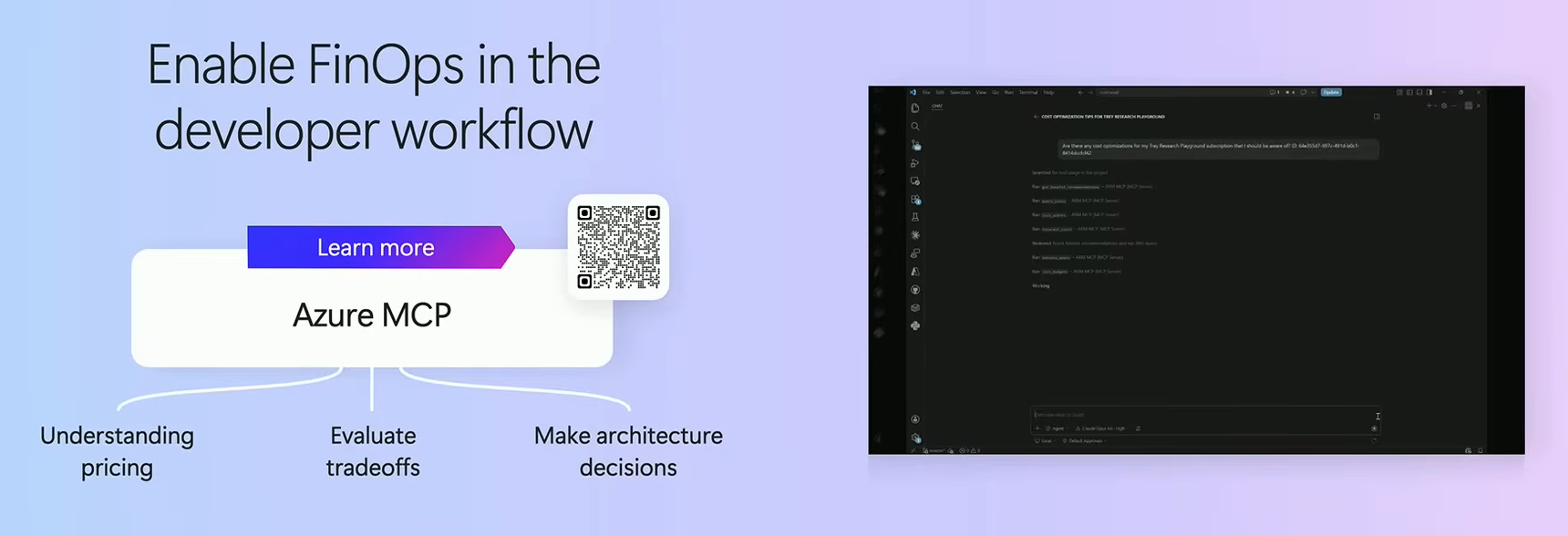
FinOps inside the developer workflow, presented by Cyril Belikoff at FinOps X 2026 (Source: FinOps X)
Shift 4: Shift from reactive optimization to proactive decision-making
The final shift is moving FinOps from a backward-looking optimization function to a forward-looking business discipline.
Belikoff described a future where FinOps data is available beyond the FinOps team itself. Engineers, finance teams, low-code users, professional developers and AI agents should all be able to access the same cost intelligence and use it in their daily decisions.
Microsoft Fabric plays a central role by bringing FinOps data into a broader organizational intelligence layer that can be accessed by engineers, finance teams, business stakeholders and AI agents.

Shift from reactive optimization to proactive decision-making, presented by Cyril Belikoff at FinOps X 2026 (Source: FinOps X)
Belikoff closed by confirming Microsoft’s commitment to support FOCUS 1.4 in 2026 and that the company is pursuing FinOps Certified FOCUS status.
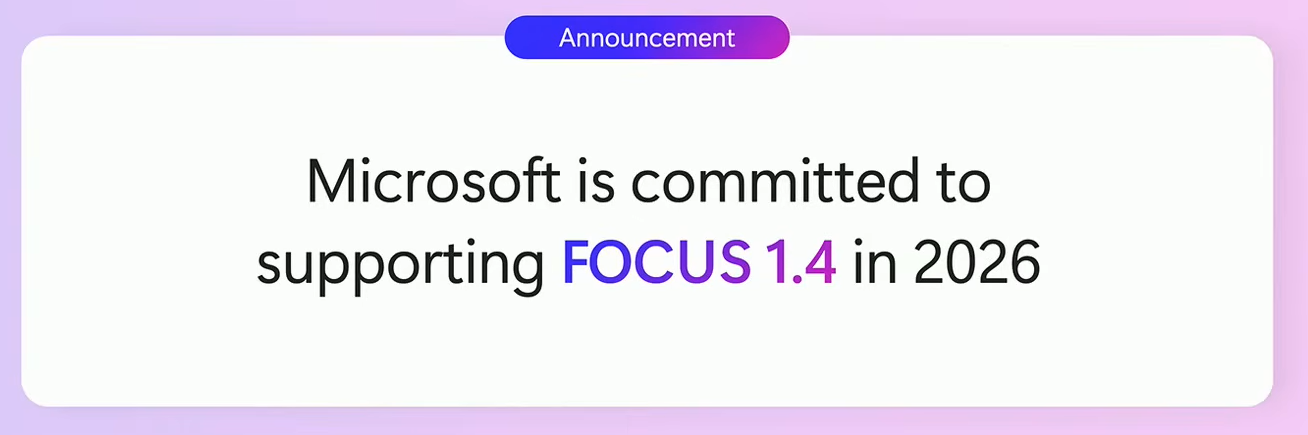
Microsoft’s commitment to support FOCUS 1.4 in 2026, presented by Cyril Belikoff at FinOps X 2026 (Source: FinOps X)
Leadership changes at the FinOps Foundation
Two personnel announcements came on Day 1.
Jennifer Hayes from Fidelity is stepping down as governing board chair of the FinOps Foundation after holding the role since 2021. Natalie Daley from HSBC takes over as the new governing board chair.
Tammy Burnett was announced as a new hire joining the FinOps Foundation team within the Linux Foundation. Burnett comes from practitioner roles at Shell and UiPath and has been active in Foundation working groups. Her focus will be leading the FinOps for AI working groups and driving evangelism in that space.
FinOps X is over; Tokenomicon is next
Storment closed day 1 by confirming that FinOps X is over; Tokenomicon is next. Starting in 2027, the FinOps X event becomes Tokenomicon, a new Linux Foundation conference built around the economics of AI at scale, with FinOps X continuing as a co-located practitioner track rather than completely disappearing.
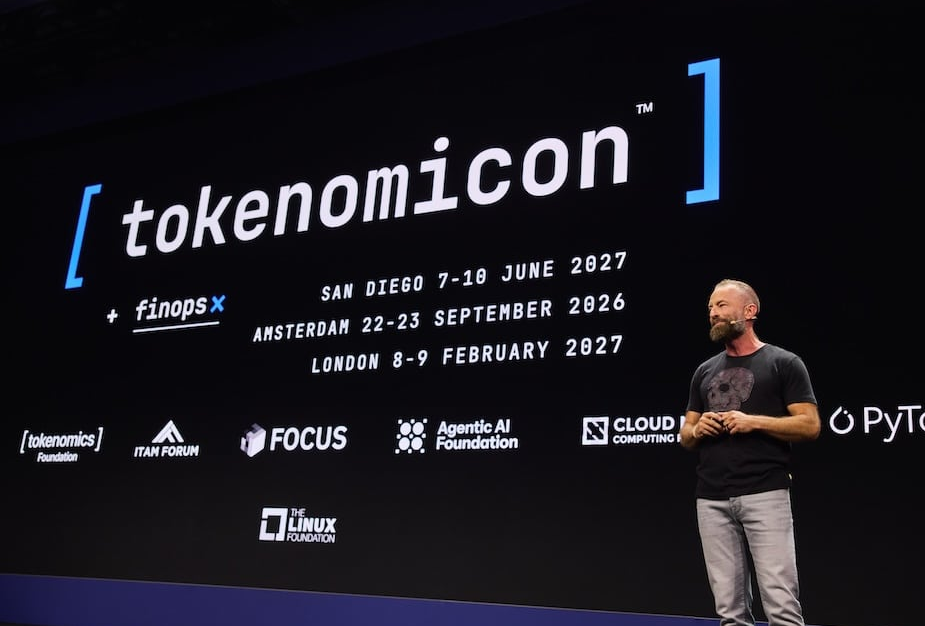
J.R. Storment announcing the Tokenomicon conference
FOCUS 1.4, AI guardrails and the road to tokenomics
Featured speakers on day 2 of FinOps X:
- Ishita Vyas and Mike Fuller (FinOps Foundation)
- Sarah McMullin (Google Cloud)
- Ambud Sharma (Pinterest)
- Bill Lobig (IBM Cloudability)
- Sonali Niswander (MetLife)
- Shawn Alpay (FinOps Foundation)
- Nick Armstrong (Oracle)
- Becky Trevino (Flexera)
- Erik Carlin (ProsperOps)
Day 2 opened with a reminder that AI won’t replace FinOps, but practitioners who get good at AI will outpace the ones who don’t. If day 1 was about naming the problem, day 2 was about figuring out what teams should actually do about it.
The crawl, walk, run model
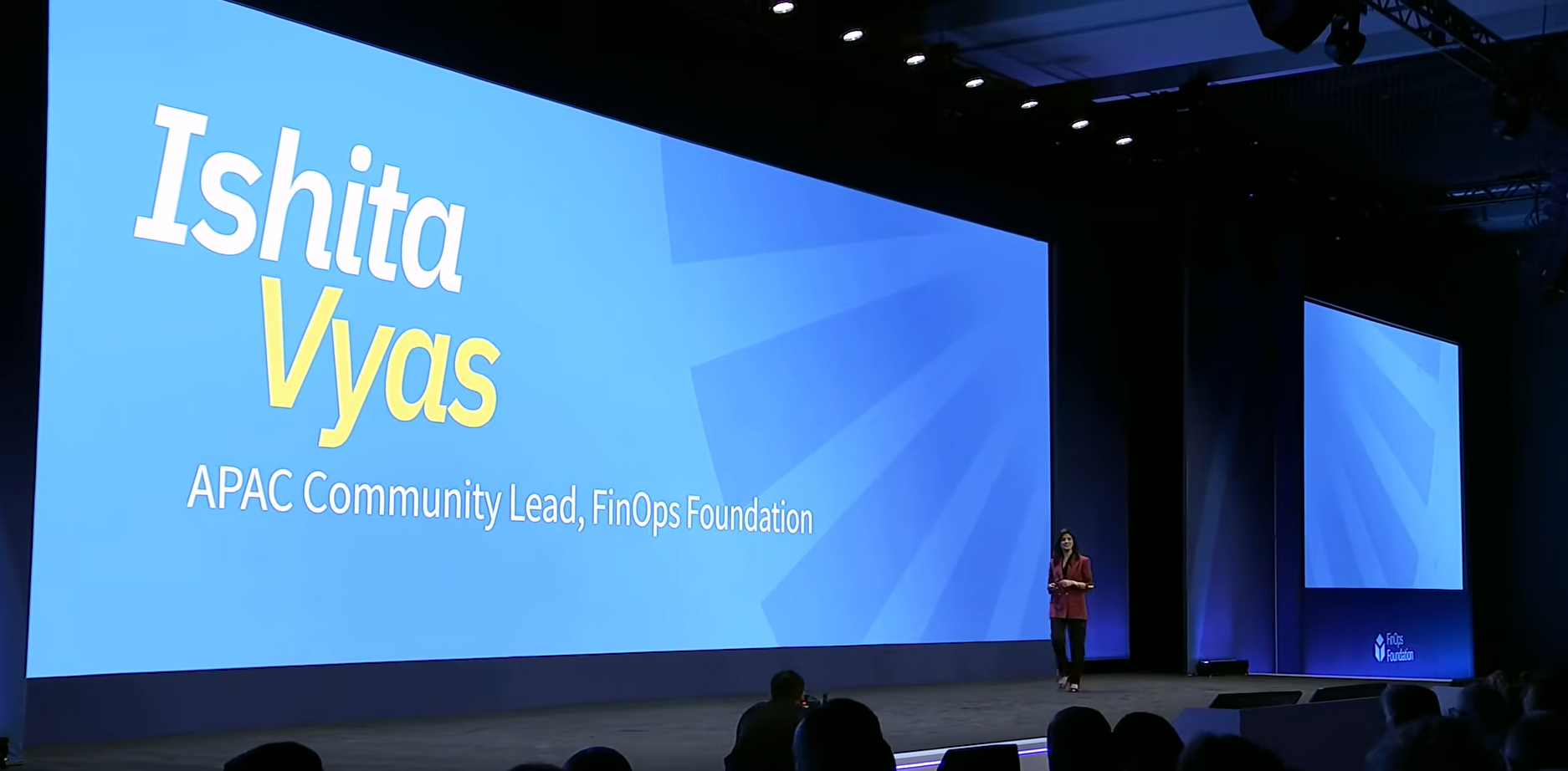
Ishita Vyas from FinOps Foundation presenting at FinOps X 2026
Ishita Vyas, the FinOps Foundation‘s APAC community lead, opened the keynote with a crawl, walk, run model for what the Foundation calls agentic FinOps maturity. The idea is simple even when the execution isn’t. Most teams start by asking a chatbot questionsabout spend. They graduate to agents that can act on recommendations, like rightsizing, without a person clicking approve every time, as she put it.
However, Vyas argued that autonomy without context creates new risks. She shared an example where an agent identified a virtual machine as idle and recommended shutting it down. The recommendation looked correct based on the available data, until an architecture team stepped in and explained that the virtual machine was a Kubernetes node designed to remain idle until workload demand increased.
The agent had the data. It did not have the context.
That missing context is one of the biggest challenges organizations face as they move toward agentic FinOps. According to Vyas, the information that explains why a decision exists often remains trapped in meetings and conversations across finance, procurement and engineering teams and many organizations still lack a standardized way to feed that knowledge into their AI systems.
She pointed to emerging solutions from the FinOps community, including FOCUS tag harmonization and metadata enrichment, which can create richer datasets that AI agents can understand and act upon.
AI won’t take your job, but standing still might
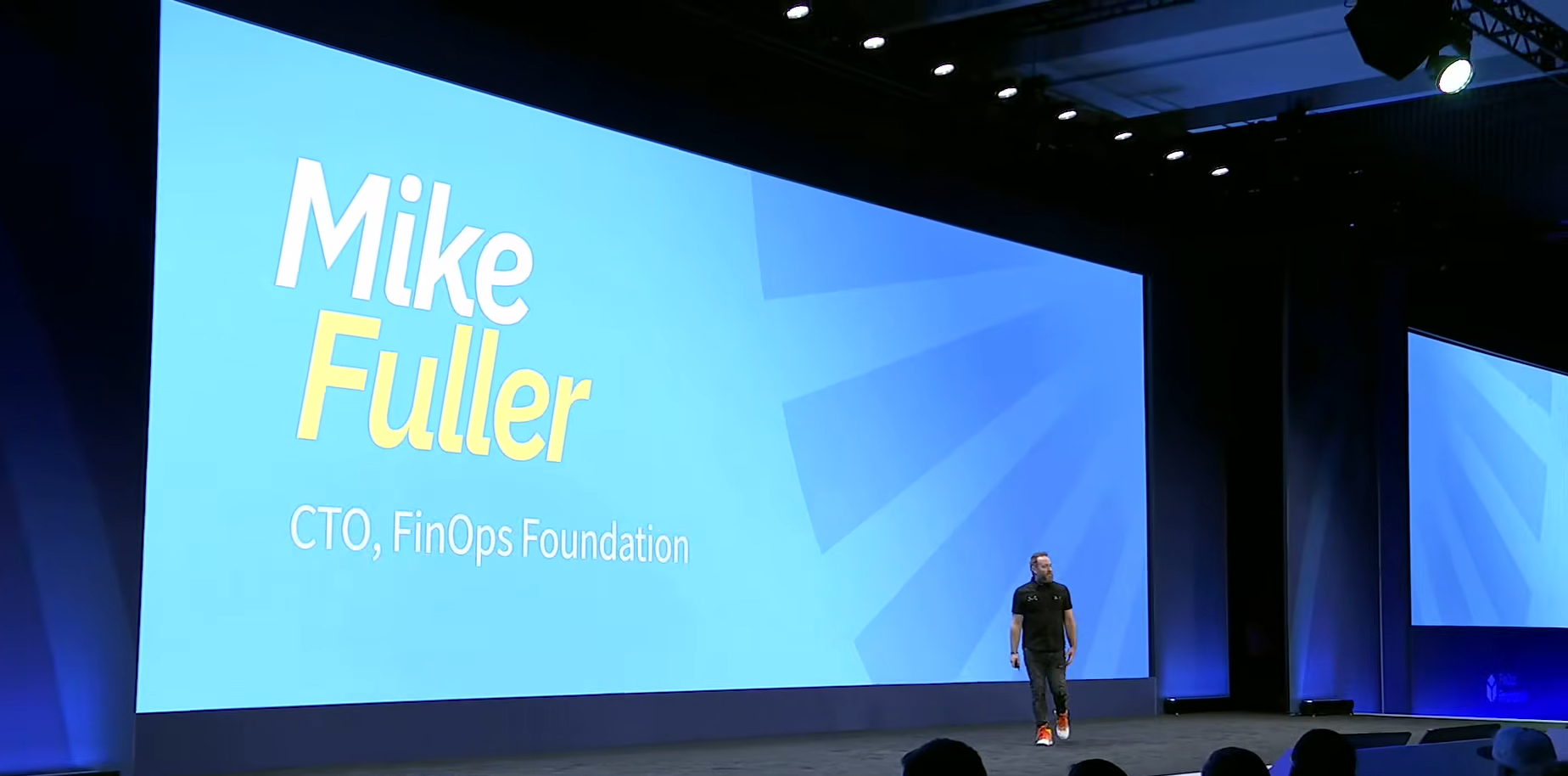
Mike Fuller from FinOps Foundation presenting at FinOps X 2026
Mike Fuller, the FinOps Foundation‘s CTO, then joined in. His point: AI isn’t coming for FinOps practitioners. It’s coming for the parts of the job that were never really the point anyway, like pulling reports and chasing spreadsheets.
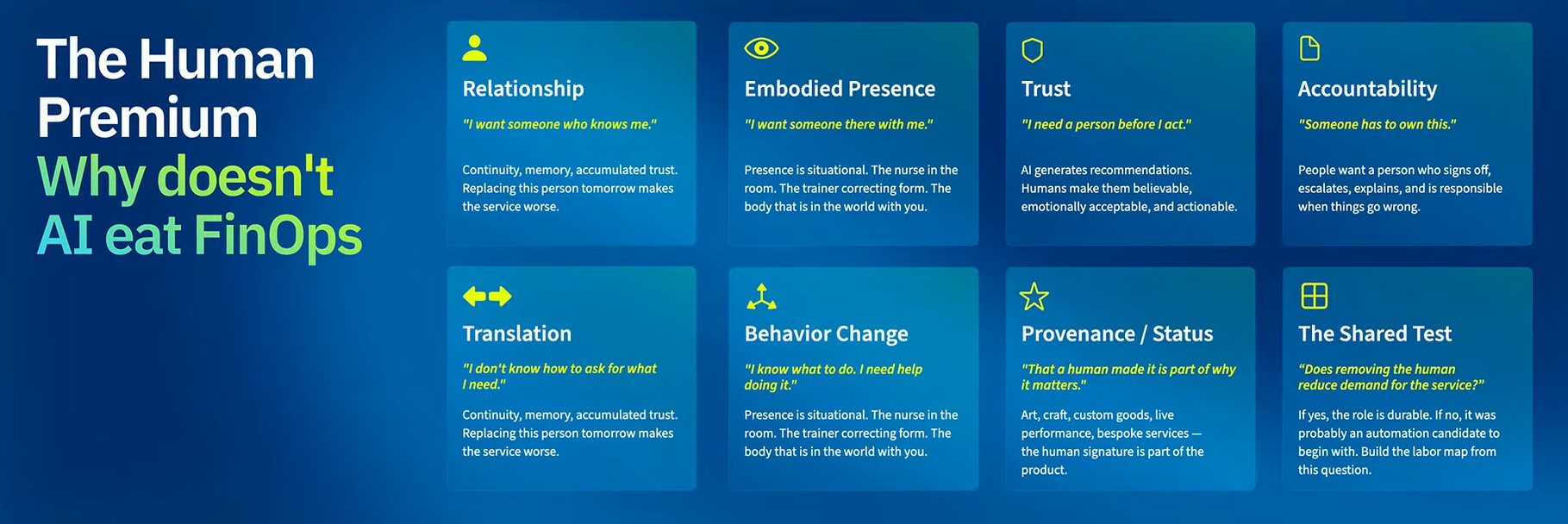
The human premium model, presented by Mike Fuller at FinOps X 2026 (Source: FinOps X)
He borrowed a concept from labor research called the “human premium,” the value that stays with a person even after AI can technically do the task. For FinOps, he said that premium shows up as trust, accountability, the ability to translate data into a decision and the ability to actually change someone’s behavior. None of that comes from a model.
He also made a point that’s easy to miss in all the AI noise. The basic job of FinOps hasn’t changed. It’s still about connecting every dollar of spend to a decision, a team and an outcome. What’s changed is the speed and the surface area. AI gateways and routers now make model selection decisions thousands of times an hour, each with its own small cost attached and none of them go through a person first.
His point was direct: if a FinOps practice can’t keep pace with how fast AI gateways and routers now make decisions, it stops getting consulted before decisions happen and starts showing up afterward with an analysis nobody asked for. His advice for staying relevant: spend less time gathering data and more time questioning what AI hands back to you, since a model can produce something that reads as polished and complete and still be wrong about your specific organization, your vendor history or which VP always overrides the budget.
Highlights: Day 2 of FinOps X 2026
Several leaders took the stage to share demos, product updates and lessons from putting FinOps for AI into practice.
Google Cloud on closing the AI value gap

Sarah McMullin from Google Cloud Foundation presenting at FinOps X 2026
Sarah McMullin, head of product at Google Cloud, opened with an uncomfortable stat: by Google’s own estimate, roughly 95% of organizations aren’t yet seeing measurable value from their AI investments and only about 5% have moved past proof of concept into production.
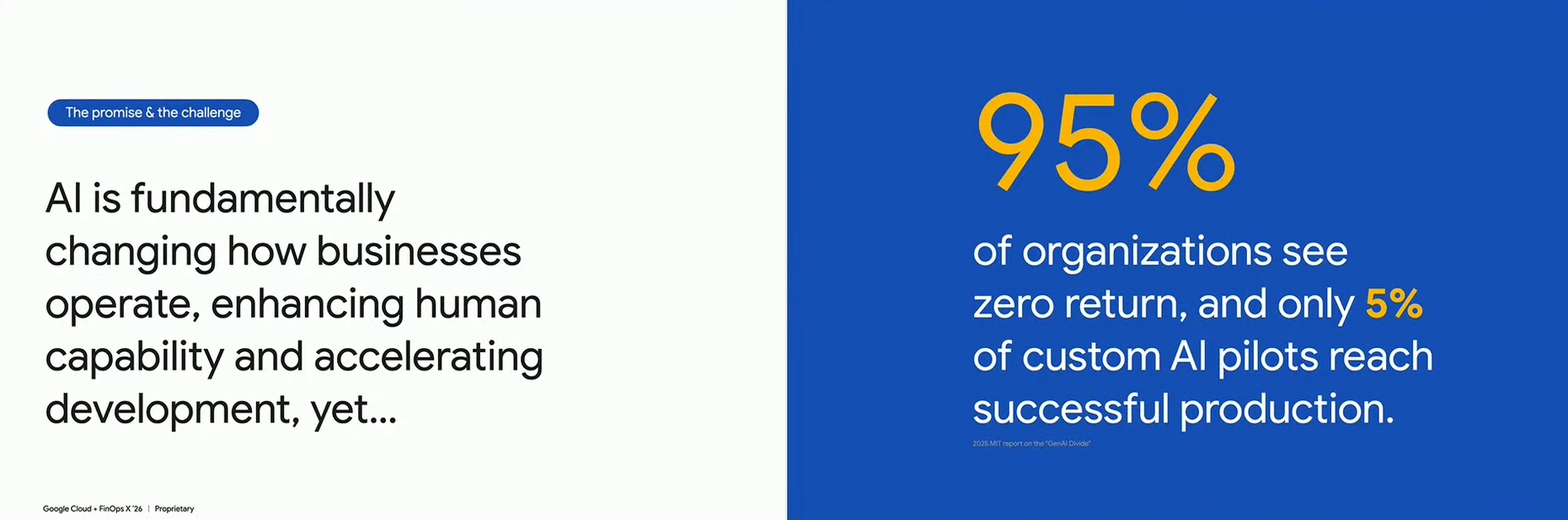
Chart showing most AI initiatives stalling before reaching production, presented by Sarah McMullin at FinOps X 2026 (Source: FinOps X)
She shared examples from inside Google itself: the company says it now matches supplier invoices to contracts four times faster using AI and an internal agent called Ducky cut onboarding time for new engineers by double digits. She then laid out three problems holding most companies back, each matched to a feature.
She then laid out three problems holding most companies back, each matched to a feature.
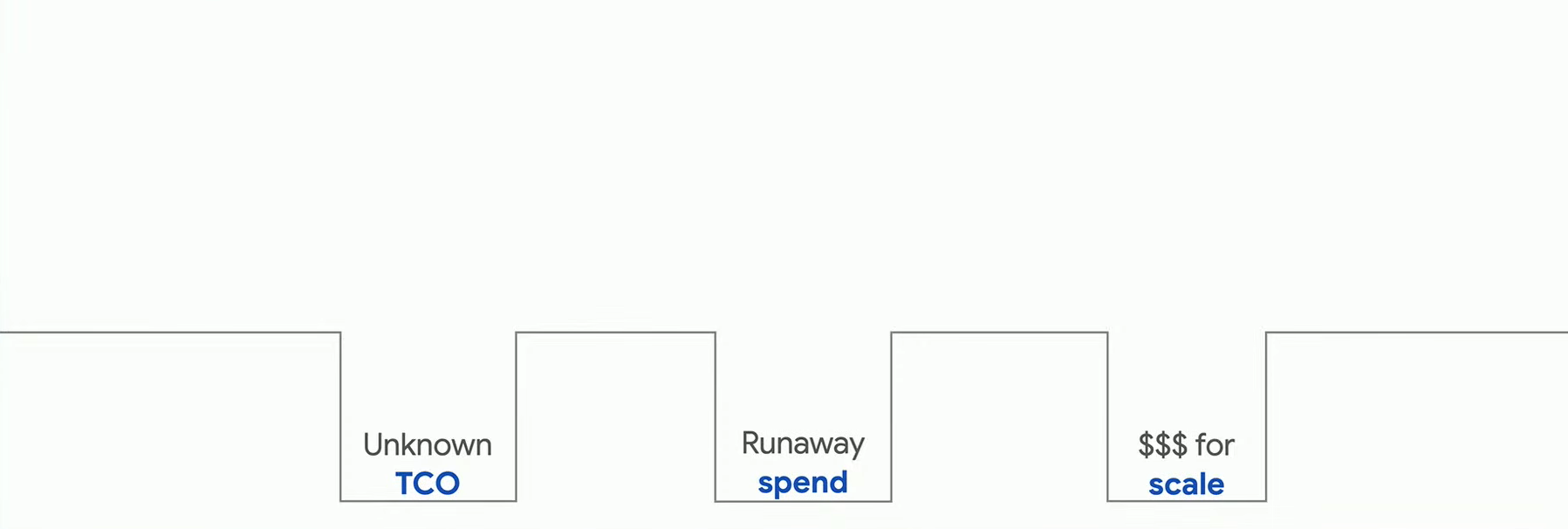
The three core AI cost problems, presented by Sarah McMullin at FinOps X 2026 (Source: FinOps X)
Problem 1: Calculating total cost of ownership is hard when AI inputs and outputs are both unpredictable. Google’s answer is the FinOps AI Explainability Agent, which scans your cloud footprint and explains why your AI spend looks the way it does, broken down by model, modality and token direction (input versus output).
Problem 2: AI spend doesn’t behave like traditional cloud spend. It shows up fast and blows through budgets without warning. Google has been expanding Spend Caps, a feature that pauses a service automatically once it hits its budget limit, without deletinganything. Spend Caps have been in private preview since April 2026, covering Google AI Studio, the Gemini Enterprise Agent Platform, Cloud Run, Cloud Run Functions and Maps.
Problem 3: Picking the right partner means understanding the contract, not just the bill. Google has expanded its FOCUS 1.2 support with billing account groups, consolidated spend visibility and commitment tracking.
Pinterest’s tokenomic layer cake
Ambud Sharma from Pinterest presenting at FinOps X 2026
Ambud Sharma, a principal engineer at Pinterest who leads the company’s efficiency work, gave one of the more technical talks of the day. His first point was simple: stop treating AI spend as a single number. Split it into product AI, the customer-facing features that should grow revenue and can justify a bigger budget and internal AI, tools like coding assistants and document processors that should be judged purely on cost savings.
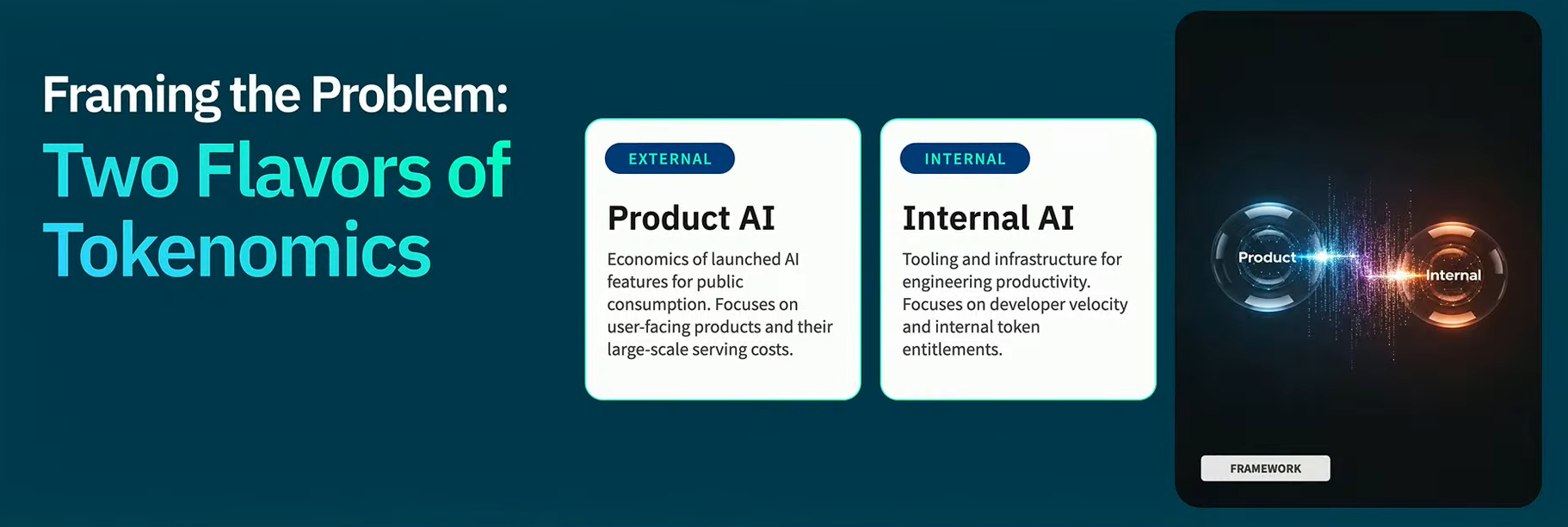
Two flavors of Tokenomics (Product AI versus internal AI), presented by Ambud Sharma at FinOps X 2026 (Source: FinOps X)
His bigger argument is that tokenomics isn’t a cost question, it’s a ratio question; basically a return on investment question (and the industry doesn’t have settled metrics for it yet). Because of that, he pushed for what he called an abundance mindset: instead of cutting the budget, find ways to get more tokens out of the same budget.
He illustrated that with what Pinterest calls a tokenomic layer cake, where gains at each layer compound on the ones below it:
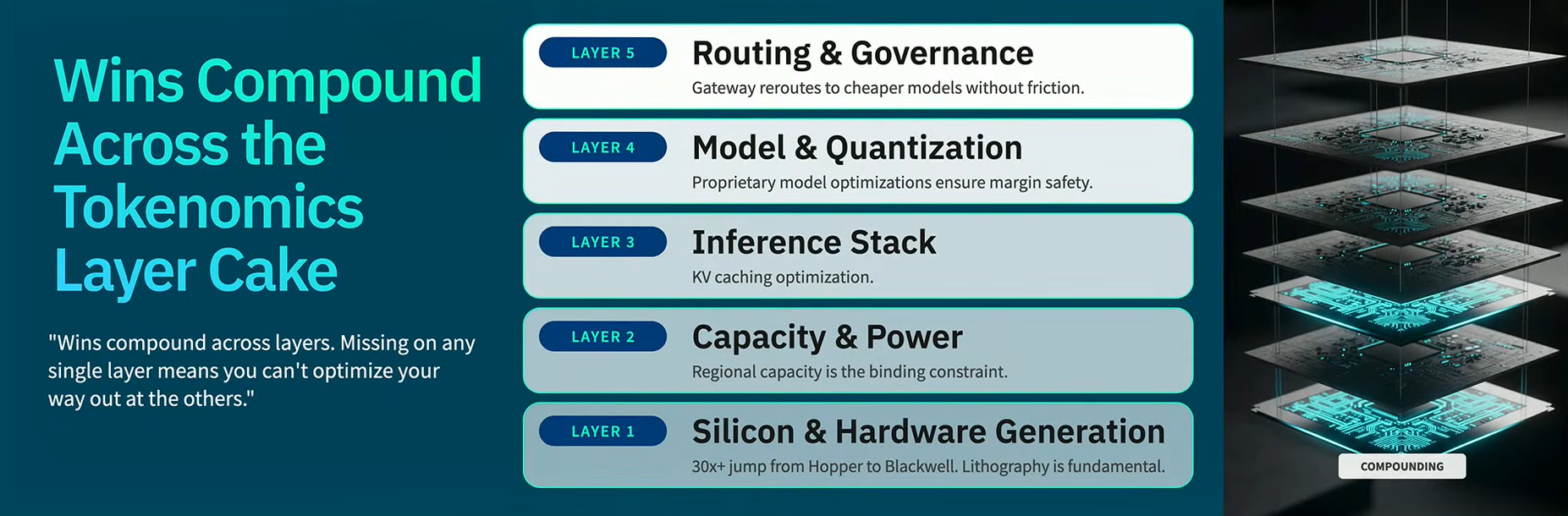
Pinterest’s tokenomic layer cake, presented by Ambud Sharma at FinOps X 2026 (Source: FinOps X)
1) Silicon and hardware, where chip-level gains in lithography and memory bandwidth set the ceiling for everything above.
2) Infrastructure, since the chip you pick decides which region, zone and data center you can get capacity in and if liquid cooling becomes part of the deal.
3) The inference stack, the software layer where tricks like KV caching and separating prefill from decode squeeze more tokens out of the same hardware, with batching as a classic lever that trades latency for throughput.
4) Model and quantization choices, like picking a dense model versus a mixture of experts model, or trimming parameter count and precision to fit the task.
5) Routing and governance, where a router can quietly downgrade a request to a cheaper model when someone asks for the biggest model and doesn’t actually need it, while still enforcing a budget.
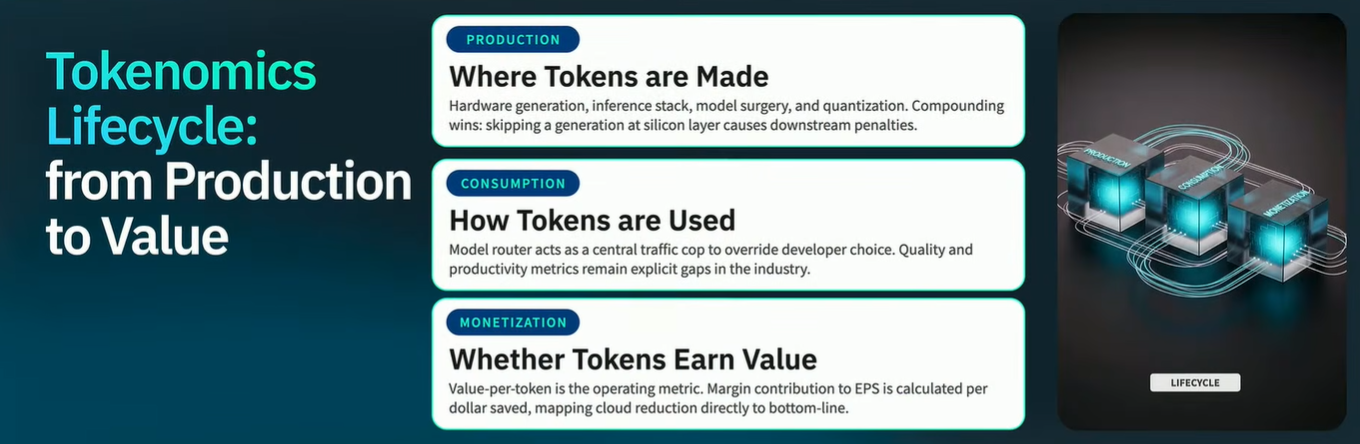
Tokenomics lifecycle, presented by Ambud Sharma at FinOps X 2026 (Source: FinOps X)
His closing point: know where your tokens get made, know how they’re used and know what value they create for the business. Skip any one of those and you’re optimizing in the dark.
IBM Cloudability builds financial intelligence
Bill Lobig from IBM Cloudability presenting at FinOps X 2026
Bill Lobig, vice president and general manager at IBM Cloudability (part of Apptio, an IBM company), opened by noting AI spend is growing several times faster than total IT spend, compressing roughly two decades of cloud spending growth into about five years.
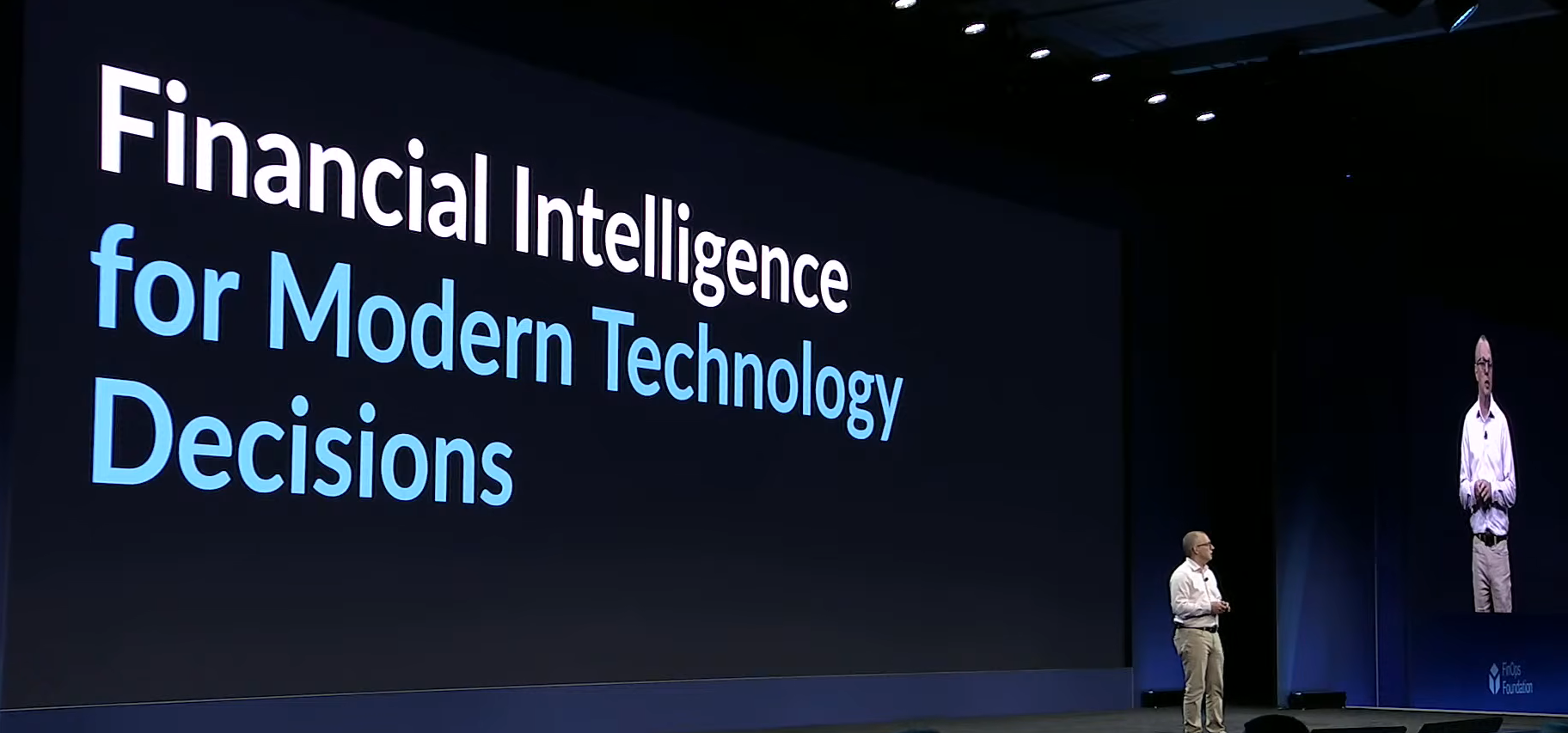
Bill Lobig announcing financial intelligence – FinOps X 2026
His announcements centered on what he called financial intelligence, with three pieces standing out.
Conversational Insights, which allows practitioners ask Cloudability questions in plain English language instead of learning the tool first. For decades, Lobig said, people had to adapt to software. Now the software can adapt to the person asking the question, which matters if you don’t want every team in the company needing a FinOps certification just to be a responsible steward of their own AI spend. It’s available in preview now, with broader availability expected later in 2026.
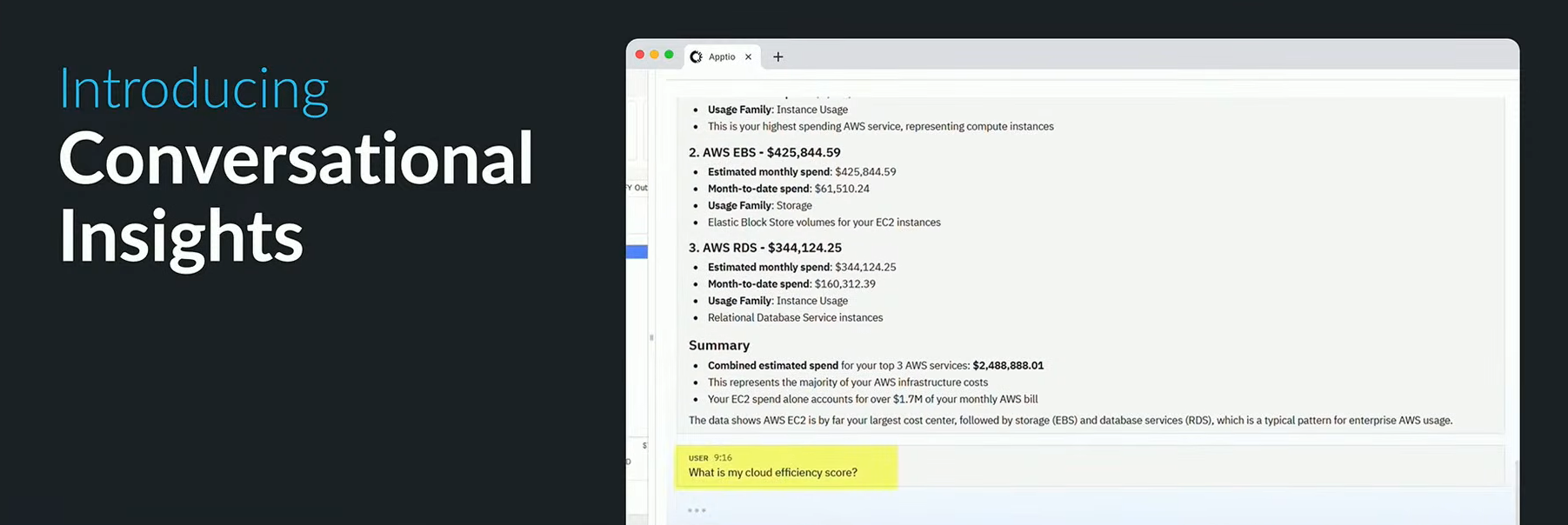
IBM Cloudability’s Conversational Insights features, presented by Bill Lobig at FinOps X 2026 (Source: FinOps X)
The Cloudability MCP Server addresses a more technical problem: Cloudability has hundreds of APIs and pointing an AI agent at all of them to answer one question burns a lot of tokens reasoning through endpoints it doesn’t need. The MCP server pre-digests that complexity into a smaller toolset an agent can call efficiently.
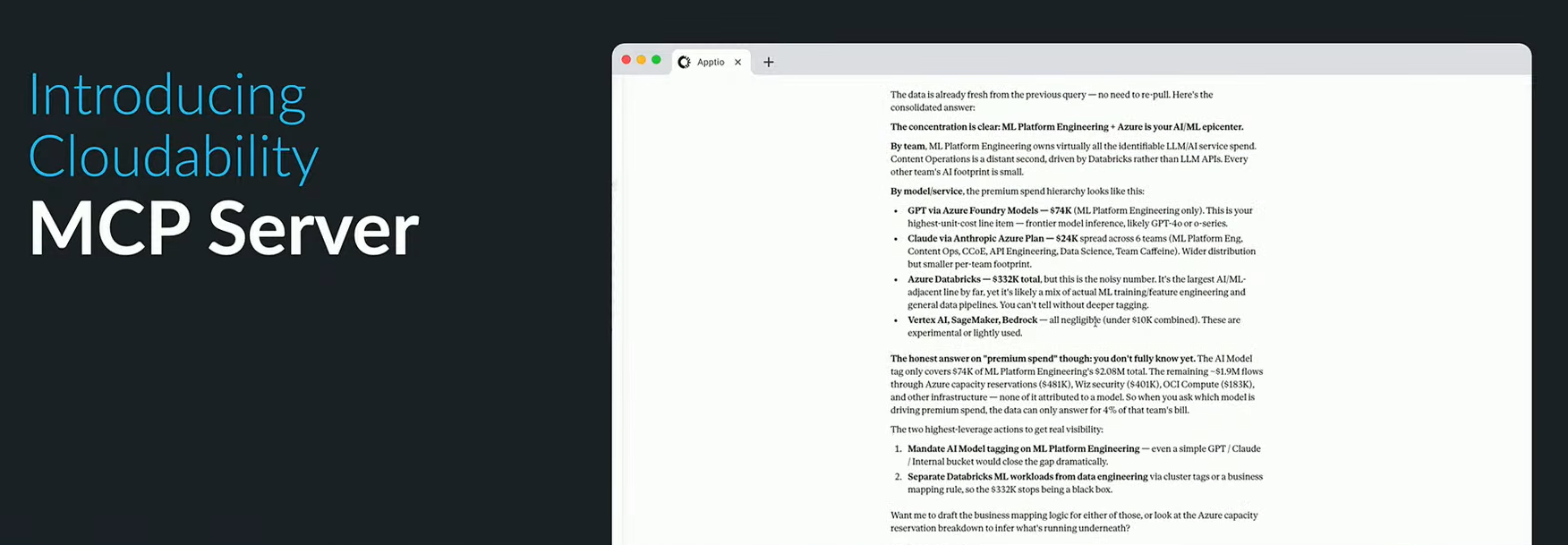
IBM Cloudability’s MCP Server features, presented by Bill Lobig at FinOps X 2026 (Source: FinOps X)
Lobig also showed a new FOCUS AI Agent and a mapping feature connecting AI use down to specific model families and up to the business applications they support, alongside direct connections to Bedrock, Foundry, Google Vertex AI, OpenAI and Anthropic, with support for more tool gateways on the way.
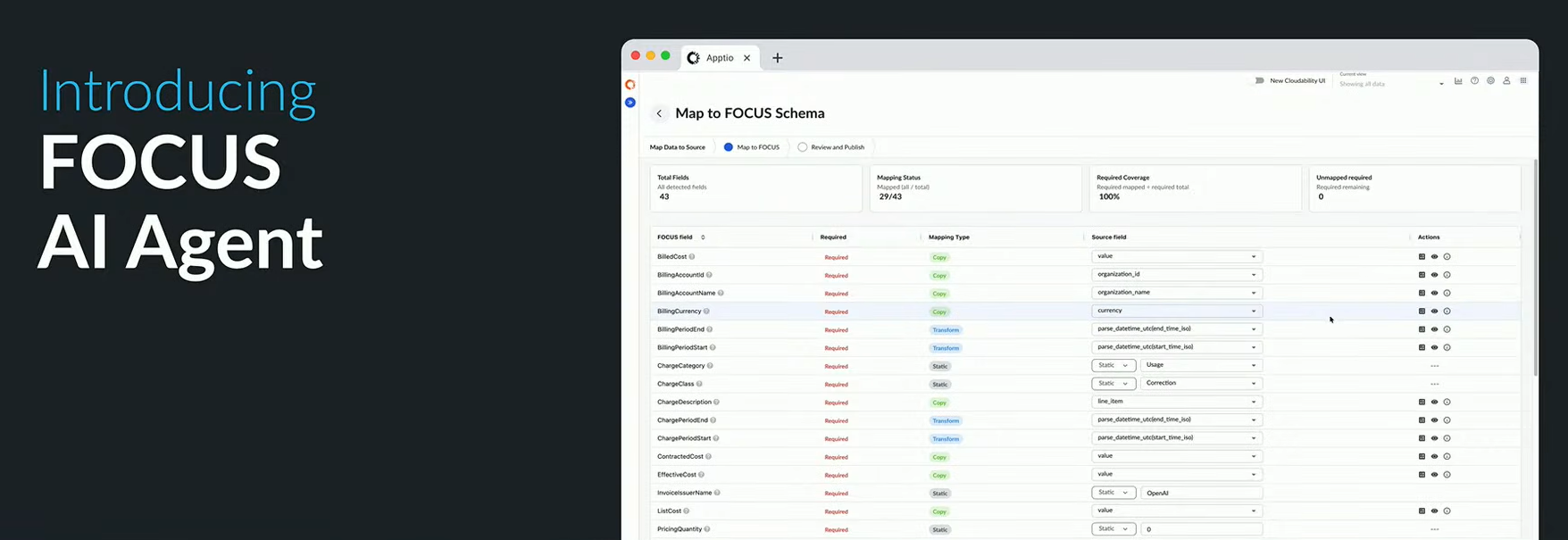
IBM Cloudability’s FOCUS AI Agent, presented by Bill Lobig at FinOps X 2026 (Source: FinOps X)
A fireside chat with MetLife
Sonali Niswander, MetLife’s SVP of Technology and AI, joined J.R. Storment for a fireside chat at FinOps X 2026. The conversation focused on what “AI is cloud all over again, only 10x faster” means in practice: value, forecasting, governance and developer accountability.
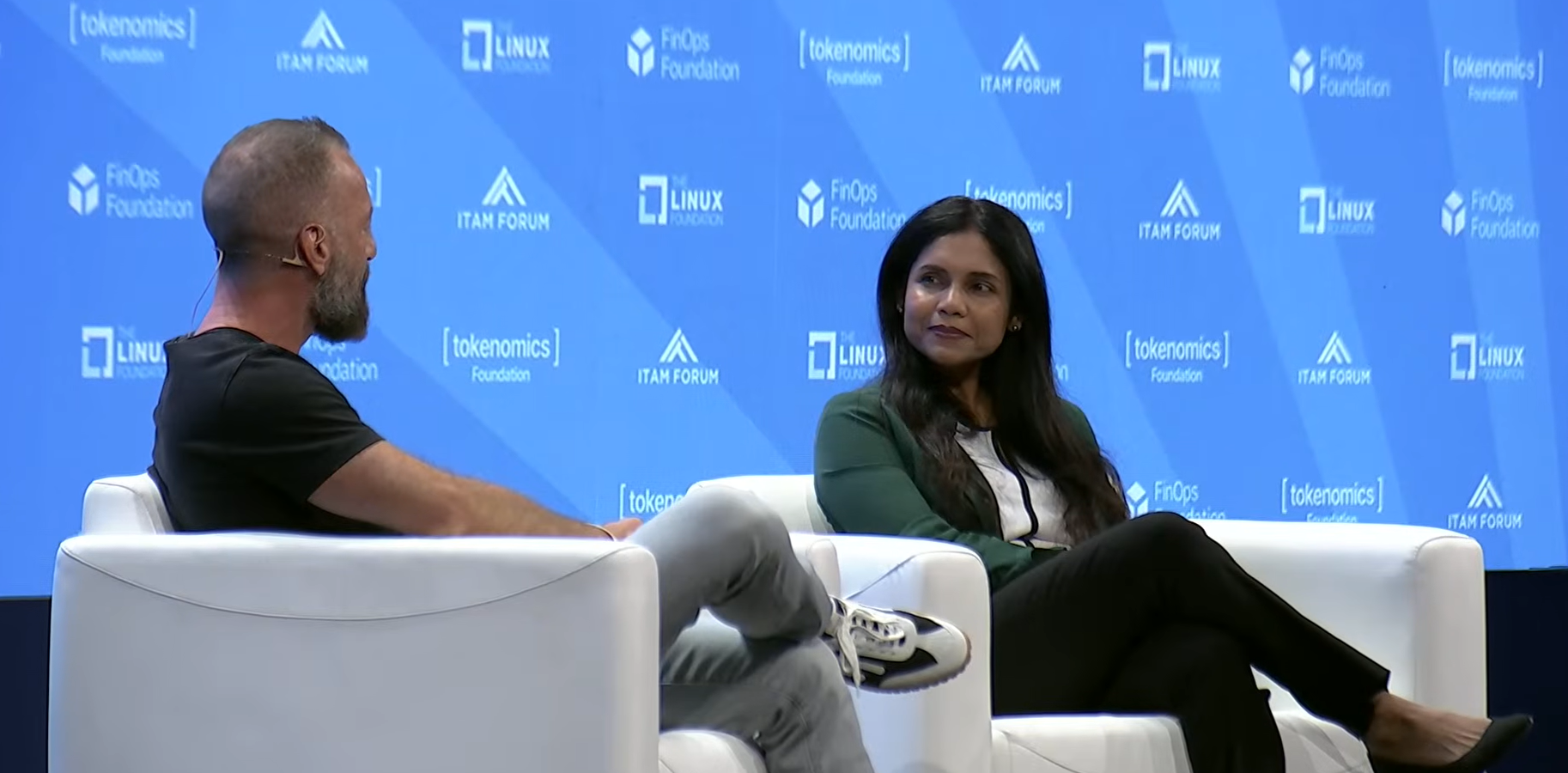
MetLife’s Sonali Niswander in conversation with J.R. Storment – FinOps X 2026
Niswander defined tokenomics as managing the cost, consumption and value of AI tokens and tying that spend back to business outcomes. She treated it as an added set of dimensions for FinOps, not a replacement. At MetLife, she broke the work into three stages.
First is consumption visibility, because AI usage shows up across internal platforms, SaaS tools and vendor APIs and there is no out-of-the-box unified view.
Second is optimization, with model routing that matches the right task to the right model and design-time evaluations that force the cost, performance and accuracy trade-off to happen early.
Third is value realization, which is simplest when there is a baseline, such as automating a process with measurable hours and hardest when the use case is new and growth oriented.
In those cases, MetLife starts with a value hypothesis, runs a time-bound pilot and defines success before the work begins.
She also pushed a practical view of governance. MetLife does not stop experimentation. It sets guardrails, offers persona-based model choices and lets engineers use the most capable reasoning models when the workload calls for it, while giving marketing, legal and other teams a more prescriptive set of options. Her point on speed was nuanced: some work, like underwriting, needs accuracy more than speed, while other work needs faster decisions. The right balance depends on the problem.
For teams trying to prepare now, her advice was very clear. Get visibility first. You cannot govern what you cannot see. Then build guardrails into the platform and give business partners and engineers the data they need to make the right trade-offs. The goal is not AI for its own sake. It is business value.
FOCUS 1.4 arrives and 1.5 already has a shape
Shawn Alpay from FinOps Foundation presenting at FinOps X 2026
Shawn Alpay, director of data engineering at the FinOps Foundation, formally introduced FOCUS 1.4, the largest update to the FinOps Open Cost and Usage Specification (FOCUS) since the standard was launched. The release expands FOCUS beyond cost and usage reporting with new datasets for invoice reconciliation and billing-period management, while also laying the groundwork for future support of AI and token economics.
FOCUS 1.4 announcement – FinOps X 2026 (Source: FinOps X)
Alpay opened with a reminder of FOCUS’ core mission: creating a common language for technology spending. Earlier versions focused on answering fundamental FinOps questions such as what was used, what was spent and what was saved. FOCUS 1.4 extends that model by helping organizations understand commitments, invoices and the quality of the underlying data itself.
A main addition is the new Invoice Detail dataset, which maps directly to provider invoices at the line-item level and links back to Cost and Usage records through shared identifiers. For FinOps teams, that addresses one of the most persistent challenges in cloud financial management: invoice reconciliation. The dataset also adds invoice-specific information such as payment currency, payment terms, due dates and purchase order references. A new Billing Period dataset rounds this out by marking whether a billing period is open or closed, so practitioners know exactly when chargeback, journal entries and reconciliation can run with confidence.
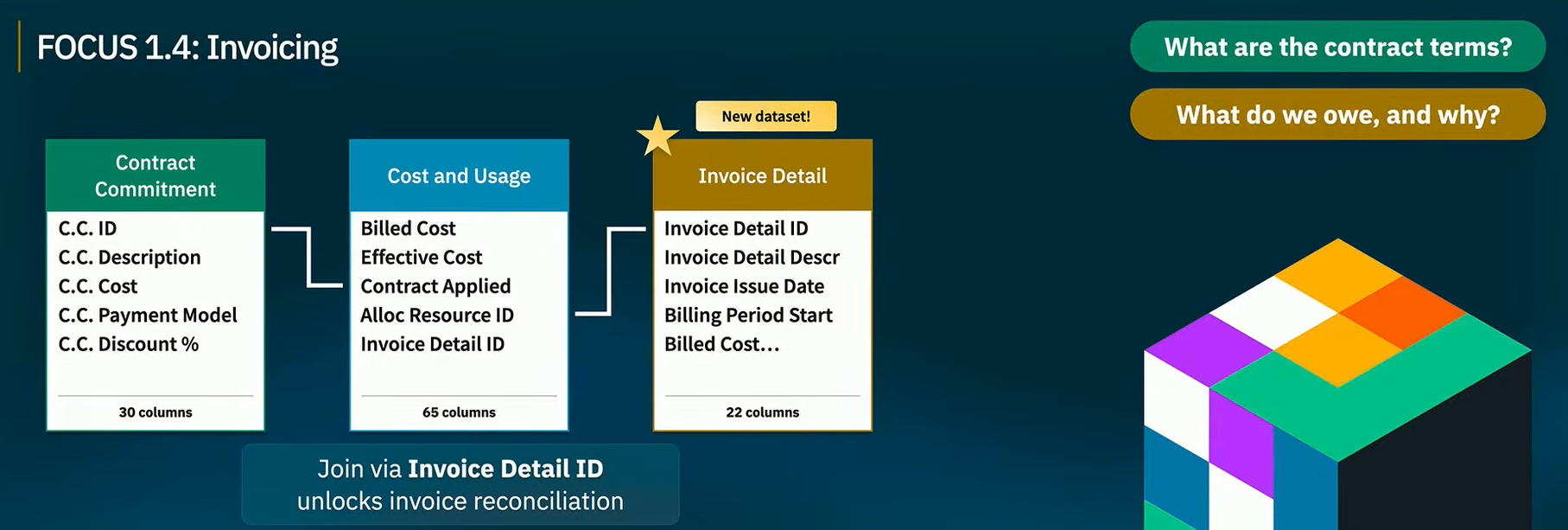
New Invoice Detail and Billing Period datasets linking to existing Cost and Usage records, presented by Shawn Alpay at FinOps X 2026 (source: FinOps X)
FOCUS 1.4 also expands the Contract Commitment dataset, providing a more complete view of commitment programs and the benefits attached to them. New metadata helps organizations track commitment lifecycle status, program details and coverage eligibility. The release also introduces support for Commitment Program Eligibility Details, allowing teams to identify resources that could have been covered by a commitment, even when no commitment was applied.
Alongside those additions, the FinOps Foundation strengthened data integrity across the specification. A new Billing Period dataset identifies whether a billing period is open or closed, helping practitioners determine when activities such as chargeback, journal entries and invoice reconciliation can be performed with confidence. The release also adds clearer rules around corrections, completeness requirements and data delivery methods.
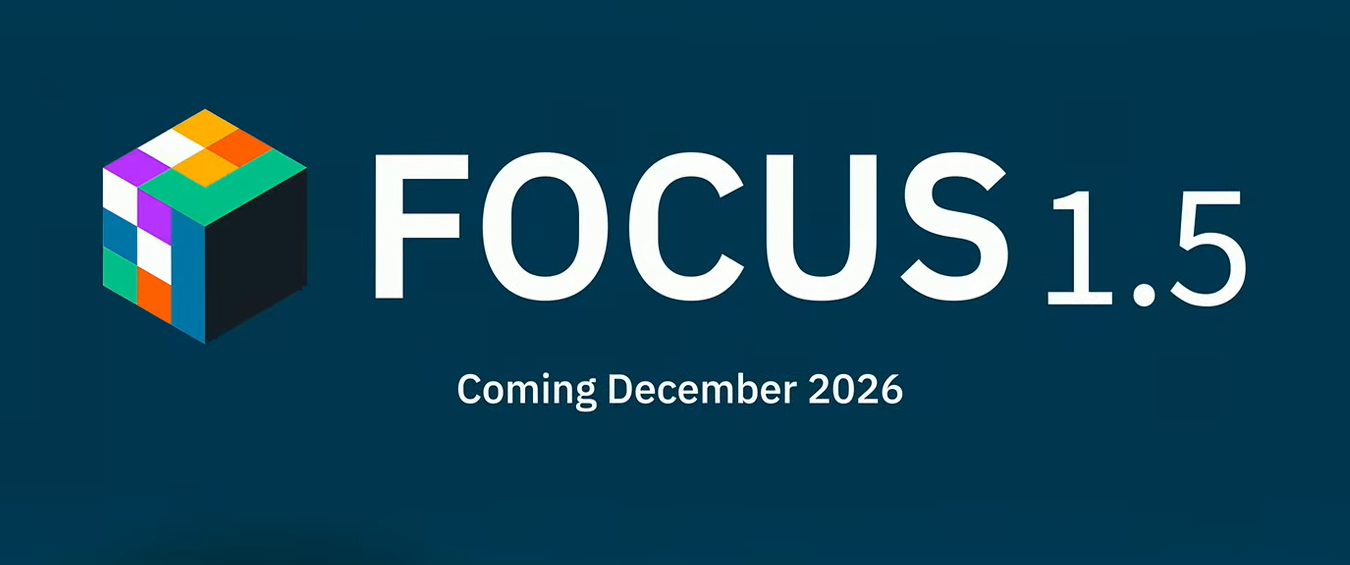
FOCUS 1.5 coming soon – FinOps X 2026 (Source: FinOps X)
Looking ahead, Alpay signaled that the next major frontier for FOCUS is token economics and AI consumption. As organizations move beyond traditional cloud billing and begin tracking model usage, inference costs and AI-generated business value, FOCUS will need to support far more granular data. He noted that future work is expected to focus on unit economics, token-level visibility and price-sheet data that can help teams evaluate alternative architectures, commitment strategies and optimization opportunities.
Oracle on reducing FinOps friction
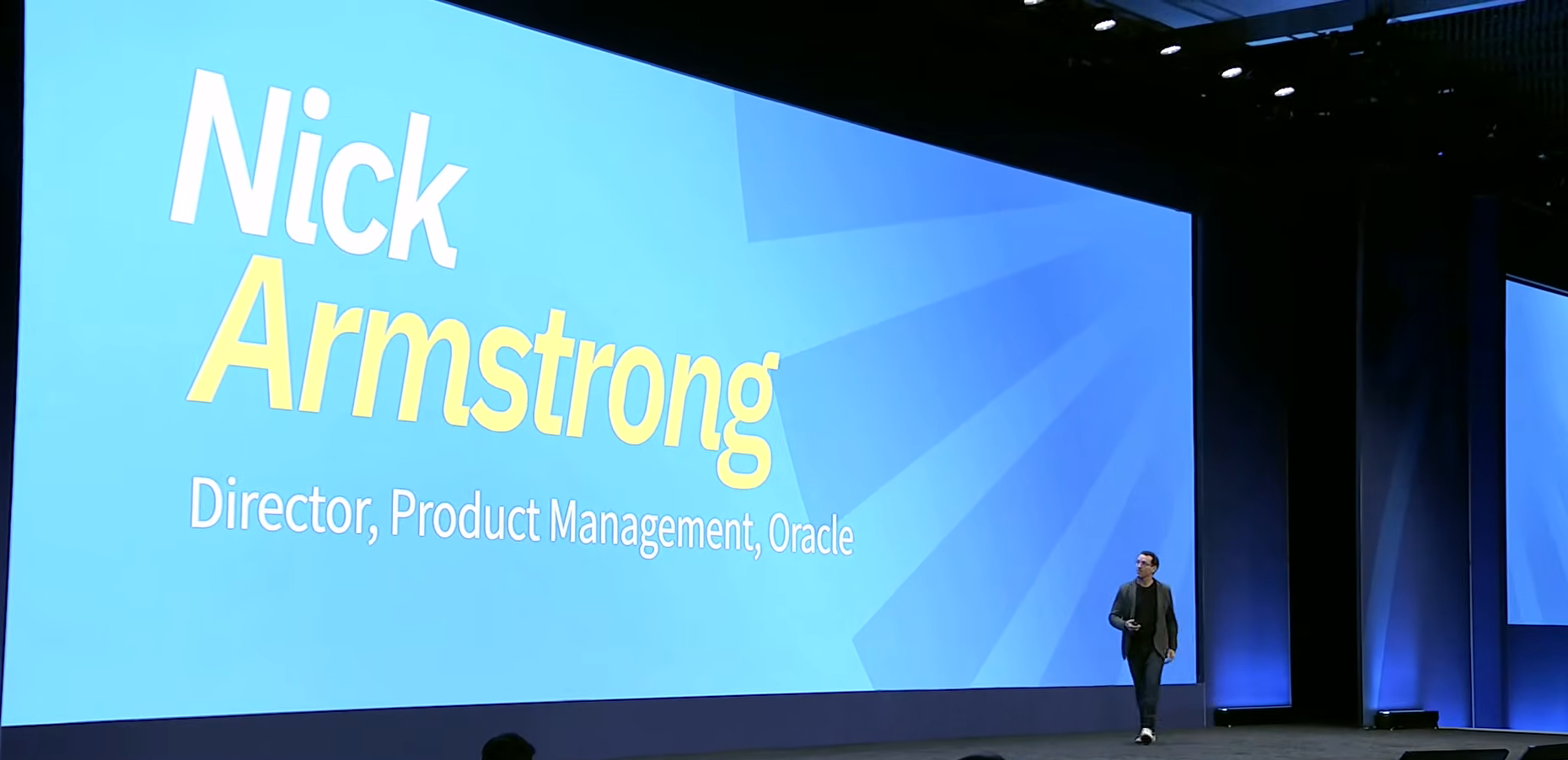
Nick Armstrong from Oracle presenting at FinOps X 2026
Nick Armstrong, director of product management at Oracle, centered his segment on a pattern Oracle’s product team has watched for years. Customers do not just read static cost reports. They interrogate the data, slicing, filtering and grouping it far beyond what a preset dashboard can do. Cost analysis remains the most-used page in Oracle’s billing portfolio and programmatic access leads by a long shot.
He used a spend spike as the example. A report comes in, someone needs a fast answer and the old workflow means pulling data, pivoting by tags and hoping the tagging is clean. Armstrong said the goal is not full AI autonomy. It is a human working with AI tools. He said AI can detect anomalies, infer patterns, suggest remediation paths and even produce a Terraform script when something needs to be fixed. As he put it, “So that’s where we’re investing in really the strategic area here which is our cost intelligence capabilities”
Armstrong also said Oracle produces cost reports every six hours and runs cost anomaly detection on top of them. Oracle has been using that internally to catch billing issues before customers report them. He also said Oracle released FOCUS 1.3 support, which matters for customers running across multiple clouds and managing large spend commitments. He described FOCUS as a way to reduce the translation tax customers pay before they make a decision.
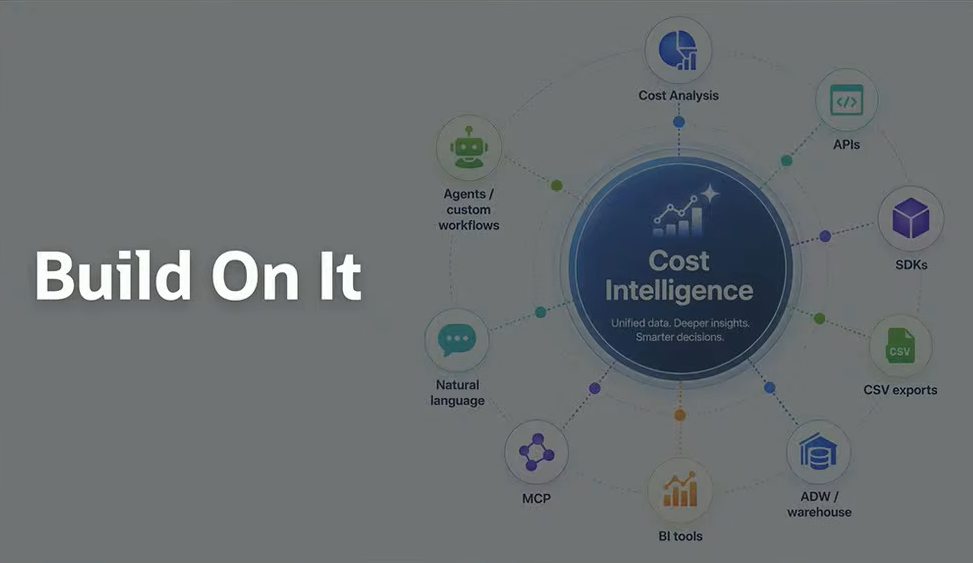
Oracle’s cost intelligence hub, presented by Nick Armstrong at FinOps X 2026 (Source: FinOps X)
Oracle is also rolling out a revamped cost reporting hub. Armstrong said it will give customers more flexibility in what data they get, how they get it and when they get it. He said Oracle is building a cost intelligence layer with APIs, MCP servers and natural language query integration in the console. That layer will cover more than billing, including compute and storage data. His point was simple. Customers already build custom experiences on top of Oracle data and Oracle wants to make that easier, faster and safer while reducing the distance between information and action.
Flexera and ProsperOps go all in on AI cost management
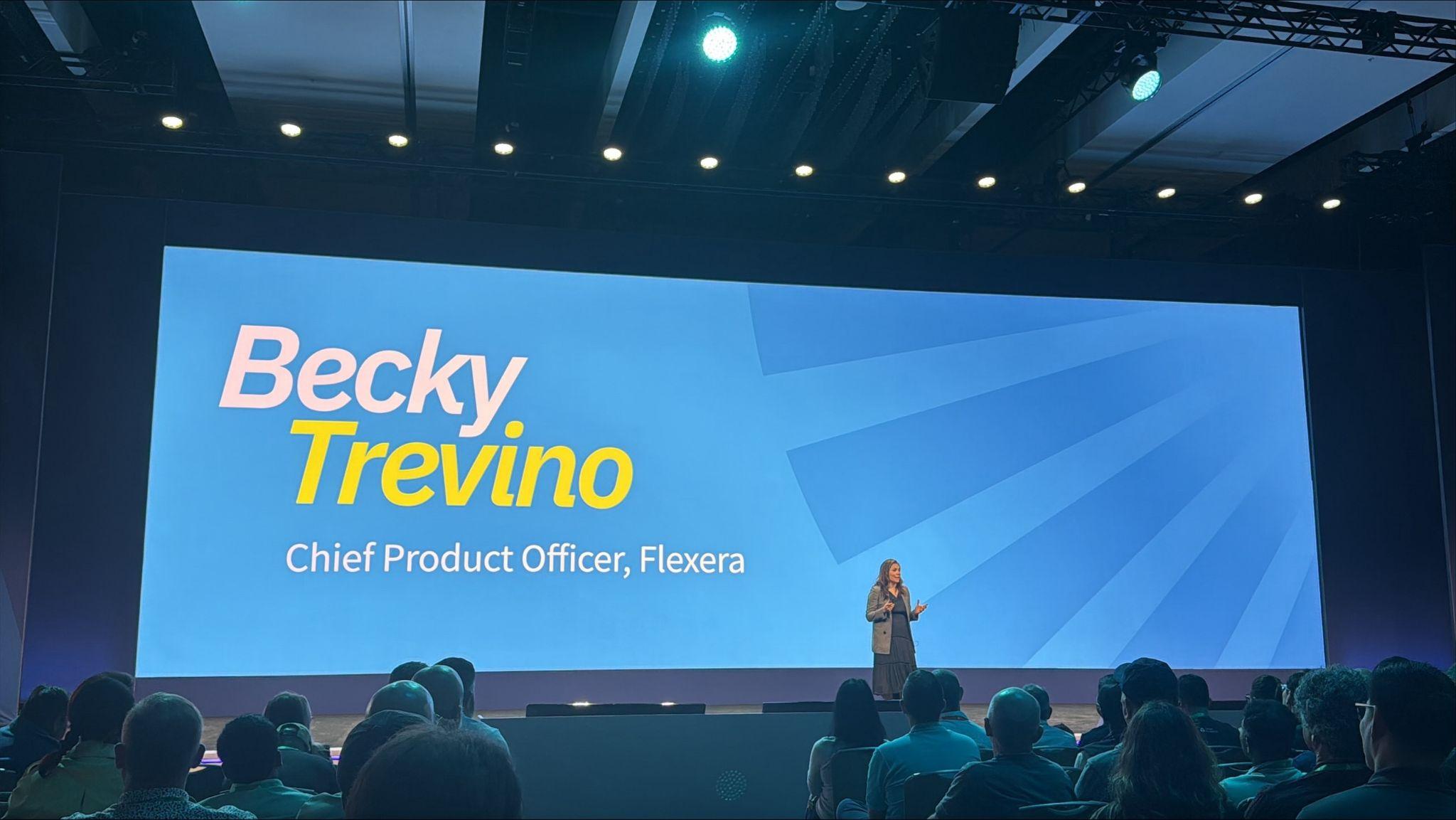
Becky Trevino from Flexera presenting at FinOps X 2026
Becky Trevino, our chief product officer, opened by asking the audience to pause and recognize what the FinOps community has accomplished over the past several years.
FinOps helped organizations bring structure, accountability and business value to cloud spending. But Becky argued that the conversation is changing. AI is introducing new services, new infrastructure requirements and entirely new pricing models. As a result, the questions FinOps teams must answer are changing too.
“As you may have heard this week, AI is disrupting all you’ve built”.
According to Becky, organizations can no longer focus solely on cloud value. Instead, they must figure out how to help the business maximize the value of AI while keeping spending visible, understandable and manageable.
“How do you enable the organization harness the value of AI to reach its maximum potential? That’s where FinOps is heading and where Flexera is already going”.
A major theme of Becky’s presentation was visibility.
Traditional cloud cost management focused on understanding infrastructure bills. AI introduces a different challenge. Costs now appear across cloud providers, SaaS subscriptions, AI services, data platforms and autonomous agents.
Becky described the problem as “AI is everywhere and everything all at once,” noting that organizations now need to track subscriptions, token consumption, model usage and new forms of business context that didn’t exist in earlier cloud environments.
The challenge isn’t simply finding AI costs. It’s understanding them well enough to make informed business decisions.
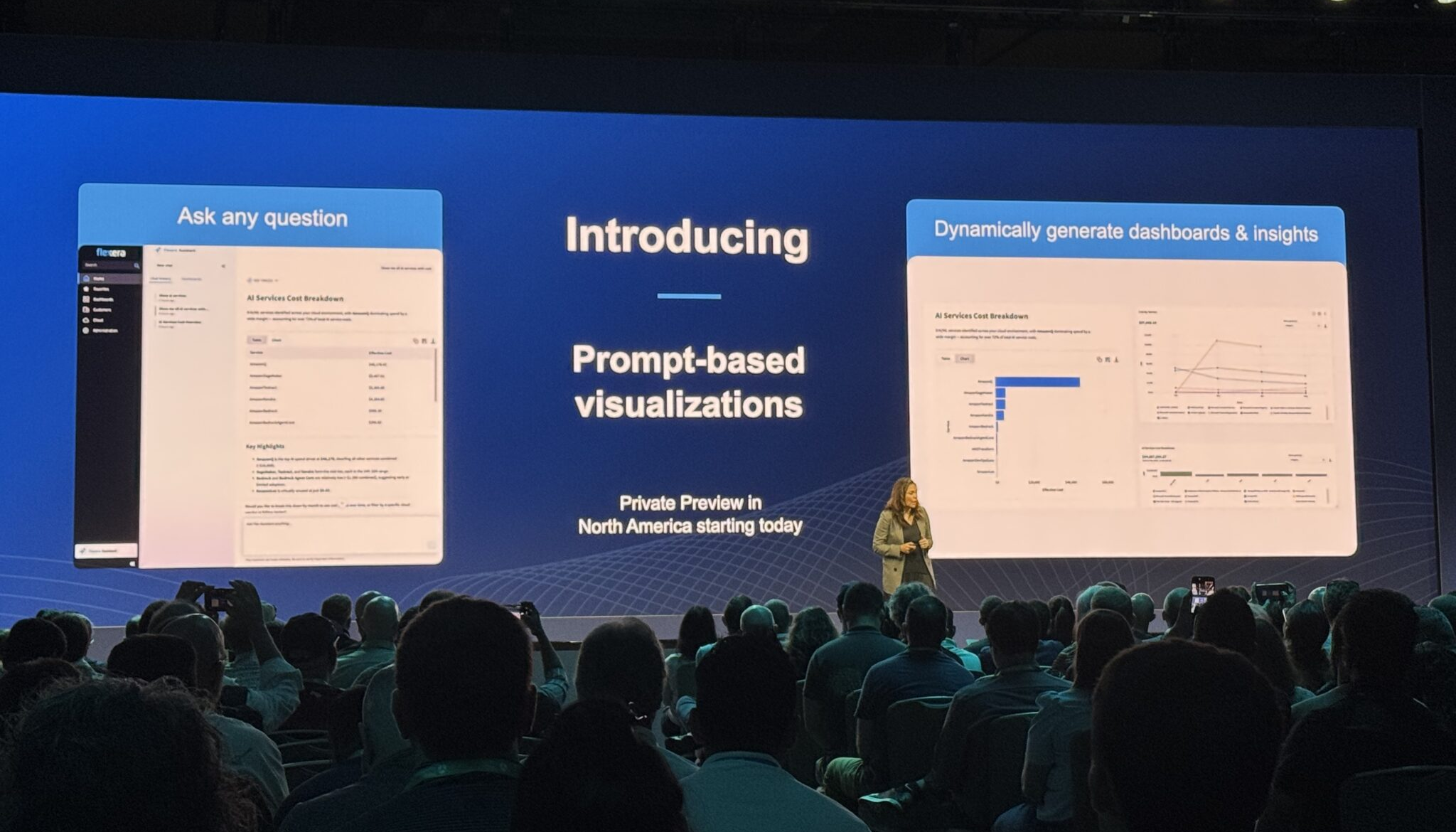
Becky announcing FinOps Assist – FinOps X 2026
To address that challenge, Becky announced the launch of FinOps Assist, a prompt-based feature rolling out inside Flexera One Cloud Cost Optimization. It’s built for the moment every practitioner dreads: an executive calls with a question about a spend spikeand there’s no dashboard built for that exact question. FinOps Assist is designed to close that very gap with natural language answers grounded in the policy engine and FinOps context already built up inside Flexera One. It’s available through MCP and currently in private preview. She then described it as an early step toward a fuller multi-agent setup that routes different questions to different specialized agents behind the scenes.
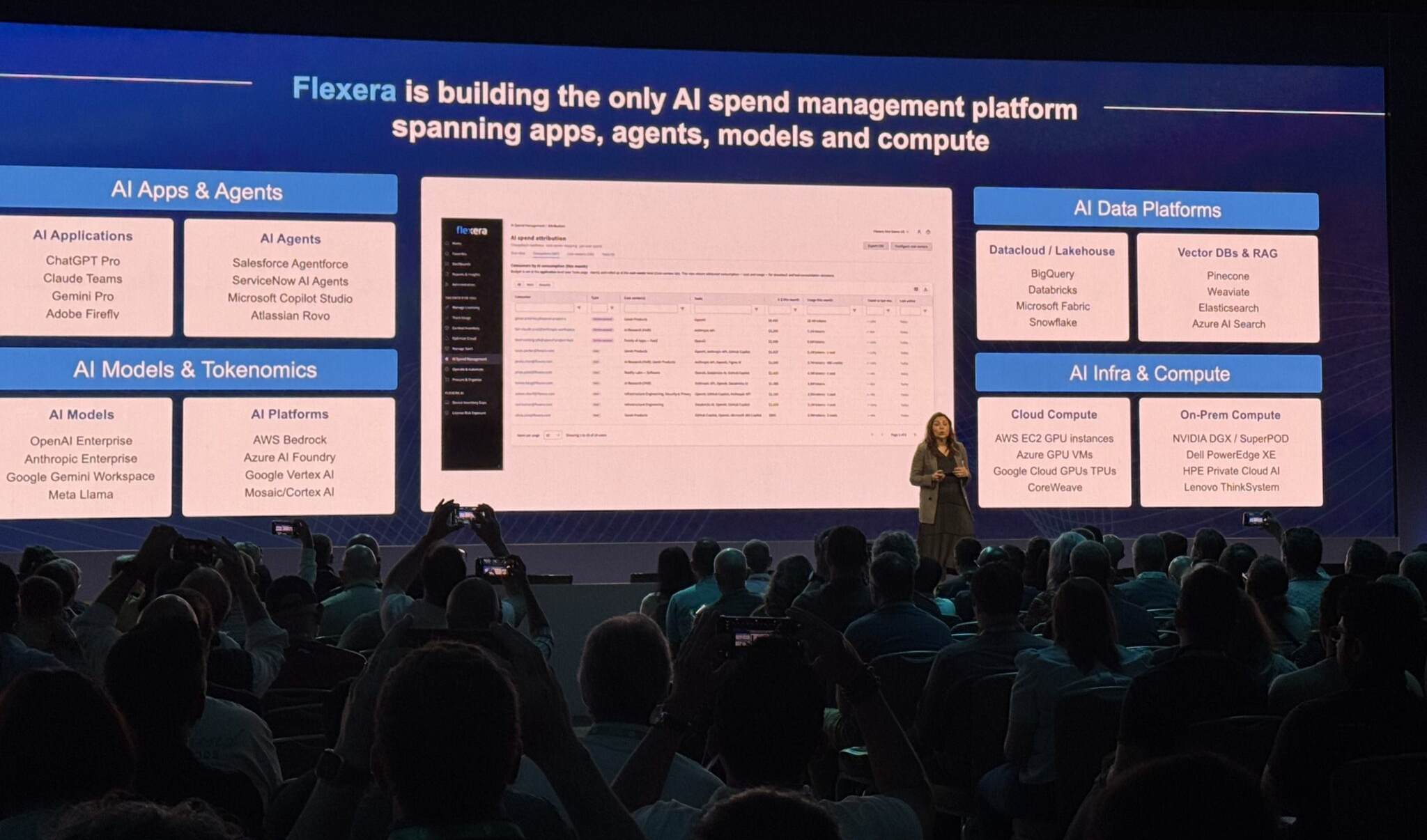
Becky announcing Flexera’s new features and capabilities – FinOps X 2026
Becky also outlined Flexera’s longer-term strategy for AI economics. She described a future where organizations need visibility across four layers of AI spending:
- AI applications and agents, where spend from tools like ChatGPT spreads across seats and subscriptions
- AI models and token consumption, which is where most of the anxiety in the room currently sits
- AI data platforms, like Snowflake and Databricks
- AI infrastructure and compute, the hardware underneath everything else
Becky pointed out that FinOps teams now need a single view across all four layers because AI spending rarely exists in one place. Costs can arise from SaaS subscriptions, model inference, token usage, data processing, or infrastructure consumption, frequently all at the same time. This is what Flexera’s AI spend management aims to solve.
Erik Carlin from ProsperOps (now part of Flexera): ProsperOps has autonomously generated $5 billion in savings for customers across AWS, Azure and Google Cloud
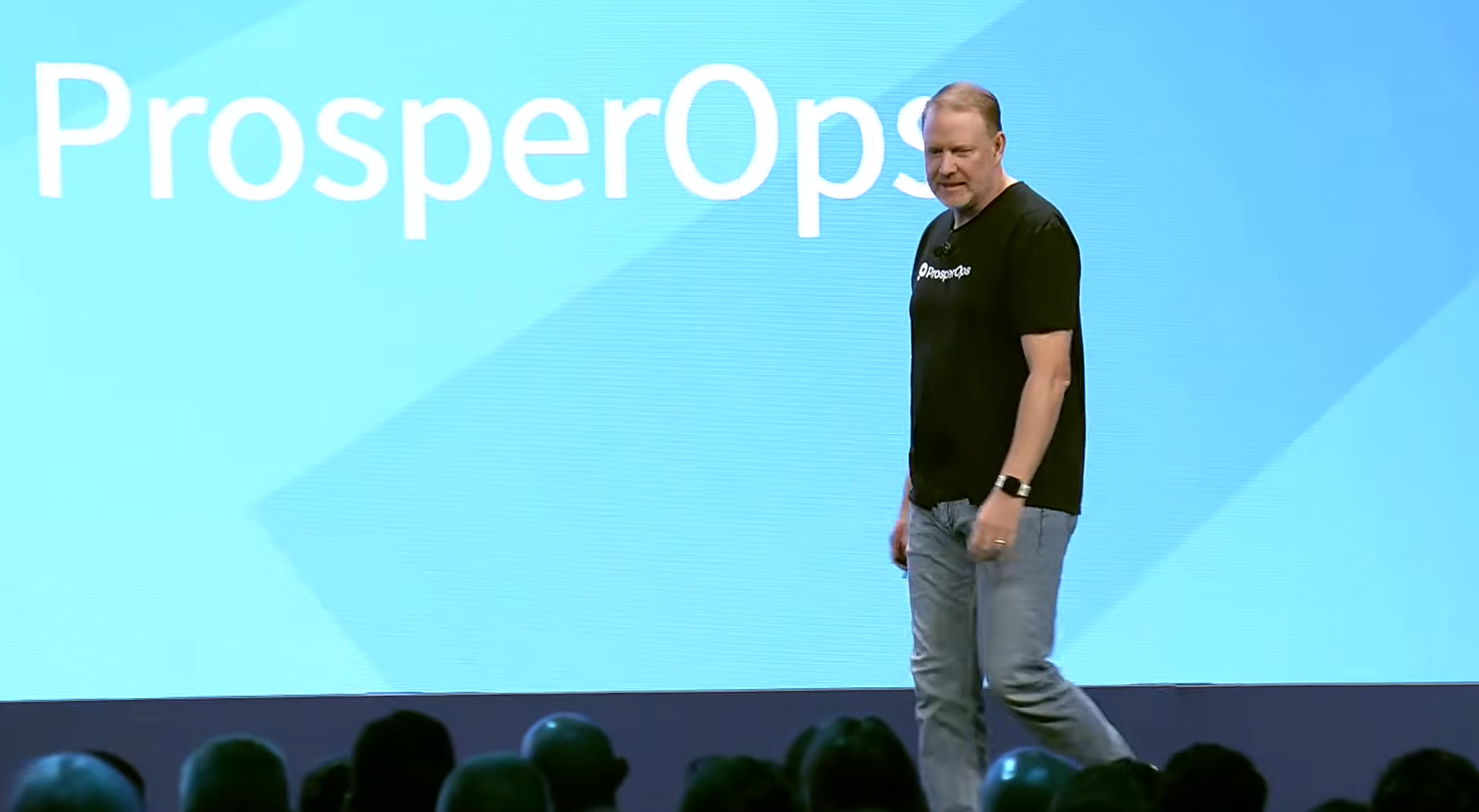
Erik Carlin from ProsperOps presenting at FinOps X 2026
Erik Carlin, co-founder and chief product officer of ProsperOps, took the second half of the segment to talk about something more concrete. He pointed out that ProsperOps has autonomously generated $5 billion in savings for customers across AWS, Azure and Google Cloud and used that track record to explain how optimization has changed. It used to be about saving money. Now, it is also about freeing up budget for AI work and other new initiatives.
He split optimization into two categories.
Rate optimization means paying less for what you already use, which is ProsperOps’s specialty through autonomous management of reserved instances, savings plans and committed use discounts.
Workload optimization means using less in the first place, which is what Flexera’s Ocean and Elastigroup products handle through automated Kubernetes sizing, spot instance management and intelligent VM autoscaling. The problem, Carlin said, is that these tools used to run on their own and could pull in different directions.
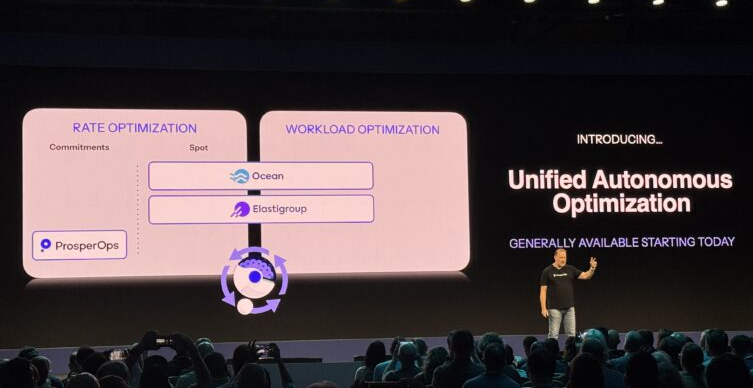
Erik Carlin officially announcing Unified Autonomous Optimization – FinOps X 2026
Erik’s then announced Unified Autonomous Optimization, which brings pod right-sizing, bin packing, node autoscaling, node scheduling, spot management and commitment management into one system instead of several uncoordinated ones. It became generally available on June 10, 2026.
He pointed to two customers already seeing the results.
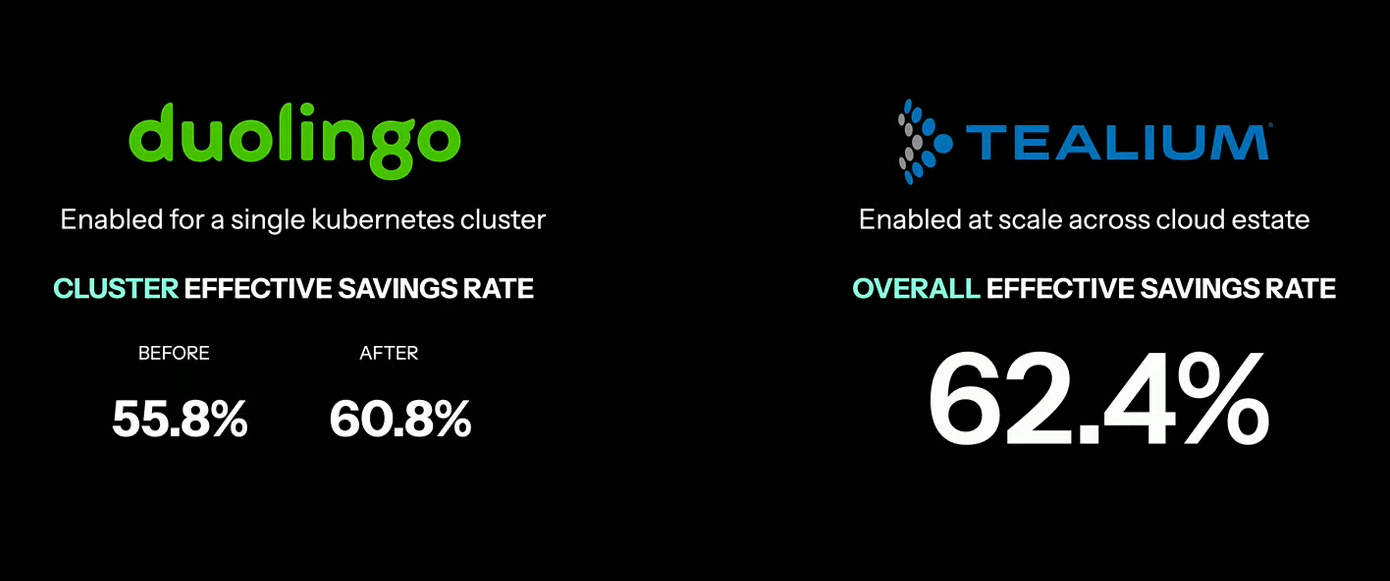
Duolingo and Tealium’s Effective Savings Rate gains under Unified Autonomous Optimization, presented by Erik Carlin at FinOps X 2026 (Source: FinOps X)
Duolingo applied it to its largest production Kubernetes cluster and saw its Effective Savings Rate (ESR) climb from 55.8% to 60.8%, a five-percentage-point jump that works out to roughly $600,000 a year in reinvestable savings for every $1 million of monthly usage on that cluster. Tealium applied it across its entire cloud estate and reached an overall ESR of 62.4%, meaning it now pays roughly 37 cents for every $1 of on-demand compute spend it would otherwise owe.
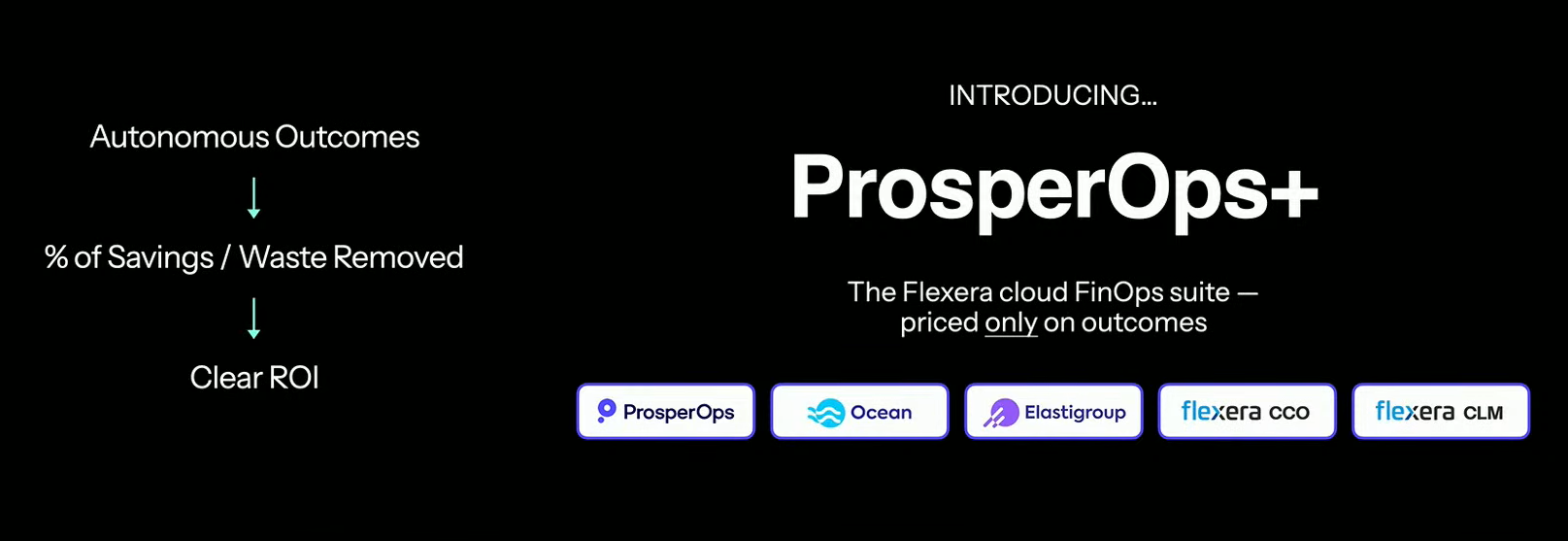
ProsperOps+ announcement, presented by Erik Carlin at FinOps X 2026 (Source: FinOps X)
Erik closed by introducing ProsperOps+, a bundle offering for managing commitment-based discounts together with any of Flexera’s FinOps products, including Ocean, Elastigroup, Cloud Cost Optimization,, Data Cloud Optimization, or Cloud License Management, all under a single outcome-based pricing model.
Tokenomicon is coming soon
Storment finally joined the session and closed the entire session with a mix of conference logistics and a genuinely big announcement. FinOps X is evolving into Tokenomicon, a new event built around the economics of AI specifically, with a flagship debut planned for San Diego from June 7 to 10, 2027.
Before that, Storment announced two smaller, earlier events: Amsterdam on September 22 and 23, 2026, followed by London on February 8 and 9, 2027.
Storment was candid that it’s still an open question whether FinOps and tokenomics evolve into one discipline or stay related but separate ones and said the Foundation plans to spend the next year exploring that with the community rather than forcing an answer now.
Breakouts, chalk talks and closing session
With the keynotes done, Day 3 and Day 4 shifted entirely to practitioner-led content: breakout sessions, chalk talk workshops, lightning talks, FOCUS Q&A sessions and live tool demos across the floor.
Breakout sessions and chalk talks covered the conference’s five program pillars: FinOps for AI, FinOps Scopes (data center, SaaS, licensing and data cloud platforms), adopting FinOps, optimization for value and FinOps-enabled executive decisions. Across the roughly 70+ keynote, breakout and chalk talk sessions held during the week, nearly a quarter touched on AI cost management or token pricing in some form, which tells you where the community’s attention sits right now.
Selected notable breakout sessions included practitioner-led talks on running FinOps at scale with small teams, unifying multicloud and SaaS cost allocation through unit economics, and the specific challenges of managing cost for data cloud platforms like Snowflake and Databricks.
A new lightning talk stage was also set during the event which gave the community a short-format outlet for early-stage ideas, separate from the sponsored keynote content.
And finally, FOCUS Q&A sessions gave practitioners direct access to FOCUS steering committee members and specification maintainers. With FOCUS 1.4 just out and the 1.5 roadmap fresh in everyone’s mind, these sessions were in high demand.
More than 50+ sponsors ran live tool demos across the expo floor, covering everything from cloud cost management and AI spend visibility to commitment management and data cloud optimization, with theCUBE running live analyst interviews from the floor throughout the day.
Worth knowing: 98% of FinOps teams now manage AI spend in some form
While we’re on the subject of how fast this discipline is moving, the FinOps Foundation’s State of FinOps 2026 report, found that 98% of FinOps teams now manage AI spend in some form, up from just 31% two years ago. AI cost management is now the top forward-looking priority among practitioners surveyed and AI value management is the single most in-demand skill teams say they’re trying to add. If you needed one stat to justify the entire week’s worth of AI talk, that’s probably it.
What to take back from FinOps X 2026
FinOps X 2026 made one thing pretty clear: the playbook that worked for cloud spend doesn’t transfer cleanly to AI spend and pretending otherwise is how budgets blow up. Forecasting models, accountability structures, cost attribution and savings targets all need rebuilding around tokens rather than retrofitting from compute hours.
The timing of the Tokenomics Foundation, FOCUS 1.4 and a wave of new capabilities from vendor after vendor all landing in the same stretch of weeks isn’t a coincidence. Individually, none of them have all the answers. Combined, they start to add up to something genuinely useful: a shared vocabulary and dataset for assessing AI cost.
Three things from this conference are worth acting on regardless of which tools you use: get token-level visibility before you try to optimize anything, track commitment coverage the way FOCUS 1.4 now lets you and start asking the value-layer question that Storment and nearly every speaker on that stage kept circling back to. Is the AI investment actually paying off and can you prove it to a CFO in terms they already use?
That’s the big question FinOps X 2026 left everyone with and it’s what Tokenomicon will be working to answer over the next few years.
Pramit Marattha
Pramit Marattha is a technical content writer and strategist with 5+ years of experience covering AI, data engineering, data cloud platforms and open source technologies. He turns complex technical concepts into clear, useful content for engineers and developers.